 Перейти к содержанию


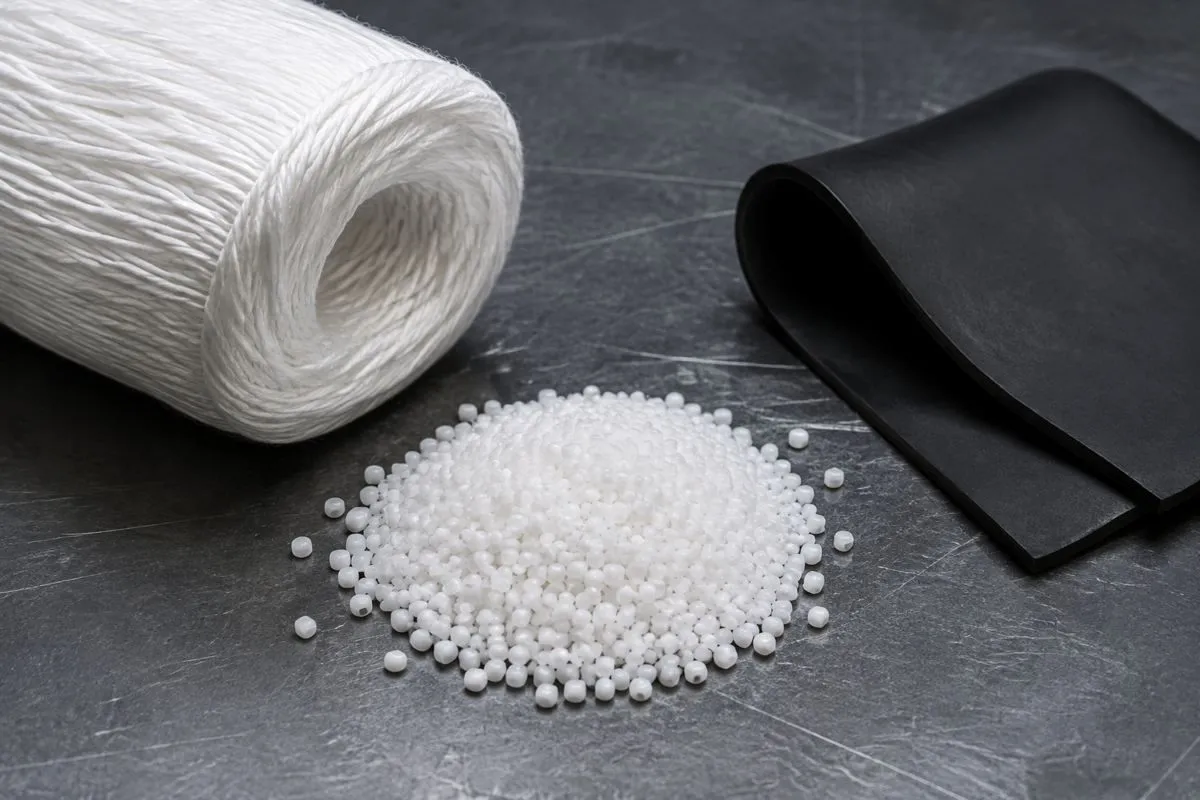
Acrylonitrile sits behind a surprising number of everyday products. It is in the acrylic sweater, the ABS dashboard, the nitrile glove, and the carbon fibre spar. Buyers rarely see it. They see the resin pellet or the fibre bobbin.
That distance is exactly where purchasing problems start. A certificate says 99.5% purity. Two suppliers quote the same number. One runs clean for a year. The other causes gels, yellowing, or a blocked feed line within three weeks. The difference hides in the parts of the spec nobody reads closely.
Acrylonitrile is also a dangerous goods item. It is flammable, toxic, and prone to self-polymerisation. So the buying decision is never just about price per tonne. It is about grade fit, impurity control, inhibitor management, and documentation that survives an audit.
In this post, you’ll learn how acrylonitrile is produced, which specifications actually matter, how impurities damage downstream processes, and how to qualify a supplier before the first purchase order.
Quick answer: Acrylonitrile (CAS 107-13-1) is a clear, highly flammable liquid monomer. It is made almost entirely by propylene ammoxidation. Industrial material is typically 99.5% minimum, stabilised with 35–45 ppm of methylhydroquinone, and shipped as UN 1093, Class 3, Packing Group I. About half of global demand goes into ABS and SAN resins. Acrylic fibre, nitrile rubber, adiponitrile, acrylamide, and carbon fibre precursor take most of the rest. For buyers, purity is only the headline. Water, aldehydes, total cyanide, peroxides, and inhibitor level decide whether the material runs well in your plant.
What Is Acrylonitrile and Why Grade Matters
Acrylonitrile is an organic compound with the formula C3H3N. The trade calls it AN, ACN, vinyl cyanide, or propenenitrile. At room temperature it is a colourless liquid with a faint, sharp smell. It boils at 77.3 °C and sits at 0.806 g/mL density. That low boiling point matters in a warm warehouse.
The molecule carries two reactive groups. One is a carbon-carbon double bond. The other is a nitrile group. That pairing lets it polymerise with itself and copolymerise with styrene, butadiene, or acrylate esters. It also lets it react into amides, acids, and amines.
Those two groups explain the whole product family. Add butadiene and styrene, and you get ABS. Add only styrene, and you get SAN. Polymerise it alone, and you get polyacrylonitrile, the base of acrylic fibre and carbon fibre.
That reactivity is also the risk. The same double bond that builds chains can build them when you do not want it. Heat, light, rust, or a sudden pH shift can start a runaway in a drum.
So grade is not a marketing label. It is a set of limits on the things that trigger unwanted reactions: water, aldehydes, cyanide, peroxides, iron, and the inhibitor itself.
How Acrylonitrile Is Made: The Ammoxidation Route
More than 90% of the world’s acrylonitrile comes from one reaction. Propylene, ammonia, and oxygen meet over a mixed metal oxide catalyst and form acrylonitrile in a single pass.
The simplified equation is C3H6 + NH3 + 1.5 O2 → C3H3N + 3 H2O. In practice, the catalyst is a molybdenum-bismuth system on a silica carrier. Older plants used antimony-iron formulations. The American Chemical Society’s molecule profile is a useful primer on the chemistry.
Most units run a fluidised bed reactor at 400–450 °C and slightly above atmospheric pressure. The reaction is strongly exothermic, so heat removal is the main engineering constraint. Temperature excursions shift selectivity and push up byproduct levels.
Crude product leaves the reactor with unreacted ammonia, acetonitrile, hydrogen cyanide, acrolein, carbon oxides, and water. The purification train then does the real quality work. A dilute sulphuric acid scrub removes ammonia. Water absorption captures acrylonitrile and light organics. An extraction column separates acetonitrile. A recovery column strips hydrogen cyanide. Drying and fractionation finish the job.
Each step removes a specific impurity. If one column runs off-condition, the final assay may still look fine while a trace component climbs. That is why a single purity number cannot describe quality.
Propane ammoxidation has been studied for decades as a cheaper feedstock route. Its only commercial unit shut down at the end of 2024. Bio-based and electrochemical routes exist in demonstration, not at scale.
| Process step | What it removes | Quality risk if it drifts |
|---|---|---|
| Acid scrub | Unreacted ammonia | pH rise, base-catalysed polymerisation |
| Water absorption | Bulk acrylonitrile from gas | Loss of yield, carryover of lights |
| Acetonitrile extraction | Acetonitrile | Chain transfer, off-spec solvent residue |
| HCN recovery | Hydrogen cyanide | Total cyanide above limit, catalyst poisoning |
| Drying | Вода | Hydrolysis, corrosion, assay drift |
| Fractionation | Heavy ends, colour bodies | Colour above 10 Hazen, polymer seeds |
Acrylonitrile Grades and Typical Specifications
There is no single global acrylonitrile standard. China works to GB/T 7717.1, currently the 2022 revision. Other regions rely on producer specifications and contract agreements. Most international trades settle on the supplier’s certificate plus a pre-shipment sample.
Three commercial grade families cover the market. Fibre grade feeds acrylic and modacrylic polymerisation. Resin grade feeds ABS, SAN, and ASA. Intermediate grade feeds acrylamide, adiponitrile, and smaller chemical syntheses.
The differences are small on paper and large in the reactor. Fibre grade usually tightens colour and iron. Resin grade tightens aldehydes, because they yellow the final part. Intermediate grade often tightens total cyanide, since the nitrile group is the reaction site.
| Parameter | Typical commercial range | Why it is specified |
|---|---|---|
| Assay (GC) | ≥ 99.5% | Base monomer content |
| Water (Karl Fischer) | ≤ 0.45–0.50% | Hydrolysis, corrosion, assay drift |
| Inhibitor MEHQ | 35–45 ppm | Prevents self-polymerisation in transit |
| Acidity as acetic acid | ≤ 20 ppm | Catalytic side reactions |
| Aldehydes as acetaldehyde | ≤ 0.005–0.05% | Yellowing, chain transfer |
| Total cyanide as HCN | ≤ 0.001–0.02% | Catalyst poisoning, toxicity load |
| Colour (Pt-Co/Hazen) | ≤ 10 | Visual quality, polymer colour |
| Внешний вид | Clear, free of sediment | Polymer seeds, haze |
Ask for the test method beside every number. Water by Karl Fischer reads differently from water by distillation. Total cyanide by titration is not the same as by ion chromatography. A spec that omits methods invites arguments at the claim stage.
Impurities That Break a Polymerization Line
Impurities rarely announce themselves. They show up as a batch that will not reach target molecular weight. Or a fibre that fails a whiteness check. Or a reactor that shuts down on a pressure spike.
Water is the most common complaint. It hydrolyses acrylonitrile slowly into acrylamide and acrylic acid. Acidity creeps up, corrosion follows, and the assay drifts down. Water also adds load to your drying train and to your waste treatment.
Aldehydes are subtle. Acrolein and acetaldehyde act as chain transfer agents. They cap growing chains early, so molecular weight falls. In ABS they also react into colour bodies, and the yellowing appears months later in a customer complaint.
Hydrogen cyanide is a stronger poison for the catalyst than for the polymer. In ammoxidation-derived material it is the main residual toxic load. High total cyanide also raises the risk profile of every downstream handling step.
Acetonitrile behaves like a weak chain transfer agent. Small amounts are tolerable. Persistent levels point to a recovery column running poorly, which usually means other lights are slipping through too.
Peroxides and dissolved oxygen matter more than their concentration suggests. Peroxides initiate polymerisation at the wrong time and place. That is how gels and polymer seeds form inside a storage tank.
| Примеси | Typical downstream symptom | Practical response |
|---|---|---|
| Вода | Assay drift, corrosion, acidity creep | Tighten KF limit, verify tank dryness |
| Aldehydes | Low molecular weight, yellowing | Request aldehyde-specific COA line |
| Total cyanide | Catalyst poisoning, HSE exposure | Set a hard limit, test each lot |
| Acetonitrile | Chain transfer, weak tensile | Check recovery column data |
| Peroxides | Gels, seeds, viscosity spikes | Test on arrival, avoid long storage |
| Железо | Grey or yellow tint in fibre | Specify Fe, use lined or SS tanks |
| Ammonia residue | Rapid, uncontrolled polymerisation | Verify acid scrub performance |
One habit pays for itself. Test the first drum of every lot, not only the composite sample. Stratification in a drum or ISO tank can hide a bad layer.
Inhibitor, Storage, and Quality Drift
Inhibited acrylonitrile is the only acrylonitrile you should buy in bulk. Methylhydroquinone at 35–45 ppm suppresses radical formation during transit and storage. Some producers use tert-butyl catechol at around 10 ppm instead.
The inhibitor is a consumable, not a permanent shield. Its concentration drops as it scavenges radicals. Long storage, warm weather, and repeated transfers all consume it. A certificate issued at the plant can be misleading three months later in your tank farm.
MEHQ also needs dissolved oxygen to work properly. That creates a real conflict with nitrogen blanketing, which many sites prefer for fire safety. Agree the blanket strategy with the producer in writing. Do not assume the drum is protected just because the COA lists an inhibitor.
Temperature control is the second lever. Vapour pressure at 20 °C is already 86 mmHg, so every degree adds inventory loss and exposure. Keep tanks shaded, below about 25–30 °C, and away from visible light.
Materials matter too. Acrylonitrile attacks copper and copper alloys, and it penetrates leather. Use stainless steel or lined carbon steel, and confirm gasket and seal compatibility before the first truck.
Retest intervals of 30 days for bulk storage are common practice. If the inhibitor falls below the working range, the product should be re-stabilised or consumed, not quietly used.
Packaging, Logistics, and Dangerous Goods Reality
Acrylonitrile ships as UN 1093, Class 3, Packing Group I, with a subsidiary 6.1 toxic risk. That combination limits your packaging options and your carriers.
Bulk moves in ISO tanks, usually 20–24 tonnes net. Smaller volumes go in 160 kg steel drums. Intermediate bulk containers are generally not accepted for Packing Group I, so do not plan a supply chain around them.
Each shipment needs a dangerous goods declaration, a safety data sheet in the right language, and emergency response information. Sea freight also requires IMDG classification and stowage away from oxidisers and acids.
Temperature discipline continues in transit. A container parked in summer sun can exceed 50 °C internally. That accelerates inhibitor consumption and raises vapour pressure. Ask your forwarder about routing, terminal dwell time, and shaded storage at transhipment ports.
Port acceptance is not universal. Some terminals restrict Class 3 PG I with toxic subsidiary risk. Confirm the discharge port before you fix a price. A cheap cargo that cannot be discharged is the most expensive cargo you will buy.
Finally, check the empty container or tank before loading. Residues from a previous alkaline cargo have started more incidents than most buyers realise.
Applications and Grade Fit
ABS and SAN resins take the largest share of acrylonitrile demand, roughly 40–50% depending on the region. The acrylonitrile content in ABS is around 25% by weight. It brings heat resistance, chemical resistance, and surface hardness to the part.
Acrylic and modacrylic fibre take most of the textile volume. This is the original use and still a steady one, though polyester has taken share. Modacrylic adds flame resistance, which keeps it in workwear and furnishing fabrics.
Nitrile rubber follows automotive demand for hoses, seals, and gaskets. Medical gloves use nitrile latex, a different polymerisation route but the same monomer.
Adiponitrile, and through it nylon 66, is the largest single chemical intermediate outlet. Acrylamide for water treatment and enhanced oil recovery is the second.
Carbon fibre precursor is small in tonnage but demanding in quality. Polymer-grade PAN needs consistent molecular weight and very low colour. Buyers in this segment usually pay for tighter limits.
| Application | Approx. share of demand | Specification priority |
|---|---|---|
| ABS / SAN / ASA | 40–50% | Aldehydes, colour, water |
| Acrylic and modacrylic fibre | 20–25% | Colour, iron, assay |
| Nitrile rubber and latex | 10–15% | Assay, water, cyanide |
| Adiponitrile, acrylamide | 10–15% | Total cyanide, water |
| Carbon fibre precursor | Small, fast growth | Colour, metals, chain-transfer agents |
If your plant also runs acrylic acid or acrylate esters, you are buying from the same chemical family. Our acrylic acid and acrylate range covers those adjacent grades.
Supplier Qualification: Eight Checks Before the First PO
Price negotiation is the easy part. Qualification is where risk gets priced properly. Eight checks cover most of it.
Start with the plant. Ask which production route and which licensor. Ask for the last two years of batch data, not a single clean certificate.
Then look at traceability. Can the supplier link a drum number to a batch number, a reactor run, and a raw material lot? If not, a quality claim becomes a conversation you cannot win.
Third, check the laboratory. In-house GC and Karl Fischer are normal. Independent third-party verification on request separates the serious suppliers.
Fourth, inhibitor management. Ask how the inhibitor is dosed, how it is verified, and what happens before shipment after long storage.
Fifth, dangerous goods capability. Carrier authorisations, tank inspections, emergency response arrangements, and previous routes all matter.
Sixth, documentation quality. A COA that lists methods and limits is worth ten that list results only.
Seventh, change notification. Any raw material or process change should trigger a written notice. Get that clause into the contract.
Eighth, commercial stability. Confirm the origin, the Incoterm, and who carries demurrage when a tank waits at port.
| Проверьте | Ask for | Red flag |
|---|---|---|
| Plant and route | Licensor, capacity, run data | Vague answers, trader only |
| Traceability | Batch-to-drum mapping | “We will check later” |
| Laboratory | In-house methods, third-party reports | No method references |
| Inhibitor control | Dosing record, retest data | Inhibitor level not tested |
| DG capability | Carrier approvals, tank certificates | Uses general cargo forwarders |
| Documentation | COA with limits and methods | Results with no limits |
| Change control | Written notification clause | No process for changes |
| Commercial terms | Origin, Incoterm, demurrage | Price only, no terms |

We supply основные химикаты with full COA and transport documentation, and we are happy to review a specification with your team before you commit. Send the grade and volume through our contact page and we will confirm what fits.
Market and Sourcing Outlook for 2026–2027
Supply has grown faster than demand. China’s acrylonitrile capacity reached about 5.55 million tonnes a year in 2026, nearly double the 2021 level. Industry operating rates have run near 71%, with several large plants at half load.
Demand is soft in the traditional outlets. ABS remains the biggest consumer at roughly 40–50%, but appliance and housing-linked demand has been weak. Acrylic fibre continues to lose share to polyester. Acrylamide growth is flat.
Carbon fibre is the exception. Precursor demand is expected to grow at 8–12% a year through 2030, though from a small base. It is also the segment least tolerant of quality variation.
Prices reflect the oversupply. Chinese domestic material has traded in a wide band, with forecasts for 2026 averaging below 2025 levels. Export competition from the Middle East and the United States keeps a ceiling on Asian prices.
For buyers, three practical implications follow. Contracts with quality clauses beat spot chasing in a falling market. Dual sourcing protects against unplanned shutdowns, which still happen. And carbon-footprint documentation is becoming a real export requirement, not a nice-to-have.
ICIS tracks acrylonitrile pricing and the automotive-linked demand that drives it. Worth a look before your next contract round.
Часто задаваемые вопросы
What is acrylonitrile used for?
It is mainly a monomer. ABS and SAN resins take the largest share, followed by acrylic and modacrylic fibre, nitrile rubber, and chemical intermediates. Adiponitrile for nylon 66 and acrylamide for water treatment are the two biggest intermediate outlets. Smaller volumes go into carbon fibre precursor, coatings, adhesives, and specialty syntheses.
Is acrylonitrile the same as acrylic?
No. Acrylonitrile is the monomer. Acrylic usually refers to the polymer family made from it, such as polyacrylonitrile fibre, or to acrylic acid and its esters. Acrylic acid is a different molecule, CAS 79-10-7. They share a name root and a feedstock chain, not a specification.
What purity does industrial acrylonitrile need?
Most commercial material is 99.5% minimum by GC. Fibre and resin grades sometimes go tighter. Purity alone is not enough. Water at 0.45–0.50% maximum, total cyanide, aldehydes, and inhibitor level all affect performance. Always read the full specification and the test methods behind it.
Why is an inhibitor added to acrylonitrile?
Acrylonitrile can polymerise on its own under heat, light, or contamination. Methylhydroquinone at 35–45 ppm slows that reaction during storage and transport. The inhibitor depletes over time, so it is tested again before use. Never assume a certificate issued at the plant still reflects the drum in your warehouse.
Is acrylonitrile toxic or carcinogenic?
Yes, it is hazardous. It is toxic by inhalation, skin contact, and ingestion, and it is classified as a suspected human carcinogen. It is also highly flammable. Handling requires closed systems, appropriate PPE, exposure monitoring, and trained personnel. Treat every purchase as a dangerous goods transaction, not a commodity buy.
Заключение
Acrylonitrile rewards buyers who read the whole specification. The headline purity is rarely the problem. Water, aldehydes, cyanide, peroxides, and inhibitor level decide whether the material runs clean. Check the method behind each number, confirm inhibitor management, and qualify the plant before you qualify the price. Then the monomer stays a feedstock, not a firefighting exercise.
