 Skip to content

Global demand for high-quality omega-3 supplements is surging, but protecting sensitive lipid-based ingredients is difficult. Creating a robust softgel capsule while ensuring long-term stability requires absolute precision. Advanced encapsulation techniques and strict manufacturing controls help solve these critical formulation challenges in human nutrition.
The Science of Softgel Encapsulation for Fish Oil
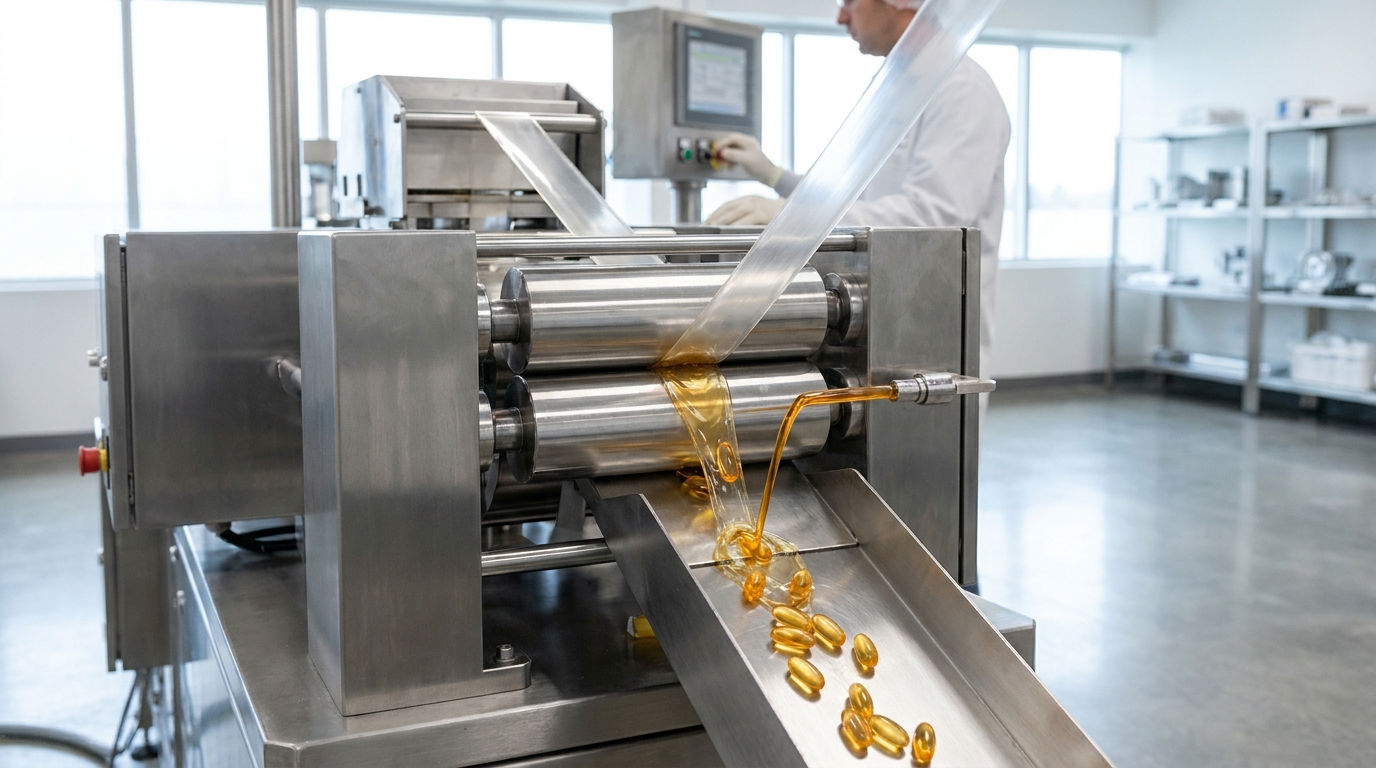
Manufacturing a reliable softgel capsule requires exact timing and strict environmental control. The industry-standard method is the rotary die encapsulation process, which forms, fills, and seals the capsule in one continuous motion.
The Rotary Die Process
The process begins by feeding two flat ribbons of gel material through rotating cylindrical dies. As the dies press the ribbons together, a precision pump injects the liquid fish oil. The combined pressure and heat instantly seal the shell around the lipid fill. The newly formed capsules then drop onto a conveyor for immediate cooling and drying.
Formulating the Capsule Shell
A stable and resilient shell relies on a precise ratio of three main components:
- Base Material: Traditional softgels use animal-derived gelatin. Plant-based alternatives utilize ingredients like pectin or carrageenan.
- Plasticizers: Ingredients like glycerin or sorbitol make the shell flexible, preventing the finished capsule from becoming brittle and cracking.
- Purified Water: Water acts as a crucial solvent during manufacturing. Most of this moisture is carefully removed during the final drying phase.
At SOHO Honry Chemical, our R&D team carefully calibrates these formulation ratios. Supported by two PhDs and partnerships with institutions like China Pharmaceutical University, we ensure our formulations meet stringent GMP and FSSC standards.
Managing Oil Viscosity and Temperature
Fish oil is highly sensitive to heat and oxygen. High temperatures can cause rapid oxidation and degrade nutritional quality, yet the oil must flow smoothly through the injection pump. Manufacturers carefully control the temperature to maintain a consistent liquid viscosity, guaranteeing a uniform fill weight for every single capsule. The sealing wedge that joins the gel ribbons is gently heated, but the fish oil itself remains cool to preserve its integrity.
Overcoming Encapsulation Challenges
Several variables can cause physical defects during encapsulation. Ribbon thickness must remain perfectly uniform throughout the run. If the gel ribbon is too thin, the final capsule may easily leak. If the ribbon is too thick, the capsule halves will not seal correctly. Technicians constantly monitor ribbon thickness using precise mechanical gauges.
Seal integrity is another critical manufacturing factor. The timing of the oil injection must perfectly match the rotation of the dies. Any mechanical misalignment forces oil into the seam, causing weak seals and eventual leakage. Advanced testing equipment, aligned with SGS and Eurofins standards, verifies that every batch maintains structural integrity under pressure.
Enteric Coating and Targeted Release
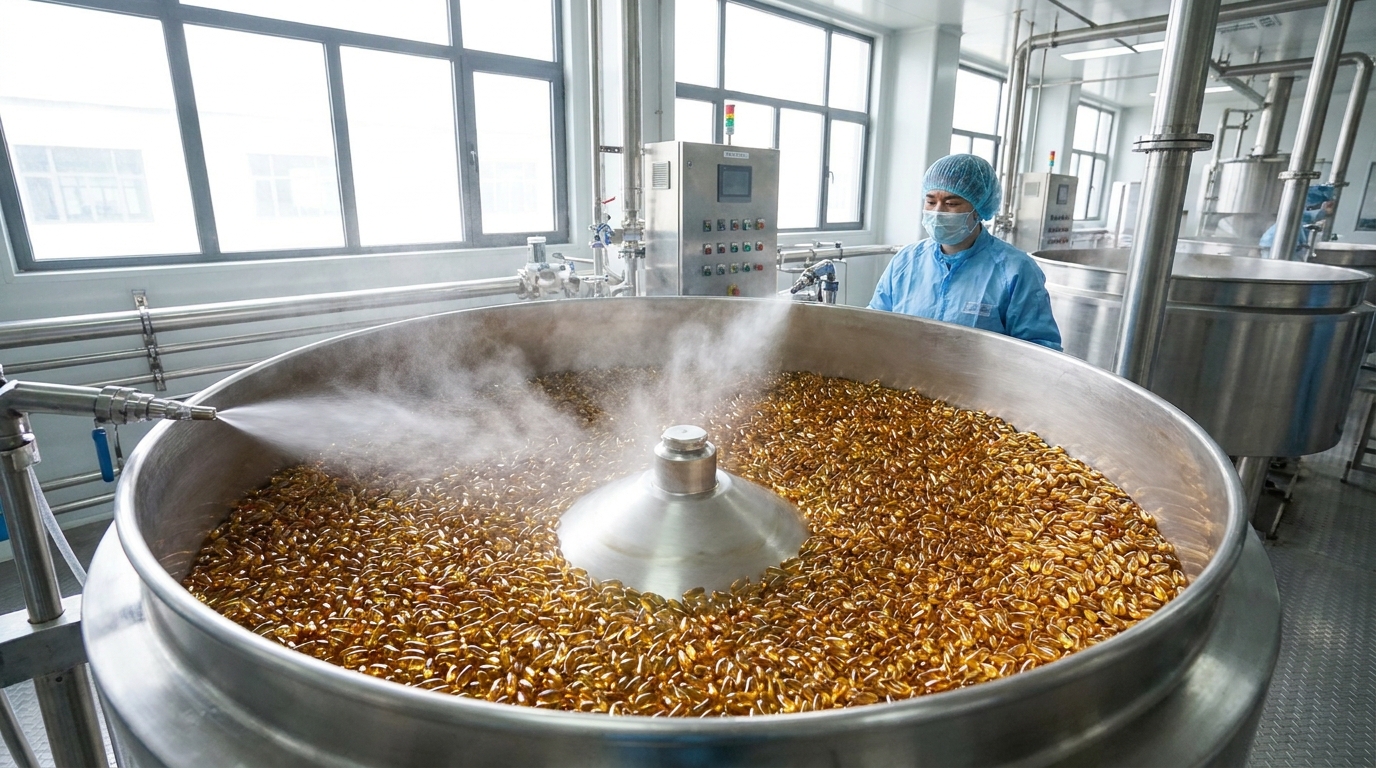
Standard gelatin shells dissolve quickly in the stomach, exposing sensitive fish oil to harsh gastric acids. This early breakdown can degrade active lipids and cause a common consumer complaint known as “fishy burps.” Applying an enteric coating solves these issues by providing a specialized outer layer that protects the omega-3 supplement until it reaches the intestines.
Coating Materials and Application
Manufacturers use specific polymers that resist acidic environments, such as methacrylic acid copolymers or cellulose acetate phthalate. Today, many brands prefer natural, plant-based alternatives like sodium alginate or pectin.
Applying the coating requires precise environmental control. Technicians typically use a fluid bed coater or a rotating pan, where spray nozzles apply a fine mist of the polymer solution onto the tumbling capsules. Warm air simultaneously dries the coating to create a smooth, continuous protective film. At SOHO Honry Chemical, our quality control technicians rigorously test this film using advanced equipment to ensure uniform thickness across every batch.
Comparing Dissolution Rates
The primary difference between capsule types is where they break down. Enteric coatings utilize highly pH-sensitive materials that remain intact in low-pH stomach acid but dissolve rapidly in neutral environments.
| Softgel Type | Stomach (pH 1.2) Dissolution | Small Intestine (pH 6.8) Dissolution | Sensory Experience |
|---|---|---|---|
| Standard Softgel | Breaks down in 15 to 30 minutes | Already digested | High risk of fishy reflux |
| Enteric-Coated Softgel | Remains intact for over 2 hours | Breaks down in 30 to 60 minutes | Eliminates fishy burps |
Maximizing EPA and DHA Absorption
Targeted release dramatically improves the bioavailability of fish oil. The small intestine is the optimal site for lipid absorption. When the enteric coating dissolves here, the oil interacts directly with bile salts, and pancreatic enzymes efficiently emulsify the released lipids. This natural digestive process allows the intestinal walls to absorb EPA and DHA easily. By bypassing the stomach, manufacturers ensure consumers receive the full nutritional benefit of the formulation.
Critical Stability Considerations in Omega-3 Supplements
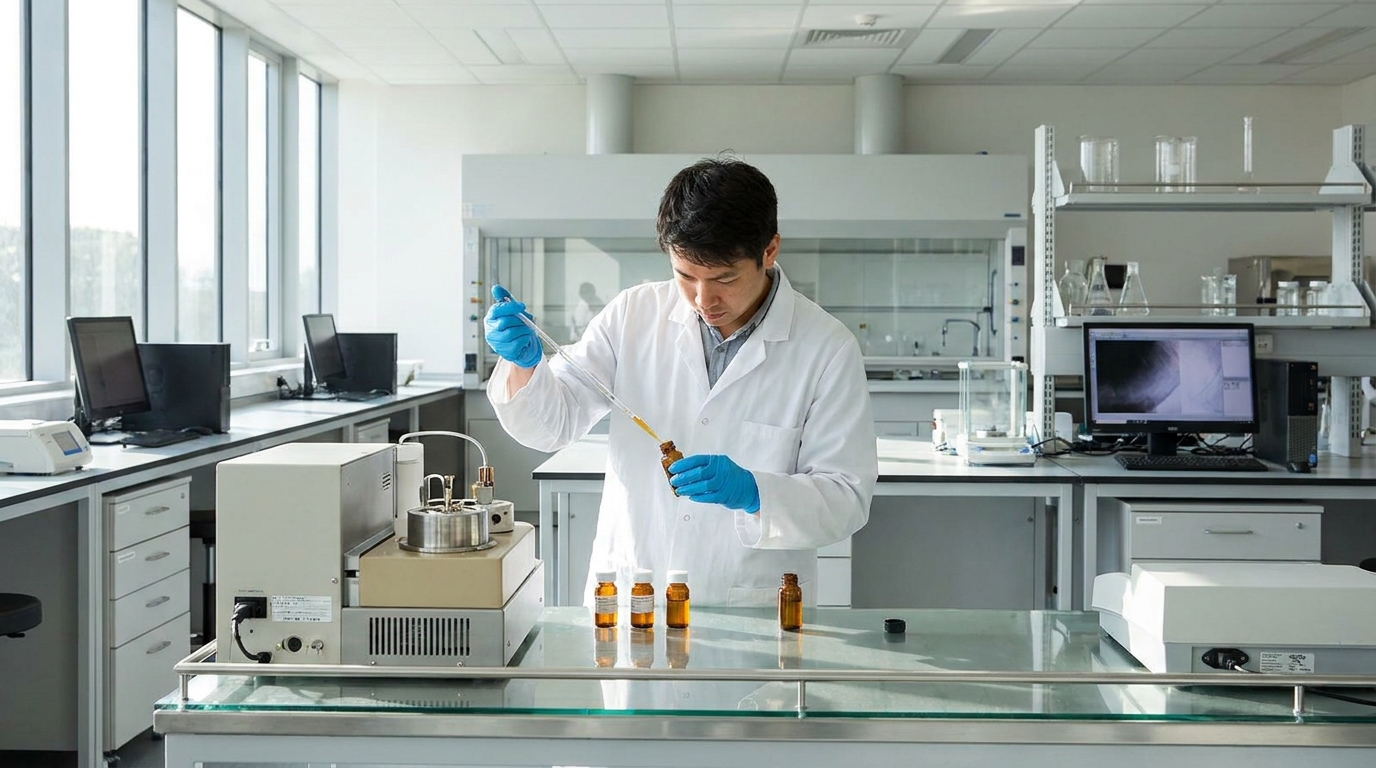
Maintaining the long-term stability of an omega-3 supplement is a complex challenge. Formulators must protect these sensitive marine lipids from environmental stress. Proper manufacturing controls ensure the final product remains safe and effective throughout its shelf life.
Understanding Oxidation Risks
Fish oil contains high levels of polyunsaturated fatty acids, which are highly susceptible to oxidation. Exposure to light, heat, and oxygen triggers rapid degradation. This chemical breakdown destroys the oil’s nutritional value and produces strong, rancid odors and off-flavors. Manufacturers must flush storage tanks and encapsulation equipment with nitrogen to displace oxygen and create a protective inert atmosphere.
Monitoring PV and pAV Markers
Quality control teams rely on specific metrics to evaluate oil freshness. The Peroxide Value (PV) measures primary oxidation products to indicate the current rate of degradation. The Anisidine Value (pAV) measures secondary oxidation products, like aldehydes, which reveal historical heat or oxygen damage.
Combining these two metrics calculates the total oxidation (TOTOX) value, where a low score confirms superior oil quality. At SOHO Honry Chemical, our R&D team utilizes advanced testing equipment to monitor these critical markers. Supported by 25 technicians and two PhDs, we provide comprehensive testing reports that meet strict Eurofins and SGS standards.
Managing Moisture Migration
A softgel is a dynamic system where the outer shell naturally contains plasticizers and residual water. During storage, moisture can migrate between the shell and the liquid fill. If too much water enters the fish oil, it accelerates oxidation. If the shell loses too much moisture, it becomes brittle and prone to cracking. Formulators must establish a precise equilibrium relative humidity (ERH), and strict drying protocols stabilize this moisture balance before the capsules are packaged.
Preventing Gelatin Cross-Linking
Cross-linking is a chemical reaction that hardens the capsule shell over time. When gelatin proteins bond too tightly, the shell loses its natural solubility. A severely cross-linked capsule will not dissolve properly during digestion, preventing the body from absorbing the active lipids.
Oxidized fish oil significantly increases this risk, as the aldehydes measured by the pAV test act as strong cross-linking agents. Even a perfectly applied enteric coating cannot function correctly if the underlying shell is chemically hardened. To prevent this, formulators must use highly purified oils and may incorporate specific cross-linking inhibitors into the gelatin matrix.
Quality Control and Manufacturing Standards
Producing a stable, high-quality softgel requires strict oversight. To maintain batch-to-batch consistency, brands must manufacture in FDA- and GMP-certified facilities. These controlled environments prevent contamination and ensure standard operating procedures are strictly followed. At SOHO Honry Chemical, our factories hold FSSC, BRC, ISO, and GMP certifications, and we undergo annual third-party audits to verify our adherence to these strict protocols.
Rigorous Testing Protocols
Tracking oxidation markers is vital. Quality control teams must execute rigorous testing protocols at every stage of production. From raw material intake to final encapsulation, technicians monitor purity and stability. Our R&D facility utilizes advanced testing equipment to meet international benchmarks, providing comprehensive testing reports verified against Eurofins and SGS standards. This guarantees the integrity of every softgel capsule we produce.
R&D and Academic Partnerships
Formulating effective lipid delivery systems requires continuous innovation. Specialized R&D partnerships help manufacturers optimize these complex formulations. SOHO Honry Chemical maintains deep cooperation with top Chinese institutions, including Nanjing Agricultural University and China Pharmaceutical University. Our dedicated technical team features over 25 technicians led by two PhDs, working together to solve encapsulation challenges and improve product stability.
Securing Critical Product Certifications
Modern consumers demand transparency in their dietary supplements, looking for specific certifications to ensure products meet their dietary and ethical standards. Securing these credentials expands market reach and builds brand trust.
- Quality and Safety: FSSC, BRC, and ISO certifications demonstrate a commitment to global food safety standards.
- Dietary Compliance: HALAL and KOSHER certifications ensure the formulation meets strict religious dietary laws.
- Ingredient Purity: NON-GMO and ALLERGEN FREE labels assure consumers that the product avoids common sensitivities.
SOHO Honry Chemical provides ingredients and product solutions carrying all these relevant certificates. By integrating advanced testing and academic expertise, manufacturers deliver safe products to customers worldwide.
Common Mistakes in Fish Oil Softgel Production

Even in certified facilities, encapsulation errors can compromise product integrity. Formulators must anticipate processing vulnerabilities to protect delicate marine lipids. Avoiding common manufacturing mistakes ensures optimal shelf life and safety.
Failing to Maintain Inert Environments
Marine lipids are highly vulnerable to oxygen. A frequent mistake is inadequate nitrogen blanketing during active production. If oxygen enters the holding tanks, premature oxidation begins immediately, spiking the PV and pAV markers before encapsulation. Manufacturers must strictly monitor nitrogen flow rates to maintain a continuous, protective barrier over the sensitive oil.
Improper Drying and Humidity Control
Moisture balance dictates the physical stability of the finished product, making rushed drying a costly manufacturing error. If capsules dry too quickly, the outer shell becomes brittle. Conversely, inadequate drying leaves excess moisture in the gelatin matrix, causing softgel capsules to clump together inside the packaging. Technicians must strictly control ambient humidity in the drying tunnels, allowing sufficient time to ensure the exact equilibrium relative humidity.
Ignoring Supply Chain Temperature Stress
Producing a stable omega-3 supplement requires forward-thinking logistics. A common oversight is ignoring temperature fluctuations during transport, as extreme heat softens the gelatin shell and accelerates lipid degradation, while freezing temperatures can cause the fish oil to cloud. Brands must utilize climate-controlled storage for all finished goods and specify strict temperature parameters for freight carriers to prevent costly damage.
Overlooking Formulation Compatibility
The liquid fill and the gelatin shell constantly interact. Formulators sometimes overlook chemical compatibility between the oil and shell plasticizers. Using the wrong ratio of glycerin can cause plasticizer migration, weakening the capsule wall and increasing the risk of leakage. Evaluating these interactions is critical when applying an enteric coating, as the underlying shell must remain structurally sound to support the coating. At SOHO Honry Chemical, our technical team rigorously tests these interactions to verify that chosen plasticizers perfectly match the specific lipid profile.
Summary of Manufacturing Vulnerabilities
Understanding the direct consequences of production errors helps brands optimize their quality control checklists.
| Manufacturing Error | Direct Consequence | Quality Control Solution |
|---|---|---|
| Inadequate Nitrogen Blanketing | Premature lipid oxidation and rancidity | Continuous monitoring of inert gas flow rates |
| Improper Drying Protocols | Brittle shells or clumping capsules | Strict humidity controls in drying tunnels |
| Unregulated Supply Chain | Accelerated degradation or cracked shells | Mandatory climate-controlled warehousing and freight |
| Plasticizer Incompatibility | Wall weakening and fill leakage | Advanced R&D interaction testing prior to production |
Frequently Asked Questions About Fish Oil Softgel Manufacturing
Why do fish oil softgels sometimes have an enteric coating?
Standard gelatin shells dissolve quickly in stomach acid, which can damage sensitive omega-3 lipids and cause unpleasant “fishy burps.” An enteric coating is a protective outer layer that prevents the capsule from breaking down in the stomach. Instead, it safely dissolves in the neutral environment of the small intestine. This targeted release maximizes the absorption of EPA and DHA while completely eliminating fishy aftertastes.
How is fish oil protected from going rancid during production?
Fish oil is highly sensitive to heat, light, and oxygen. To prevent oxidation and rancidity, manufacturers keep the oil cool during the encapsulation process. They also use nitrogen gas to flush out oxygen from storage tanks and equipment, creating a protective barrier. Quality control teams constantly monitor specific oxidation markers, like PV and pAV, to ensure the oil remains fresh and nutritious.
What causes a fish oil softgel to harden and fail to dissolve?
Softgels can harden due to a chemical reaction called cross-linking. When gelatin proteins bond too tightly, the capsule shell loses its ability to dissolve during normal digestion. This chemical reaction is often triggered by oxidized fish oil, which releases compounds that act as strong cross-linking agents. Using highly purified oils and monitoring storage conditions helps prevent this hardening so the body can properly absorb the nutrients.
Are there plant-based alternatives to standard gelatin softgels?
Yes. While traditional softgels use animal-derived gelatin, manufacturers can formulate plant-based shells using natural ingredients like pectin or carrageenan. These alternatives are often paired with plant-based enteric coatings, such as sodium alginate. Facilities like SOHO Honry Chemical also secure specific product certifications, including HALAL, KOSHER, and NON-GMO, to ensure these dietary supplements meet strict ethical and religious standards for global consumers.
How do manufacturers prevent softgel capsules from leaking or clumping?
Preventing leaks requires precise mechanical control during the rotary die encapsulation process. Technicians constantly monitor the gel ribbon thickness and ensure the timing of the oil injection perfectly matches the sealing dies. To prevent finished capsules from sticking together, manufacturers carefully control the humidity in specialized drying tunnels. Rushing the drying process or leaving excess moisture in the shell can cause clumping or make the capsules brittle over time.
Conclusion
Producing high-quality fish oil softgels requires a delicate balance of precise encapsulation and rigorous stability controls. Partnering with an experienced supplier ensures your supplements remain effective. SOHO Honry Chemical utilizes advanced R&D and FDA-certified facilities to deliver reliable ingredient solutions.
Beyond softgel encapsulation, our omega-3 and marine oil ingredients also support formulators across wider applications. Explore our food and beverage solutions to see how fish-oil-derived ingredients fit functional food and drink products, and learn more about our company, certifications and global supply record.
- Review your formulation for potential stability risks.
- Consult our R&D team for custom encapsulation solutions.
- Request our GMP and FDA facility certifications.
