
A clear, source-based look at the fermented ingredient behind stable sauces, smooth drinks, gluten-free dough, and more.
https://www.honrychemical.com/
Xanthan gum can sound unfamiliar on an ingredient list. Its job is familiar, though: it helps food and liquid products stay smooth, stable, and easy to use. The short answer is that xanthan gum is made by fermenting a sugar source with the bacterium Xanthomonas campestris, then recovering, drying, and milling the resulting polysaccharide into powder.
This guide explains what that process means, where xanthan gum is used, what its benefits and limits are, and when a buyer or consumer should ask more questions. It is educational information, not personal medical advice.
Quick Answer: What Is Xanthan Gum Made From?
Xanthan gum is a high-molecular-weight polysaccharide made through pure-culture fermentation. Manufacturers feed Xanthomonas campestris a carbohydrate source, often a sugar derived from corn, but potentially from other sources such as cane sugar, wheat, or soy. The organism produces xanthan in the fermentation broth.
The finished material is not simply ground corn or another crop. It is the purified polymer created during fermentation. Under the U.S. food-additive regulation, xanthan gum is derived from Xanthomonas campestris by pure-culture fermentation and recovered with isopropyl alcohol; the final additive must be free of viable bacterial cells.
| Stage | What happens | Why it matters |
| 1. Prepare feedstock | A suitable sugar source is prepared for fermentation. | It supplies energy for the microorganism. |
| 2. Ferment | Xanthomonas campestris produces xanthan in a controlled broth. | The polymer gives the broth its thick texture. |
| 3. Recover and purify | The gum is separated, commonly through alcohol precipitation and washing. | It isolates the functional polymer from the broth. |
| 4. Dry and mill | The material is dried and milled into a fine powder. | It makes dosing, shipping, and dispersing practical. |
| 5. Test and package | Food-grade material is checked against applicable specifications. | It supports consistent quality and intended use. |
How Xanthan Gum Is Produced
Fermentation: The Core Step
Fermentation is the key reason xanthan gum is different from a simple plant starch. In a controlled system, Xanthomonas campestris uses sugar as a feedstock and releases a long-chain carbohydrate into the liquid. This polymer has a useful ability to bind water and build viscosity even at low use levels.
Production conditions influence the result. Feedstock selection, culture purity, temperature, pH, aeration, and fermentation time can all affect yield and performance. Commercial production is therefore a process-control exercise, not just a mixing step. For food use, the process must meet the relevant regulatory and product specifications.
Recovery, Drying, and Milling
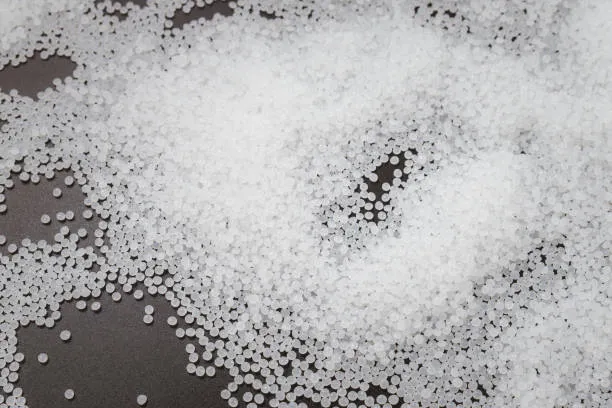
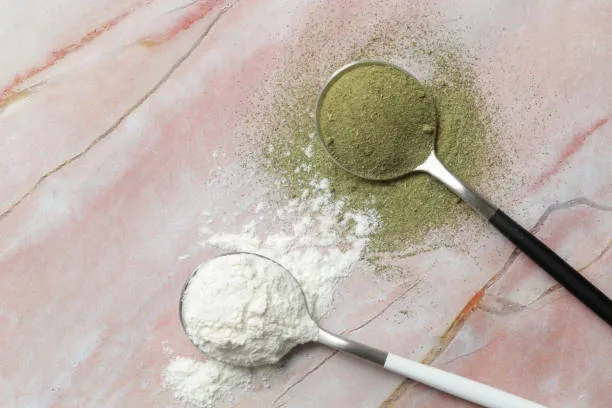
After fermentation, the gum must be separated from the liquid broth. An alcohol recovery step is commonly used to precipitate the polymer. It is then washed, dried, and milled. The result is the pale powder sold to food, personal-care, pharmaceutical, and industrial formulators.
The powder is designed to hydrate when added properly to water. It can clump if poured too quickly into a still liquid, so manufacturers often preblend it with other dry ingredients or add it under good agitation. This is a practical handling issue, not a sign that the ingredient is poor quality.
What the Finished Material Contains
Xanthan gum is a polysaccharide. The U.S. regulation describes D-glucose, D-mannose, and D-glucuronic acid as its dominant hexose units, and allows sodium, potassium, or calcium salt forms. In everyday language, it is a large carbohydrate polymer rather than a protein, fat, or conventional flour.
That chemistry explains its behavior. In water, its long chains create viscosity and help suspend particles. It also stays useful across many pH and temperature conditions, which is why it is valuable in products ranging from sauces to dairy alternatives.
Xanthan Gum Uses: Why Formulators Choose It
Xanthan gum uses are broad because one ingredient can solve several texture problems. It can thicken, stabilize, suspend particles, support emulsions, add body, and reduce separation. The best use depends on the full formula, processing conditions, and target texture.
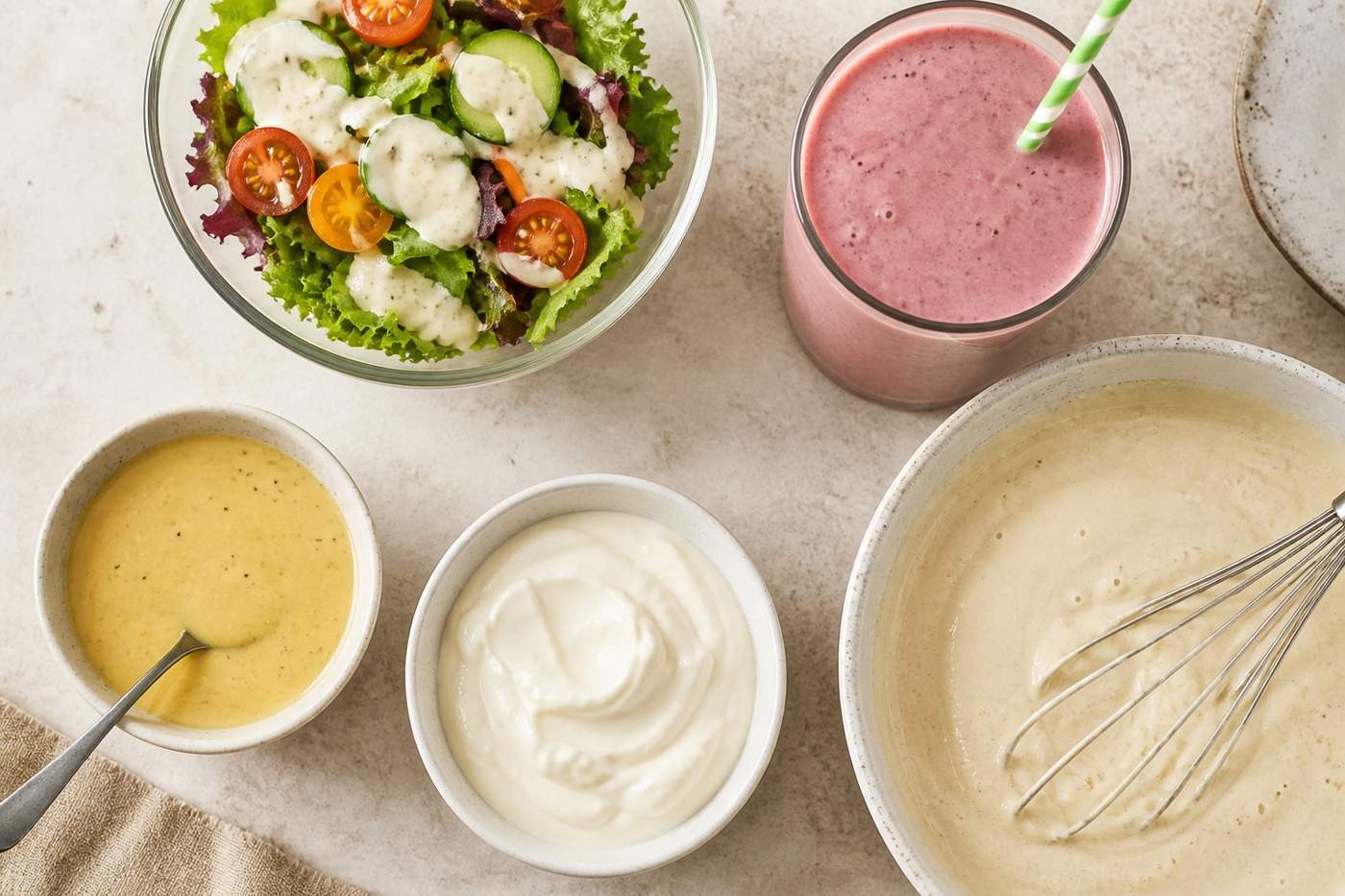
Common food uses: sauces, dressings, drinks, and gluten-free mixes benefit from stable texture.
| Application | Typical role | What the user notices |
| Dressings and sauces | Thickener and stabilizer | A pourable product that looks more uniform. |
| Gluten-free baking | Structure and water management | Dough or batter that holds together more reliably. |
| Beverages and smoothies | Suspending agent | Fewer settled particles and a fuller mouthfeel. |
| Frozen desserts | Texture support | A smoother, more consistent feel. |
| Cuidado personal | Rheology modifier | A cream, gel, or shampoo that dispenses cleanly. |
| Industrial liquids | Viscosity control | Better flow control and particle suspension. |
Aplicaciones en Alimentos y Bebidas
In foods, xanthan gum often keeps water, oil, and fine particles from separating too quickly. It appears in salad dressings, sauces, gravies, soups, dairy alternatives, syrups, ice cream, and beverages. A small amount can create a noticeable change because the polymer hydrates efficiently.For product-specific food applications, see Honry Chemical’s Food & Beverage Solutions.
It is especially familiar in gluten-free products. Gluten normally contributes stretch and structure to wheat-based dough. Xanthan gum cannot recreate gluten exactly, but it can help a gluten-free batter retain gas, hold moisture, and feel less crumbly after baking. The proper amount is recipe-specific; too much can make a product feel overly gummy.
Personal-Care and Pharmaceutical Applications
The same thickening and stabilizing behavior makes xanthan gum useful in toothpaste, lotions, creams, shampoo, and some liquid medicines. It can keep an emulsion from looking broken and can help a product flow from a tube or pump. These uses are functional. They do not make xanthan gum an active treatment by itself.
Aplicaciones industriales
Outside consumer products, xanthan gum is valued for viscosity and suspension. It may be used in cleaners, coatings, agricultural formulations, and drilling fluids. A formulation team evaluates grade, salt tolerance, shear behavior, temperature stability, and regulatory fit for the intended market. Food-grade material should not be assumed to be interchangeable with every industrial grade.
Xanthan Gum Benefits: Practical, Not Magical
Xanthan gum benefits are mainly functional. It helps manufacturers and home cooks achieve a target texture with a low inclusion rate. For consumers, the most visible benefits are a smoother sauce, a dressing that stays mixed, or a gluten-free product that holds together better.
- Efficient thickening: a small amount can increase viscosity significantly.
- Stability: it helps limit separation in mixed liquids and emulsions.
- Suspension: it can keep spices, cocoa, pulp, or other fine solids more evenly distributed.
- Gluten-free structure: it can improve cohesion and moisture retention in suitable formulas.
- Process flexibility: it works across a useful range of acidity and temperature conditions.
Some discussions frame xanthan gum as a health supplement because it behaves somewhat like a gel-forming carbohydrate in the digestive tract. Evidence for health outcomes from the small quantities found in foods is limited. It is wiser to separate its proven formulation role from broader claims about cholesterol, blood sugar, weight, or gut health.
For a product developer, the practical question is usually not “Does xanthan gum make a product healthy?” It is “Does it deliver the desired texture, stability, label position, processing performance, and cost profile?” Those are distinct decisions.
Is Xanthan Gum Safe?
For most people, xanthan gum in ordinary food amounts is generally considered safe. U.S. regulations permit its use as a food additive under good manufacturing practice for functions including stabilizing, emulsifying, thickening, suspending, bodying, and foam enhancement. Safety still depends on the product, amount, route of exposure, and individual situation.
Food Amounts Versus Concentrated Products
Packaged foods usually contain xanthan gum at low levels. A concentrated powder or supplement is different from a serving of salad dressing or a slice of gluten-free bread. Larger intakes can have a laxative-like effect because the gum holds water in the digestive tract. Gas, bloating, softer stools, abdominal discomfort, or diarrhea may occur in some people.
Do not use a food thickener as a self-directed treatment for constipation, blood sugar control, or another medical condition. If a product is marketed for a swallowing problem or another health use, follow its label and consult an appropriate clinician or pharmacist. People using diabetes medicines or planning surgery should ask a clinician before taking concentrated amounts, as precaution is sensible when blood-sugar effects are a concern.
Allergies and Special Populations
The fermentation feedstock can matter for people with severe allergies. Xanthan gum is often made from a corn-derived sugar, but other sources may be used. The finished gum is a fermentation product, not the original crop itself; however, people with serious corn, wheat, soy, or dairy allergies should ask the manufacturer about the specific source and allergen controls rather than guessing from a generic ingredient label.
Premature infants are a separate high-risk group. Xanthan-gum-based thickening products have been linked to safety concerns in premature infants, so these products should never be used for infants unless a qualified medical team specifically directs it. Powder should also be handled to avoid inhalation, especially in workplace settings.
A Sensible Consumer Rule
If you tolerate foods containing xanthan gum, there is usually no reason to fear it. If you repeatedly notice digestive symptoms after a particular product, consider the whole formula and serving size first. Keep a simple food-and-symptom record, then discuss persistent symptoms with a qualified clinician. Do not assume one ingredient is the cause without evidence.
Guar Gum vs. Xanthan Gum
Guar gum vs. xanthan gum is a common comparison because both are hydrocolloids used to thicken foods. They are not the same material. Guar gum comes from guar beans, while xanthan gum is produced by fermentation. Their flow behavior, tolerance of processing conditions, and best applications can differ.
| Factor | Xanthan gum | Guar gum |
| Origin | Fermentation product made by Xanthomonas campestris. | Plant-derived gum from guar beans. |
| Typical strength | Builds viscosity effectively at low levels. | Also thickens strongly; performance depends on the system. |
| Processing behavior | Often selected for broad pH, temperature, and shear tolerance. | Can be useful in many foods, but may respond differently to heat, acidity, and shear. |
| Common uses | Dressings, beverages, sauces, gluten-free baking, personal care. | Baked goods, dairy, sauces, and frozen products. |
| Best choice | When stable suspension and predictable flow are priorities. | When a plant-based thickener suits the formula and desired texture. |
Neither gum is automatically “better.” A developer may use one, the other, or a blend. Start with the product goal: a pourable dressing needs different rheology from a spoonable dessert or a gluten-free dough. Bench trials are more useful than choosing solely by a generic substitution ratio.
How to Read Xanthan Gum on a Label
An ingredient list tells you xanthan gum is present, but it rarely tells you the exact amount or source. In a packaged food, it is generally there for texture, stability, or suspension. Its appearance does not automatically tell you whether the entire product is nutritious, highly processed, allergen-safe, or suited to a particular diet.
Read the product as a whole. For example, a salad dressing containing xanthan gum may also contain oils, sugars, salt, flavorings, and allergens. A gluten-free bread may use xanthan gum to improve structure, but its fiber and protein quality come from the flour blend and other ingredients. The gum is one tool in a larger formula.
For Everyday Food Shoppers
Most shoppers do not need to avoid xanthan gum simply because the word is unfamiliar. If you are comfortable with the food and do not experience symptoms, the ingredient does not need special attention. If you follow a strict allergen protocol or have a medical dietary plan, choose products that provide the labeling and manufacturer information you need.
People who are troubleshooting symptoms should avoid turning an ingredient list into a diagnosis. One product can contain several gums, fibers, sweeteners, dairy ingredients, or high-fat components. A clinician or registered dietitian can help identify patterns safely when symptoms are persistent or restrictive eating is becoming difficult.
For Home Cooks
When buying xanthan gum for a kitchen, select food-grade powder from a supplier that provides clear storage and use information. Keep it dry, tightly closed, and away from moisture. Use clean, dry measuring tools. Small amounts are usually enough, so a compact package can last a long time when stored correctly.
A home recipe is also a texture experiment. Add the powder gradually and give the mixture time to hydrate before deciding whether to add more. Cold sauces, hot sauces, batters, and frozen mixtures can respond differently. Notes on the amount, mixing method, and final texture make future batches easier to improve.
Choosing the Right Xanthan Gum Grade for Product Development
A label may simply say “xanthan gum,” but technical purchasing involves more detail. Product teams normally define viscosity, particle size, microbial limits, moisture, ash, pH behavior, and dispersibility expectations. They also decide whether the ingredient needs a particular certification, allergen statement, origin declaration, or market-specific documentation.
Match the Grade to the Process
A fast-mixing beverage line may prioritize rapid dispersion and suspension without a heavy mouthfeel. A sauce may need body after heating and cooling. A dry blend may need a particle size that mixes uniformly with flour or sugar. A personal-care gel may need a different rheology target from a food product. Requesting a “standard xanthan gum” without process details can lead to avoidable trials.
Technical data sheets help start the discussion, but they do not replace a pilot run. Evaluate the gum at expected use levels in the actual water quality, salt level, acid level, and thermal process. Compare the result after manufacture, after storage, and after temperature cycling when the product will face refrigeration or freezing.
Ask the Questions That Protect Consistency
| Question for a supplier | Why it is useful |
| What is the viscosity specification and test method? | It allows results to be compared between lots and suppliers. |
| How should this grade be dispersed? | It reduces fish-eyes, lumps, and long mixing times. |
| Which certifications or statements are available? | It supports market, customer, and allergen requirements. |
| What storage conditions and shelf life apply? | It helps preserve performance before production. |
| Can you support an application trial? | It moves the decision from assumption to measured evidence. |
A supplier should be able to explain the intended use of its grade without making unsupported health claims. When your team needs food-grade documentation or a technical starting point, learn more about Honry Chemical before including a supplier in your evaluation process alongside your own quality requirements.
Common Xanthan Gum Mistakes to Avoid
Mistake 1: Treating It Like a Nutrition Supplement
Xanthan gum can affect the thickness of digestive contents at high intakes, but that does not make it a substitute for medical care, a balanced diet, or prescribed treatment. Claims about weight management, cholesterol, or blood sugar require a higher evidence standard than a food-texture claim. Use it for its demonstrated formulation purpose unless a clinician provides a different recommendation.
Mistake 2: Adding Too Much
Overuse is easy because the powder is potent. Too much can make a drink slick, a sauce stringy, or a baked item rubbery. It can also increase the chance of digestive discomfort. Use a tested level, weigh carefully when possible, and change one variable at a time during development.
Mistake 3: Ignoring Dispersion Technique
A good gum can still perform poorly when it is not dispersed well. Lumps trap dry powder inside a hydrated outer shell. Preblending with dry ingredients or using strong agitation helps prevent this problem. In a production setting, addition order and shear conditions should be written into the batch procedure.
Mistake 4: Assuming Every Gum Is Interchangeable
Guar gum, locust bean gum, carrageenan, starches, pectin, and cellulose derivatives each have their own strengths. Switching materials may change viscosity, flavor release, freeze-thaw stability, clarity, and cost. A formula revision deserves testing, even when two ingredients share the word “gum.”
Storage, Handling, and Quality Basics
Xanthan gum powder should be stored in a cool, dry place in a sealed package. Moisture can create clumps and make weighing less accurate. Keep open containers clean, close them promptly, and follow the supplier’s shelf-life and storage instructions. In commercial operations, retain lot information so any performance question can be traced.
Avoid creating airborne dust. Staff who handle fine powders should follow site safety practices, including suitable ventilation and personal protective equipment. The concern is not ordinary consumption in food; it is unnecessary powder exposure during handling. Good housekeeping also prevents cross-contact and keeps production areas easier to clean.
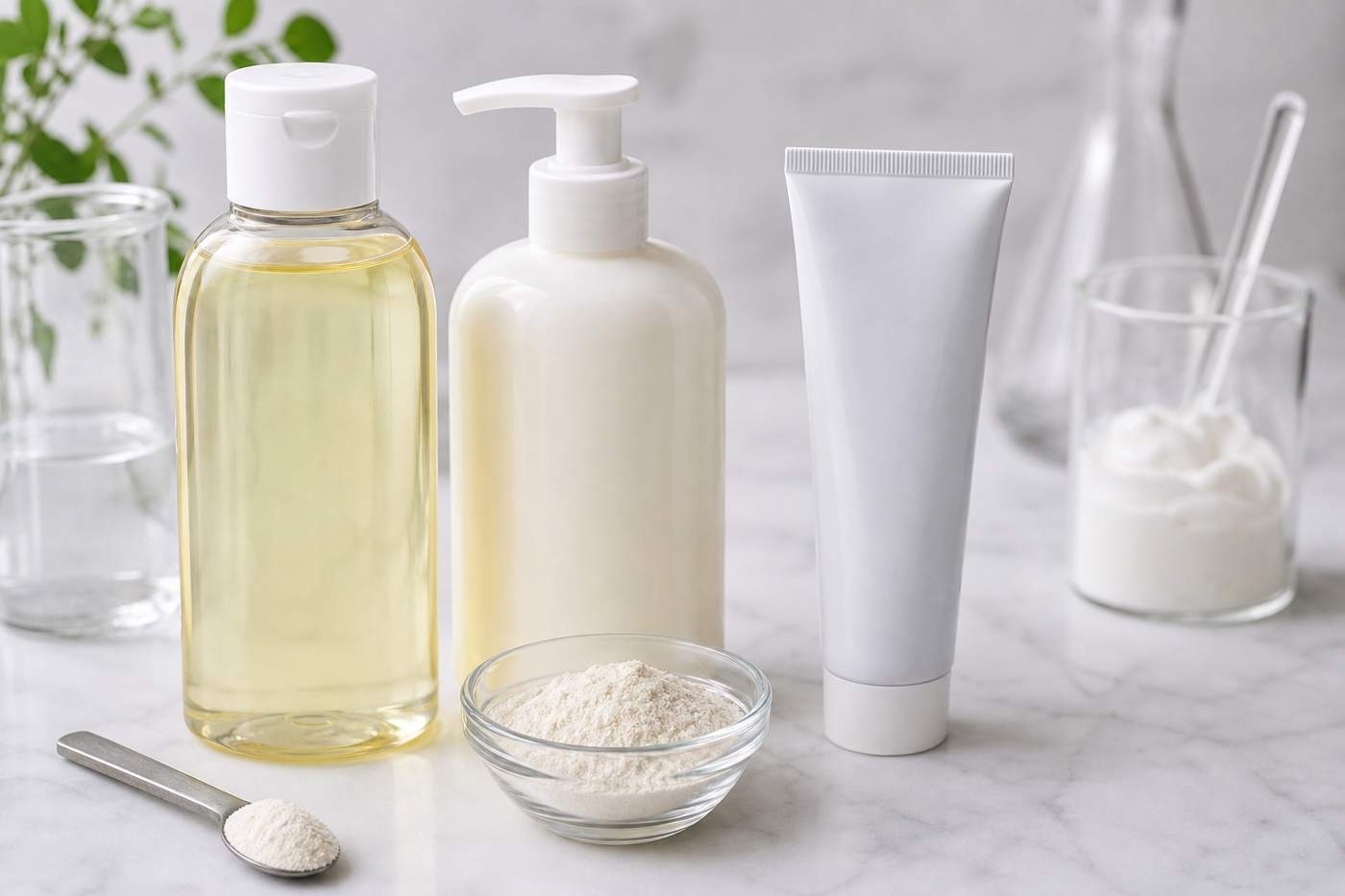
Beyond food, xanthan gum helps personal-care products maintain a stable, easy-to-dispense texture.
How to Choose a Food-Grade Xanthan Gum Supplier
A dependable xanthan gum supply decision goes beyond price per kilogram. Ask whether the material is suitable for the intended use, target market, and processing conditions. A food formula needs food-grade documentation and clear specifications; an industrial project may need a different grade entirely.
- Confirm the grade, intended application, and applicable food-contact or food-additive requirements.
- Request a specification sheet, certificate of analysis, microbiological information, and allergen statement when relevant.
- Discuss viscosity grade, particle size, hydration method, and dispersibility before scaling a formula.
- Ask about traceability, packaging, storage conditions, shelf life, and lot-to-lot consistency.
- Run pilot tests in the real formula, especially where salt, acid, heat, freezing, or shear are important.
For sourcing support and product discussions, visit [Honry Chemical](https://www.honrychemical.com/). A technical conversation should begin with the finished product goal, not only the name of an ingredient.
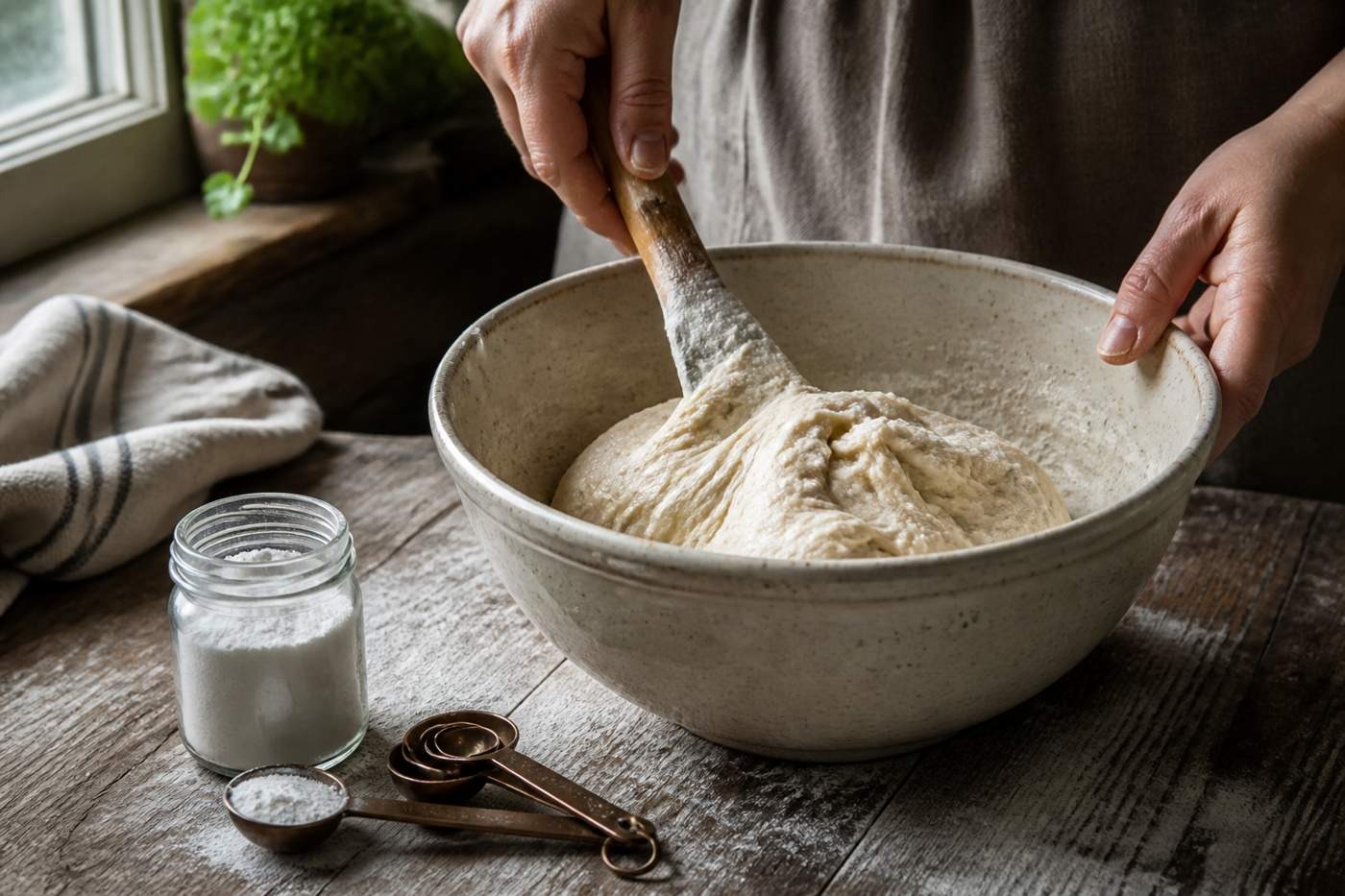
In gluten-free baking, xanthan gum can improve cohesion, but the right level must be tested for the recipe.
How to Use Xanthan Gum in a Formula or Recipe
Disperse It Before It Hydrates
The most common practical mistake is adding xanthan gum directly into still water. Its outer surface can hydrate quickly and form lumps around dry powder. Better options include premixing it with other dry ingredients, dispersing it in oil when the formula allows, or adding it slowly into a well-agitated liquid.
Start Small and Test
More is not automatically better. Start from a credible formulation guideline or tested recipe, then evaluate viscosity, pour, mouthfeel, stability, and flavor release. A product can move from smooth to slimy or overly elastic when the level is too high. In commercial development, record the grade, batch, temperature, mixing speed, and timing so results can be repeated.
Consider the Whole System
Salt, sugar, protein, acids, fats, starches, other gums, and processing conditions change performance. A successful sauce formula may not transfer to a fruit drink. For technical grade selection and application conversations, Honry Chemical can be a starting point for obtaining specification-led information.
Common Questions About Xanthan Gum
Is xanthan gum natural or synthetic?
It is made through microbial fermentation and then purified. Descriptions such as “natural” can have regulatory and marketing meanings that vary by country, so use the applicable standard and product documentation instead of relying on a single label word.
Does xanthan gum contain gluten?
Xanthan gum itself is commonly used in gluten-free foods because it can provide structure. However, a consumer with celiac disease or a severe allergy should rely on the specific product label and manufacturer controls, especially when the fermentation sugar source or facility cross-contact matters.
Can xanthan gum replace guar gum?
Sometimes, but not as a guaranteed one-to-one replacement. The right choice depends on texture, pH, heating, freezing, salt level, and other ingredients. Test the substitute in the actual formula.
Is xanthan gum safe during pregnancy or while breastfeeding?
Ordinary food exposure is different from a concentrated supplement. Because individual health and medicines matter, discuss concentrated products or therapeutic uses with a healthcare professional.
Why does xanthan gum sometimes upset my stomach?
Higher intakes can draw water into the intestines and may cause gas, bloating, or loose stools. The reaction may also relate to the complete food, portion size, or another ingredient. Seek clinical advice for ongoing or severe symptoms.
Final Takeaway
Xanthan gum is made by fermenting sugar with Xanthomonas campestris, then recovering, drying, and milling the resulting polysaccharide. Its value lies in performance: it can thicken, stabilize, suspend, and support texture in foods and many other products.
For most people, the small amounts found in foods are considered safe. Concentrated use, serious allergies, infant products, and medical concerns deserve extra care. For formulators, the best path is simple: define the finished product target, select a suitable food-grade material, and validate it in the real system.
