 Loncat ke konten


Is sugar ruining your healthy food products? Demand for low-calorie alternatives is rising fast.
You need a clean, zero-calorie solution. Erythritol perfectly meets these strict consumer expectations.
In this post, you will learn how to use erythritol in sugar-free product formulations.
We explore particle sizes and overcome common issues.
Understanding the Ultimate Zero Calorie Sweetener
Before diving into particle sizes and formulation tricks, you must understand how this ingredient actually works. Erythritol is a naturally occurring polyol, commonly known as a sugar alcohol. Manufacturers produce it through a highly efficient natural fermentation process. Yeast-like fungi, such as Moniliella pollinis, ferment glucose derived from corn or wheat starch to create this versatile molecule.
Its nutritional profile makes it a highly sought-after zero calorie sweetener. It delivers only 0 to 0.2 kcal/g. Compare this to traditional table sugar, which packs 4 kcal/g. It also boasts a glycemic index of zero. It will not spike blood glucose or insulin levels. This makes it perfectly keto-friendly and highly suitable for diabetic diets.
Consumers often worry about stomach upset from sugar alcohols. Erythritol solves this problem easily. It has the highest digestive tolerance among all polyols. Adults can comfortably consume up to 0.8g per kg of body weight without experiencing laxative effects. It is far gentler on sensitive stomachs than maltitol or sorbitol. Dentists also favor it because it is non-cariogenic. It actively protects tooth enamel and prevents decay.
| Feature | Erythritol | Table Sugar (Sucrose) | Maltitol |
|---|---|---|---|
| Calories (kcal/g) | 0 – 0.2 | 4.0 | 2.1 |
| Glycemic Index (GI) | 0 | 65 | 35 |
| Digestive Tolerance | High (0.8g/kg) | Tinggi | Low to Medium |
| Tooth Friendly | Yes | No | Yes |
Why Erythritol is Essential for Sugar-Free Product Formulations
Mastering how to use erythritol in sugar-free product formulations requires ingredients delivering a clean, sugar-like taste. Erythritol provides about 60% to 70% of the sweetness of sucrose. It entirely lacks the bitter or metallic aftertaste commonly found in artificial alternatives. Formulators often use it as a simple bulk replacement. They blend it synergistically for optimal results. A common industry golden ratio mixes 99% erythritol and 1% high-intensity sweeteners like stevia or monk fruit. This matches sugar’s exact sweetness curve perfectly.
Heat stability is another major advantage for food manufacturers. It has a high melting point of 121°C (250°F). You can boil, bake, or extrude it without losing sweetness or degrading the molecular structure. It does not undergo the Maillard reaction. This means it will not brown like regular sugar during baking. You may need slight recipe adjustments, like adding allulose, to achieve a golden crust color.
Sourcing reliable bulk erythritol guarantees consistent quality across your production lines. At SOHO Honry Chemical, we support global food and beverage companies with premium ingredients. Our R&D team includes over 25 technicians led by two PhDs. We collaborate closely alongside top institutions like Nanjing Agricultural University. Our factory operates under strict FSSC, BRC, ISO, and GMP certifications. Every batch meets rigorous Eurofin and SGS testing standards. We provide NON-GMO, HALAL, and ALLERGEN FREE ingredients to ensure your final products remain safe, competitive, and healthy.
Selecting the Right Particle Size: 30 Mesh vs. 60 Mesh
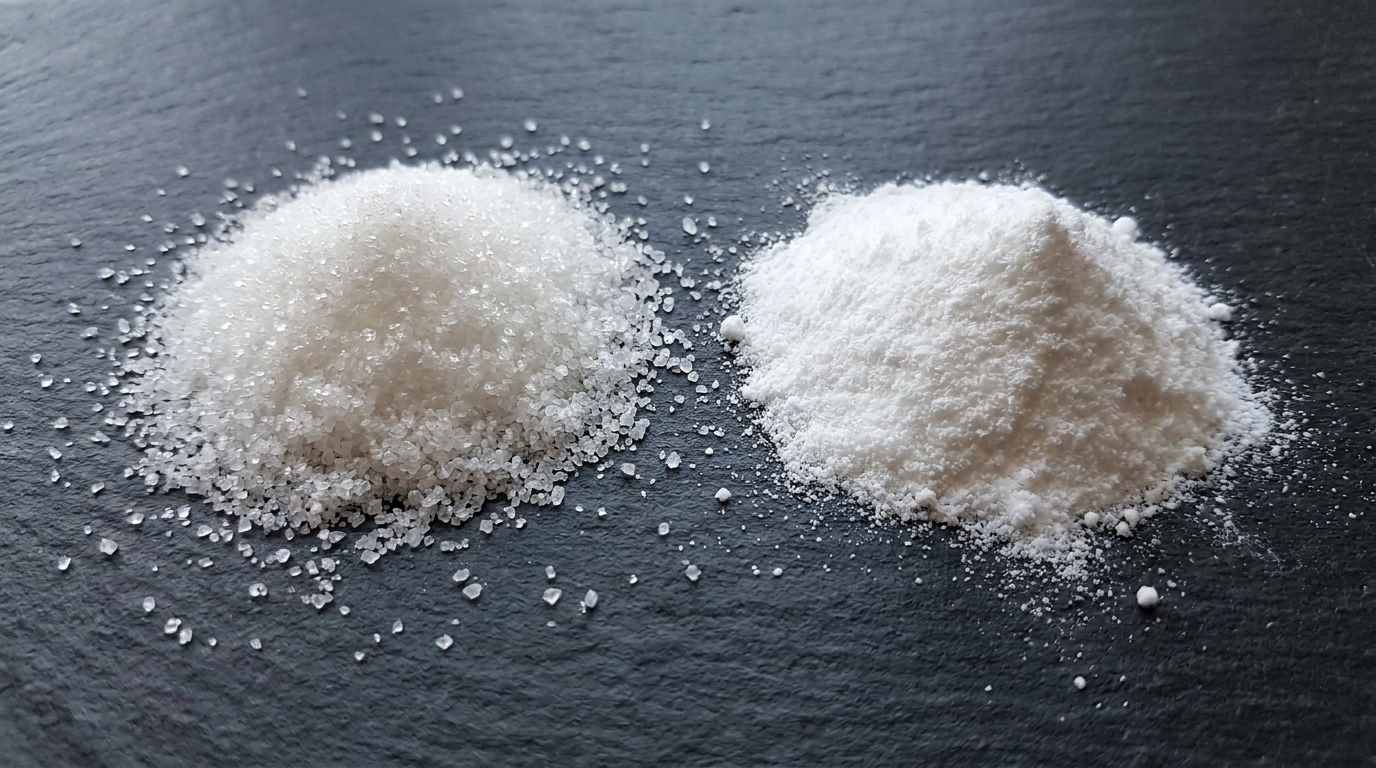
You secured a reliable source for your bulk ingredient. Now you face another critical choice. Mastering how to use erythritol in sugar-free product formulations requires the correct physical format. Particle size heavily dictates texture, mouthfeel, and solubility. As we covered earlier, this polyol boasts excellent heat stability. However, its solubility sits at only 37% at room temperature. If you choose the wrong particle size, you risk unwanted crystallization. Customers strongly dislike gritty textures in smooth products. Selecting the proper mesh size solves this exact problem.
Applications for 30 Mesh Erythritol
Let us look at the larger granular option first. Formulators often rely on 30 mesh erythritol when they need a traditional sugar-like crunch. These larger crystals mimic the exact mouthfeel of regular table sugar. It works perfectly for tabletop sweetener packets and dry beverage mixes.
You will also use it extensively in baked goods. It provides necessary bulk and structure to cookies or cakes. Because it has very low hygroscopicity, it will not absorb moisture from the air. This keeps your baked products highly stable on the shelf. Certain hard candies also benefit from this specific size. The larger granules help manufacturers control the crystallization process during cooling.
Applications for 60 Mesh Erythritol
Sometimes your recipe demands a flawlessly smooth finish. This is where 60 mesh erythritol becomes absolutely essential. The finer powder dissolves much faster in liquids. You easily avoid gritty textures in zero-calorie beverages and syrups.
We highly recommend it for delicate applications. Use it in chocolates, gummy candies, and smooth sauces. Finer particles dissolve rapidly on the tongue. This quick dissolution highlights the clean sweetness and endothermic cooling effect. It pairs exceptionally well with mint or citrus flavor profiles. If you formulate frozen desserts, the finer mesh integrates seamlessly. It aids in freezing point depression without leaving sandy residues behind.
| Ukuran Partikel | Key Characteristics | Ideal Formulations |
|---|---|---|
| 30 Mesh | Granular, slower dissolution, sugar-like crunch | Baked goods, tabletop sweeteners, hard candies |
| 60 Mesh | Fine powder, rapid dissolution, smooth mouthfeel | Beverages, chocolates, gummies, sauces, ice cream |
Practical Applications: How to Use Erythritol in Sugar-Free Product Formulations

You now understand how particle sizes impact texture and mouthfeel. Let us apply this knowledge directly to your production lines. Learning how to use erythritol in sugar-free product formulations starts with a basic rule. This ingredient delivers about 60% to 70% of the sweetness of sucrose. You cannot simply swap it gram-for-gram and expect the same taste.
It functions primarily as a highly effective bulk displacement ingredient. Formulators replace the physical volume of sugar first. Then, they adjust the sweetness curve using complementary ingredients. This two-step approach guarantees your final product maintains the correct weight, texture, and flavor profile.
Formulating Sugar-Free Beverages
Liquid formats present unique manufacturing challenges. As we covered earlier, this polyol has lower solubility at room temperature compared to regular sugar. You must maximize solubility to prevent unwanted crystallization in syrups, sauces, or zero-calorie drinks. Always utilize the finer powder formats for these applications. Heating the liquid during the mixing phase also significantly increases solubility.
To achieve a perfect 1:1 sugar sweetness ratio, you must blend it. Formulators combine it synergistically with high-intensity sweeteners (HIS). Stevia and monk fruit work exceptionally well here. The polyol effectively masks the metallic or bitter aftertaste often associated with HIS. The industry standard “golden ratio” blends 99% erythritol and 1% high-intensity sweetener. This creates a convenient plug-and-play sugar replacement for beverage manufacturers.
Baking and Confectionery Formulations
Baked goods rely heavily on sugar for more than just taste. Sugar provides essential bulk, structure, and moisture. Managing these bulking properties ensures your cakes and cookies maintain structural integrity. Because this ingredient lacks the Maillard reaction, baked goods will not naturally brown. You can easily solve this. Just add small amounts of allulose or protein to achieve a golden-brown crust.
In soft-baked goods, combine it with a humectant like vegetable glycerin or polydextrose. This prevents the final product from becoming too dry or brittle over time.
Confectionery applications require careful temperature management. In chocolates and gummy candies, you must balance its natural endothermic cooling effect. It absorbs heat when dissolving on the tongue. This creates a distinct minty sensation. This cooling effect pairs perfectly with citrus or mint flavors. However, if you formulate a rich chocolate or caramel, you must mask this sensation using specific fats or fibers. For chocolate production, ensure fine grinding under 20 microns. This guarantees a clean “snap” without any gritty residue.
| Common Formulation Issue | Primary Application | Practical Solution |
|---|---|---|
| Crystallization / Grittiness | Beverages, Syrups, Sauces | Use fine mesh formats, increase mixing temperatures, or add stabilizers. |
| Lack of Surface Browning | Baked Goods, Pastries | Introduce small percentages of allulose or milk proteins to trigger browning. |
| Unwanted Minty Sensation | Chocolates, Caramel Candies | Mask using specific dietary fibers, fats, or adjust flavor pairings. |
| Dry or Brittle Texture | Soft Cookies, Cakes | Incorporate a humectant like vegetable glycerin to retain internal moisture. |
Human Nutrition and Pharmaceutical Ingredients
Formulators also rely heavily on this ingredient outside traditional food categories. Vitamins, plant extracts, and active pharmaceutical ingredients (APIs) often carry harsh, bitter off-notes. Erythritol effectively masks these unpleasant flavors. It provides a clean, neutral sweetness profile without adding calories.
You will find it used extensively in sports nutrition powders, chewable supplements, and medicated lozenges. Its non-cariogenic nature makes it absolutely ideal for chewable formats. It actively protects dental health while improving patient compliance through better taste.
Developing sensitive pharmaceutical or nutritional formulas requires rigorous quality control. You need reliable technical support from a professional partnership team. Our R&D team collaborates deeply with top institutions like China Pharmaceutical University. We ensure your ingredient solutions meet exact specifications. We test every single batch against strict Eurofin and SGS standards. This guarantees your formulations remain safe, effective, and highly competitive in the global market.
Troubleshooting Common Issues When Using Bulk Erythritol
Developing high-quality nutritional and food products requires strict quality control, as we just discussed. Even with premium ingredients, manufacturers often face technical hurdles on the production line. Mastering how to use erythritol in sugar-free product formulations means knowing how to troubleshoot these physical challenges effectively. When you understand its unique chemical properties, you can easily prevent texture and flavor issues.
Preventing Crystallization in Liquids
You might occasionally notice a gritty texture in your syrups or sauces. This happens because this polyol has a relatively low solubility rate. It only dissolves up to 37% at room temperature. When your heated liquid cools down, the molecules quickly recrystallize. You can prevent this unwanted grittiness by strictly controlling your total concentration. Never exceed its maximum solubility threshold in the water phase.
For higher concentration syrups, you must combine it with other ingredients. Adding hydrocolloids provides an excellent solution. Xanthan gum and pectin help suspend the molecules. You can also blend it with a small amount of allulose or liquid glycerin. These additions disrupt the crystal lattice formation. They keep your liquid products perfectly smooth and shelf-stable.
Minimizing the Cooling Effect
We covered the endothermic cooling effect earlier. It drops the temperature in the mouth when it dissolves. This works beautifully for mints but ruins a warm bakery item. To minimize this minty mouthfeel in dry formulations, you must reduce the total bulk erythritol load. You achieve this by blending it with other functional ingredients.
Dietary fibers offer a perfect fix. Inulin and polydextrose add the necessary bulk without triggering any cooling sensation. You can also mask the effect using specific fats. Cocoa butter and heavy cream work exceptionally well. Fat physically coats the tongue during consumption. This slows down the dissolution rate and completely hides the cold sensation.
Mastering Moisture Management
Moisture control directly dictates your product’s shelf life. Erythritol exhibits very low hygroscopicity. It simply will not absorb moisture from the air. It stays completely dry even at 90% relative humidity. This characteristic is fantastic for hard candies or crisp cookies. They stay crunchy much longer on the shelf.
However, this presents a real challenge for soft-baked goods. Cakes and soft cookies can dry out rapidly. They lose their tender crumb structure over time. To fix this moisture retention issue, always pair it with a strong humectant. Vegetable glycerin serves this purpose perfectly. It actively holds onto water molecules within the matrix. This keeps your final product soft, fresh, and highly competitive.
| Production Challenge | Underlying Cause | Effective Formulation Fix |
|---|---|---|
| Gritty Texture | Low solubility causes rapid recrystallization as liquids cool. | Control concentration limits. Add hydrocolloids like xanthan gum. |
| Minty Mouthfeel | High negative heat of solution (-42.9 cal/g). | Reduce total load using inulin. Mask using fats like cocoa butter. |
| Stale or Dry Crumb | Very low hygroscopicity prevents moisture absorption. | Incorporate strong humectants like vegetable glycerin. |
Sourcing from a Professional Global Ingredients Solution Supplier
You just learned how to troubleshoot common physical challenges on the production line. However, mastering how to use erythritol in sugar-free product formulations starts long before the mixing phase. It begins directly with your supply chain.
The quality and consistency of your raw materials dictate your final product’s success. If your base ingredient contains impurities, your formulations will suffer. Inconsistent particle sizes will ruin your carefully planned textures. Even the best hydrocolloids cannot fix a poor-quality batch. You need a reliable global partner. Consistent purity ensures your syrups stay smooth and your baked goods retain perfect moisture.
SOHO Honry Chemical’s R&D and Quality Assurance
We continuously offer advanced ingredient solutions for global manufacturers. SOHO Honry Chemical helps you create safe, competitive, and healthy products. We specialize across multiple demanding sectors. These include Food & Beverage, Human Nutrition, and Pharmaceutical Ingredients.
Technology and innovation form our core strengths. We leverage deep cooperation with top academic institutions. We partner closely with Nanjing Agricultural University and China Pharmaceutical University. Our robust R&D team features over 25 skilled technicians. Two experienced PhDs lead this dedicated group. They ensure we consistently deliver innovative and highly safe product solutions.
You cannot compromise on safety or compliance. We guarantee exceptional quality across all manufacturing stages. Our facilities utilize advanced industry testing equipment. We provide detailed testing reports against strict Eurofin and SGS standards.
Our global supply chain operates under the highest regulatory frameworks. We manufacture your ingredients in FDA and GMP certified facilities. We also maintain comprehensive factory and product certifications to support your specific label claims.
- Factory Certifications: FSSC, BRC, ISO, and GMP.
- Product Qualifications: HALAL, KOSHER, NON-GMO, and ALLERGEN FREE.
- Third-Party Verification: Annual audits ensure complete transparency and trust.
This rigorous quality control actively protects your brand reputation. It ensures your final formulations always meet strict consumer expectations worldwide.
Kesimpulan
Using erythritol correctly is vital for sugar-free product formulations. Zero-calorie sweeteners will keep growing in global health markets. Partner with SOHO Honry Chemical for your next project. We offer premium ingredients and expert R&D support.
- Evaluate your current recipe to find sugar replacement opportunities.
- Test different erythritol mesh sizes in your test kitchen.
- Contact our team today to request high-quality ingredient samples.
Frequently Asked Questions About How to Use Erythritol in Sugar-Free Product Formulations
How do you stop erythritol from crystallizing in syrups?
Erythritol tends to turn grainy in wet liquid mixtures. You can prevent this by blending it with other ingredients. Adding a thickener like xanthan gum helps a lot. You can also mix it with liquid sweeteners. Using finely powdered erythritol reduces the gritty texture. This keeps your jams and sauces perfectly smooth.
Why does erythritol feel cold in the mouth?
Erythritol absorbs heat when it dissolves in your mouth. This creates a distinct minty feeling on your tongue. You can mask this cold sensation quite easily. Try adding warm flavors like vanilla or caramel. Mixing it with fats or fibers also hides the chill. It actually works great with citrus or mint flavors.
Can erythritol help baked goods turn brown?
Erythritol does not cause the normal Maillard reaction. This means it will not brown like regular sugar. You can fix this by tweaking your baking recipe. Try adding a small amount of allulose. Using extra protein also helps create a golden crust. You might need to raise the baking temperature slightly.
Is erythritol safe for sensitive stomachs?
Yes, it is very gentle on the human stomach. Erythritol has the highest digestive tolerance among sugar alcohols. Adults can handle up to 0.8 grams per kilogram. Children safely tolerate up to 0.6 grams per kilogram. It avoids the laxative effects seen with maltitol. SOHO Honry Chemical provides high-quality erythritol for safe formulations.
How do you match the exact sweetness of real sugar?
Erythritol is only about 70% as sweet as sugar. You need to combine it with high-intensity sweeteners. The industry often uses a special golden ratio. Mix 99% erythritol with 1% stevia or monk fruit. This blend copies the exact sweetness of table sugar. It provides a clean taste without extra calories.
- Order a sample batch to test ingredient solubility.
- Calibrate your bakery ovens for altered heating requirements.
- Request third-party audit reports to verify ingredient safety.
- Grind granular sweeteners below 20 microns for smooth chocolate.
Erythritol is a zero-calorie sweetener perfect for sugar-free products. It offers excellent digestive tolerance and lowers water activity. Formulators must manage its cooling effect and lack of browning. Blending it with high-intensity sweeteners creates a perfect sugar match. Partnering with a reliable supplier ensures top-tier ingredient quality. SOHO Honry Chemical provides certified solutions for your manufacturing needs.
