
Demand for natural sweeteners is exploding globally.
Yet, procuring quality raw ingredients presents a massive hurdle for modern manufacturers.
Bitter aftertastes can easily ruin your entire product line.
In this post, you will learn how to source bulk stevia.
We will explore essential purity grades and evaluate suppliers.
Understanding Bulk Stevia: What You Need to Know Before Sourcing
Before you evaluate suppliers or compare purity grades, you must understand the raw material. Sourcing commercial stevia differs entirely from buying retail sweeteners. You need to know exactly how it behaves in your specific product matrix.
What is Stevia and How is it Extracted?
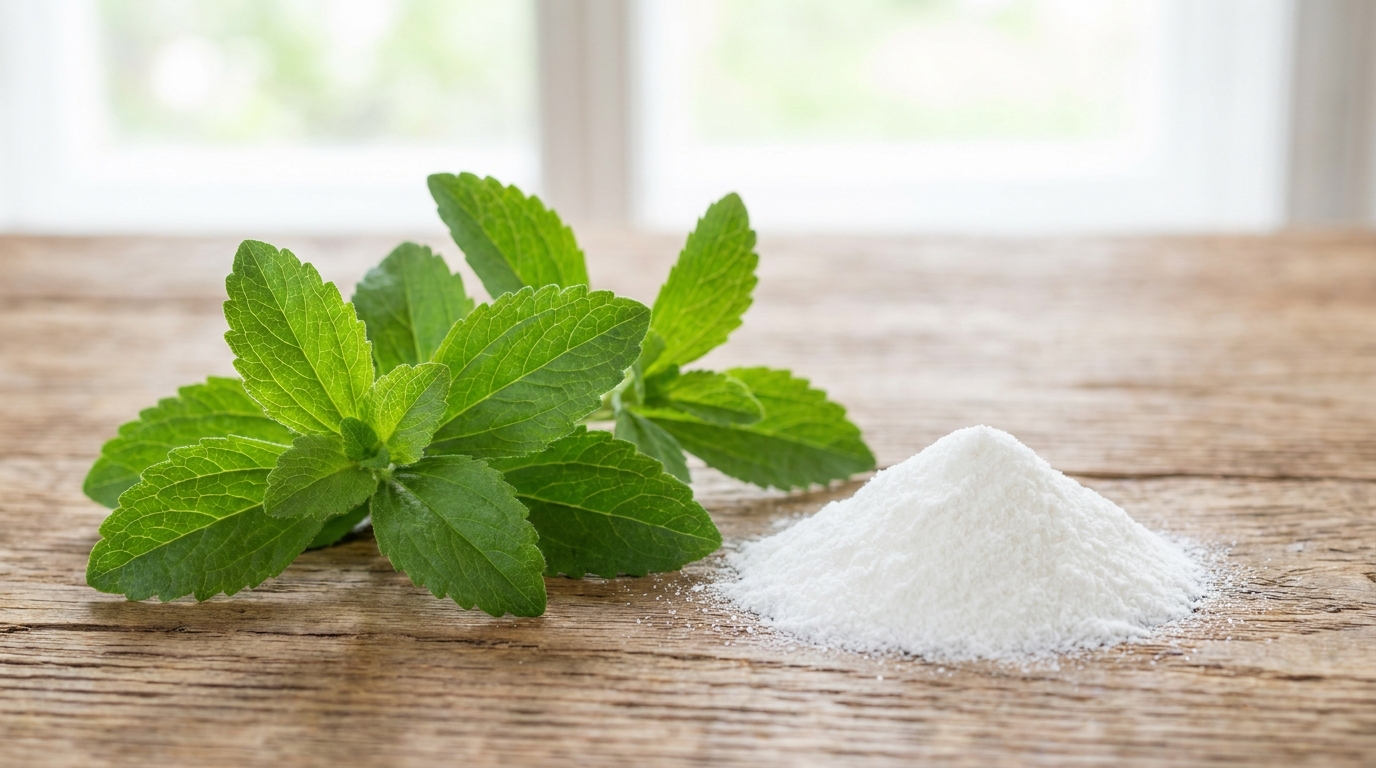
Stevia originates from the Stevia Rebaudiana Bertoni plant. Its leaves contain sweet compounds called steviol glycosides. These active components are 200 to 450 times sweeter than regular table sugar.
Commercial extraction is a highly technical process. Manufacturers typically steep the leaves in water. They then use resin absorption and solvent crystallization. This step isolates specific sweet compounds. The most common targets are Rebaudioside A (Reb A) and Stevioside (STV).
Advanced R&D plays a huge role here. Top manufacturers like SOHO Honry Chemical utilize teams of over 25 technicians. Working alongside universities like Nanjing Agricultural University, they ensure precise extraction. This rigorous process yields a clean, consistent extract.
Retail Stevia vs. Commercial Bulk Stevia Powder
You cannot formulate a commercial beverage using supermarket stevia. Retail products contain heavy fillers like erythritol or maltodextrin. These fillers add necessary bulk for everyday use. They allow consumers to measure the sweetener spoon-for-spoon like sugar.
Commercial bulk stevia powder is entirely different. It is an intensely concentrated raw ingredient. To meet regulatory standards, it must contain at least 95% Total Steviol Glycosides. Manufacturers use very small amounts during production. Typical usage levels in beverages range from 100ppm to 500ppm.
Here is a quick breakdown of the core differences:
| Cecha | Retail Stevia | Commercial Bulk Stevia |
|---|---|---|
| Skład | Mostly fillers (erythritol, maltodextrin) | 95%+ Total Steviol Glycosides (TSG) |
| Sweetness Potency | 1:1 ratio to table sugar | 200 to 450 times sweeter than sugar |
| Usage Level | Teaspoons or packets | Measured in parts per million (100-500ppm) |
| Target User | End consumers | Food and beverage manufacturers |
The Role of Stevia in Modern Formulation
Stevia does more than just sweeten drinks. It is a highly versatile commercial ingredient. Formulators use it across diverse product categories. You will find it in table sugar alternatives, savory sauces, gummy candies, and complex beverages. It also appears in feed and pharmaceutical injection formulas.
However, stevia interacts uniquely inside different product matrices. It behaves one way in acidic sodas. It acts differently inside fat-heavy sauces or protein shakes. You must test it in your final product matrix. A simple water test will not give you accurate results.
Why Sourcing the Right Type is Critical
Choosing the wrong stevia grade can ruin your product. Lower purity grades often carry a bitter, licorice-like aftertaste. This metallic flavor turns consumers away instantly.
To achieve a clean flavor profile, you need the proper glycoside blend. Sourcing high purity Reb A is often the best approach. It provides excellent sweetness and lacks a bitter tail. It remains highly stable during baking and processing.
You must also ensure you buy premium food grade ingredients. Quality suppliers provide strict certifications for every batch. Look for FSSC, BRC, ISO, and GMP credentials. You also want products verified as HALAL, KOSHER, NON-GMO, and ALLERGEN FREE. Reliable partners test their products against stringent Eurofin and SGS standards. This guarantees you receive a safe, uniform ingredient every single time.
Decoding Stevia Purity Grades: Finding the Right Fit for Your Products
As we covered earlier, selecting the wrong extract introduces unwanted metallic or licorice flavors. To prevent this, you must decode the available purity grades. Sourcing bulk stevia requires looking past basic labels. You need to understand exactly what compounds make up your raw ingredient. Let us break down these metrics so you can find the perfect match.
Total Steviol Glycosides (TSG) vs. Specific Glycosides
Total Steviol Glycosides (TSG) serves as your baseline metric. Regulatory bodies like the FDA and JECFA require a minimum of 95% TSG. This allows a product to be labeled as “Stevia Extract.” However, 95% TSG is merely the starting point.
The exact ratio of specific glycosides within that 95% dictates the flavor. A supplier might offer a 95% TSG product. But if it contains mostly Stevioside (STV), it will taste bitter. You must always request a detailed HPLC breakdown. This document reveals the exact glycoside profile instead of just the total percentage.
The Importance of Rebaudioside A
Rebaudioside A (Reb A) is the primary sweet compound targeted during extraction. Higher Reb A percentages consistently yield cleaner sweetness profiles. Industry professionals call this the “Reb A Rule.”
Standard industrial grades like RA80 or RA95 work well for basic applications. However, high purity Reb A is the true industry standard for premium products. Grades like RA97, RA98, and RA99 significantly reduce the licorice-like bitter aftertaste. Formulators often consider RA98 the gold standard. It delivers exceptional sweetness and stability without extreme costs.
Exploring Premium Glycosides: Reb M and Reb D
Sometimes formulators need an even cleaner taste profile. Rebaudioside D and Rebaudioside M offer the most sugar-like experience available. They produce virtually zero bitterness.
However, these minor glycosides exist in tiny amounts within the leaf. This scarcity makes them significantly more expensive to isolate. You must weigh this cost against your desired flavor profile. For most commercial formulations, a carefully chosen Reb A extract performs perfectly well.
Choosing Application-Specific Grades
Your end product ultimately dictates the exact grade you need. Stevia behaves differently across various manufacturing environments. You must choose the right food grade stevia for your specific product matrix.
* **Cold Beverages:** Require highly soluble grades. Powders must dissolve quickly in concentrated syrups or cold liquids.
* **Baked Goods:** Demand intense heat stability. Premium Reb A remains stable during high-temperature baking processes.
* **Acidic Drinks:** Require strict pH stability to maintain sweetness over a two to three-year shelf life.
Different product categories require specialized approaches. SOHO Honry Chemical provides tailored ingredient solutions for diverse applications. We support formulations for table sugar alternatives, savory sauces, and gummy candies. Partnering with a supplier who understands these specific matrices saves you valuable R&D time.
| Purity Grade | Primary Use Case | Profil smakowy | Cost Level |
|---|---|---|---|
| RA80 / RA95 | Standard food and beverage | Sweet, slight bitter tail | Low to Medium |
| RA97 / RA98 | Premium applications, baked goods | Very clean, minimal aftertaste | Medium to High |
| Reb M / Reb D | High-end zero-sugar products | Highly sugar-like, zero bitterness | Very High |
Key Factors in Bulk Stevia Supplier Evaluation
We just explored how specific purity grades dictate your product’s final flavor profile. You know exactly which extract fits your beverage or baked good. Now, you must secure a reliable source. Evaluating bulk stevia suppliers goes far beyond comparing price tags. You need a partner capable of delivering consistent quality. Let us examine the crucial factors for qualifying a commercial supplier.
Manufacturing Capacity and Supply Chain Stability
Sourcing bulk stevia requires steady volume. A sudden shortage can halt your entire production line. You must ensure your supplier handles large-scale demands without delays. Look for manufacturers utilizing a robust global supply chain. SOHO Honry Chemical operates as a global manufacturer and supplier. We support leading companies across diverse sectors. Our infrastructure ensures you receive raw materials precisely when needed.
Advanced Quality Control and Testing
As we covered earlier, a simple 95% TSG label does not guarantee a clean taste. You need proof of the exact glycoside breakdown. Reliable suppliers provide a detailed Certificate of Analysis (CoA). They also share comprehensive HPLC testing data. They must utilize advanced testing equipment.
SOHO Honry Chemical tests products against stringent Eurofin and SGS standards. We accept rigorous third-party audits annually. We always issue the resulting audit reports to our clients. You must verify specific facility and product certifications before signing contracts.
| Certification Category | Specific Standards | Why It Matters for Sourcing |
|---|---|---|
| Facility Safety | FSSC, BRC, ISO, GMP | Ensures hygienic, highly regulated manufacturing environments. |
| Dietary Compliance | , co gwarantuje globalną zgodność i zaufanie konsumentów. | Opens your product to diverse global consumer markets. |
| Product Purity | NON-GMO, ALLERGEN FREE | Meets strict clean-label requirements for modern consumers. |
R&D and Technical Support
Formulating commercial stevia presents unique manufacturing challenges. The ingredient interacts differently inside proteins, fats, and acidic liquids. You need more than just a raw material vendor. You need a professional partnership team.
We continuously offer ingredient solutions to create safe, competitive products. Our R&D team features over 25 technicians. Two PhDs from top universities lead this dedicated group. We maintain deep cooperation with Nanjing Agricultural University. We also partner with China Pharmaceutical University. This technical support helps you optimize rozwiązania dla żywienia ludzkiego and food formulas. They guide you through sensory panels to perfect your final matrix.
Traceability and Sustainability
Modern consumers demand absolute ingredient transparency. They want to know exactly where their ingredients originate. Your supplier must demonstrate a clear commitment to sustainable development globally. This includes ethical labor practices and clean cultivation methods.
Traceability directly protects your brand reputation. It ensures every batch links back to responsible farming methods. You should always source from partners prioritizing these core values. If you want to understand how a dedicated supplier operates, read more about us and our practices.
Essential Certifications to Look for in a Stevia Manufacturer
We just established how traceability and technical support protect your brand. Now, you must verify those claims through official documentation. Evaluating a supplier’s certifications is the final step in how to source bulk stevia safely. You cannot rely on verbal promises alone. You need hard proof of purity and compliance. Let us break down the exact credentials your manufacturing partner must hold.
Facility and Quality Management Certifications
Your supplier’s factory must maintain rigorous safety standards. A clean extraction process requires a highly regulated environment. You should always demand FSSC, BRC, and ISO certifications. These globally recognized standards guarantee proper quality management systems. Furthermore, look for GMP compliance. Good Manufacturing Practice ensures pharmaceutical-grade hygiene during production.
SOHO Honry Chemical proudly holds FSSC, BRC, ISO, and GMP certificates. Our advanced facilities handle complex chemical ingredients safely. This robust infrastructure prevents contamination. It guarantees you receive consistent raw materials for every production run.
Product-Specific Dietary Certifications
Formulating commercial products often means targeting diverse global markets. You do not want to limit your consumer base unnecessarily. Therefore, your raw ingredients must meet specific dietary laws. Sourcing HALAL and KOSHER certified extracts is non-negotiable for international brands. These certifications prove the extraction process avoids restricted substances. They also verify strict separation from non-compliant materials.
We ensure our product solutions carry both HALAL and KOSHER credentials. This allows you to scale your food and beverage lines globally. You can enter new regions without facing sudden regulatory roadblocks.
Health and Allergen Standards
Modern consumers read ingredient labels very closely. They actively avoid hidden allergens and genetically modified organisms. Your bulk stevia powder must meet these strict consumer health demands. Always verify the extract is certified NON-GMO. This proves the original Stevia Rebaudiana leaves grew naturally.
Additionally, you need an ALLERGEN FREE guarantee. Cross-contamination in a factory can trigger severe consumer reactions. Our factory meticulously controls the entire production environment. We provide NON-GMO and ALLERGEN FREE certifications for every batch. This gives you complete confidence in your clean-label claims.
| Certification Type | Specific Credentials | Primary Benefit for Manufacturers |
|---|---|---|
| Facility Safety | FSSC, BRC, ISO, GMP | Ensures pharmaceutical-grade hygiene and consistent quality control. |
| Dietary Compliance | , co gwarantuje globalną zgodność i zaufanie konsumentów. | Expands product reach into diverse global consumer markets. |
| Health Standards | NON-GMO, ALLERGEN FREE | Satisfies strict clean-label and consumer safety demands. |
Third-Party Auditing and Instant Verification
Internal testing is important, but external validation builds true trust. Reliable manufacturers never grade their own homework. They actively invite independent scrutiny. You should partner with suppliers who accept annual third-party audits. These external inspectors evaluate every aspect of the facility.
SOHO Honry Chemical embraces this operational transparency. Each year, we undergo rigorous third-party audits. We immediately issue the resulting audit reports to our clients. We also offer instant verification of our FDA and GMP certified facilities. This level of openness removes the guesswork from supplier evaluation. It proves you are receiving safe, competitive, and healthy products.
How SOHO Honry Chemical Elevates Your Stevia Sourcing Experience
We just covered the importance of third-party audits and strict certifications. Finding a supplier who meets these exact standards takes time. You need a partner who actively simplifies this process. SOHO Honry Chemical does exactly that. We elevate how you source bulk stevia.
A Trusted Global Manufacturer
We operate as a trusted global manufacturer. We supply premium chemical ingredients to clients worldwide. Our expertise spans multiple demanding industries. We specialize in Food & Beverage, Human Nutrition, and Pharmaceuticals. We also support the Personal Care and Animal Nutrition sectors. We continuously offer innovative ingredient solutions. Our primary goal remains very simple. We help you create safe, competitive, and healthy products.
Elite R&D Capabilities
Extracting the perfect steviol glycoside profile requires advanced science. You cannot rely on basic extraction methods. Innovation drives our core strengths. We maintain deep cooperation with top Chinese universities. We partner directly with Nanjing Agricultural University. We also collaborate closely with China Pharmaceutical University. This academic integration fuels our elite R&D capabilities. It allows us to push boundaries in scientific health.
An Expert Technical Team
You need more than just raw materials. You need formulation expertise. Our dedicated R&D team includes over 25 skilled technicians. Two highly experienced PhDs lead this group. They understand exactly how stevia interacts inside different product matrices. They help you eliminate bitter aftertastes completely. This technical support ensures your final product tastes perfect.
Uncompromising Quality Standards
Advanced R&D means nothing without strict manufacturing controls. As we covered earlier, facility safety dictates product consistency. Our state-of-the-art factory maintains uncompromising quality standards. We hold active FSSC, BRC, ISO, and GMP certifications. We guarantee every batch of food grade stevia meets your exact specifications.
Our facility utilizes the most advanced testing equipment available today. We provide comprehensive testing reports against Eurofin and SGS standards. You never have to guess about purity levels or glycoside ratios. We deliver total transparency for every single order.
| Your Sourcing Challenge | Our Direct Solution | The Benefit to Your Brand |
|---|---|---|
| Formulation complexity | 25+ technicians and university partnerships | Faster product development and superior taste. |
| Quality inconsistencies | FSSC, BRC, ISO, and GMP certified facilities | Reliable batch-to-batch uniformity every time. |
| Purity verification | Testing against Eurofin and SGS standards | Guaranteed glycoside profiles and absolute safety. |
Step-by-Step Guide on How to Source Bulk Stevia Effectively

We just showed how strict testing and expert R&D elevate your manufacturing process. Now, you must put this knowledge into practice. Learning how to source bulk stevia effectively requires a clear action plan. You cannot simply order the first extract you find. Let us walk through the exact steps to secure the perfect sweetener for your production line.
Step 1: Define Your Formulation Requirements
Start by analyzing your end product. You must define your exact formulation requirements before contacting any supplier. Consider the specific sweetness level you need. Will the extract go into a cold beverage or a baked good?
As we covered earlier, cold drinks require highly soluble powders. Baked goods demand excellent heat stability. Identify the right purity grade for your matrix. Do you need a standard RA95 for basic sweetening? Or does your premium product require RA98 to eliminate all bitter aftertastes? You must document these specifications clearly.
Step 2: Request and Test Samples
Never buy commercial quantities without testing first. Always request samples of high purity Reb A or your chosen grade. You must run these samples through rigorous sensory testing. A simple water test fails to show how stevia reacts alongside fats or acids.
Conduct stability trials directly inside your actual product matrix. Formulate a small batch and monitor it over time. Check for any metallic or licorice flavors. This step ensures the extract performs perfectly under real manufacturing conditions.
Step 3: Audit Documentation
Once a sample passes your sensory panel, verify the paperwork. You must audit the supplier’s documentation thoroughly. You need a detailed Certificate of Analysis (CoA) for the exact batch you tested. Look for the specific HPLC breakdown of glycosides.
Next, review their third-party audit reports. As we established, reliable manufacturers like SOHO Honry Chemical issue these reports annually. Finally, confirm all health and dietary statements. Ensure you have valid NON-GMO and Allergen-free certificates on hand. This paperwork directly protects your clean-label claims.
Step 4: Assess the Partnership Potential
The final step involves evaluating the business relationship itself. Assess the long-term partnership potential of the supplier. Do they communicate clearly and promptly? You want a partner willing to offer custom ingredient solutions. They should actively help you troubleshoot formulation challenges.
Evaluate their global supply chain reliability. A robust infrastructure prevents sudden raw material shortages. We continuously offer ingredient solutions to create safe, competitive products. Partnering with a dedicated manufacturer ensures your production lines never stop.
| Sourcing Step | Key Action Item | Primary Goal |
|---|---|---|
| 1. Define Requirements | Determine solubility, heat stability, and purity grade. | Match the raw material to your specific product matrix. |
| 2. Test Samples | Run sensory panels using high purity Reb A. | Eliminate bitter aftertastes in the final formulation. |
| 3. Audit Documentation | Verify the CoA, third-party audits, and NON-GMO status. | Ensure regulatory compliance and ingredient safety. |
| 4. Assess Partnership | Evaluate supply chain stability and R&D support. | Secure a reliable, long-term manufacturing partner. |
Wnioski
Sourcing bulk stevia requires understanding purity grades and evaluating suppliers carefully. The right ingredient partner ensures product safety, quality, and brand success. Contact SOHO Honry Chemical today for premium stevia. Our professional team provides custom solutions and free samples.
- Define your exact product sweetness and formulation requirements.
- Request a stevia sample for your sensory testing.
- Contact our technical team for a custom quote.
Frequently Asked Questions About Bulk Stevia Sourcing
Is 95% purity enough for my food product?
Most global regulations require at least 95% Total Steviol Glycosides for stevia extract labels. This purity works well for many standard industrial applications. However, you might need higher grades like RA98 for a very clean taste. Always test the specific stevia grade in your final recipe.
What is the difference between Reb A and GSG?
Rebaudioside A is a natural extract known for its stability and high sweetness. Enzyme-modified stevia, called GSG, undergoes a process to mask bitter flavors. GSG rounds out flavor profiles beautifully in many food products. However, this modified version may require different labeling on your packaging. Choose based on your specific taste goals and local labeling laws.
How do I avoid the bitter aftertaste in bulk stevia?
You can avoid bitter flavors by selecting high-purity grades like RA98 or Reb M. Lower grades often contain more Stevioside, causing a licorice-like aftertaste. Work with a reliable supplier who provides detailed HPLC breakdowns. This ensures you get the right glycoside ratio for clean sweetness.
How can I verify a bulk stevia supplier’s quality?
Look for suppliers with strong research teams and recognized safety certifications. For instance, SOHO Honry Chemical holds FSSC, BRC, ISO, and GMP certificates. You should request third-party testing reports against strict Eurofin or SGS standards. Always ask for detailed data sheets and check for Non-GMO claims.
Why is solubility important when sourcing stevia powder?
High-purity stevia powders can be difficult to dissolve in cold liquids. Poor solubility leads to uneven sweetness and gritty textures in beverages. You must select a specific stevia grade tailored to your application. Always perform sensory tests in your actual product to ensure perfect blending.
Sourcing bulk stevia requires balancing purity grades, flavor profiles, and cost. High-purity options like RA98 or Reb M offer the cleanest taste for premium products. Always verify your supplier’s certifications, such as FSSC and BRC, to guarantee safety and consistency. By understanding glycoside ratios and testing samples, you can secure the ideal sweetener for your needs.
- Request a detailed Certificate of Analysis from your top three potential vendors.
- Conduct a triangle sensory test using your specific food or beverage matrix.
- Audit the manufacturing facility for GFSI-recognized safety credentials before signing contracts.
- Consult with a formulation expert to determine the optimal dosage for your recipe.
