
A practical guide for supplement brands and buyers who source lutein in bulk.
Lutein is the pigment that colors marigold petals. It is also the pigment your retina uses to shield your vision. Open any pharmacy shelf and you will find it in eye-health gummies, softgels, and multivitamins. Open any ingredient catalog and you will find the same molecule listed as marigold extract, at five to twenty percent strength.
That gap between the label and the bulk drum is where buyers get stuck. Two suppliers quote the same grade, and the price differs by forty percent. One ships free lutein and calls it lutein. Another ships esters and never says so. Your product claims 10 mg per serving, but the powder in the drum may not deliver it.
In this post, you’ll learn what lutein really is, where it comes from, and how free lutein differs from lutein esters. You’ll see the clinical evidence in plain language, the spec lines that belong on every COA, and a sourcing checklist you can run before your next purchase order.
Quick Answer
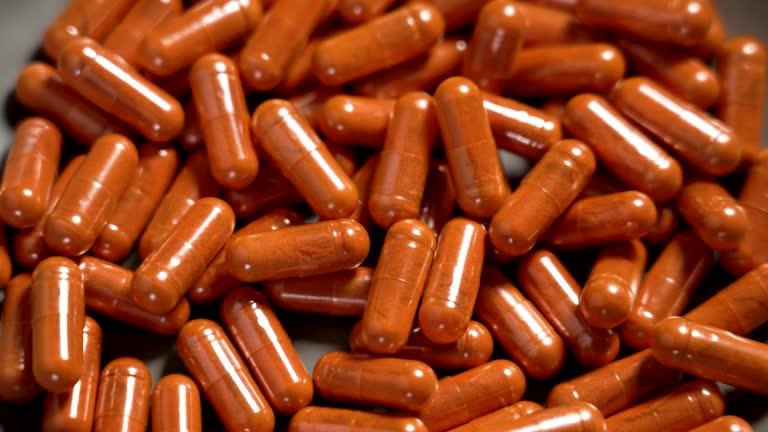
Lutein is a fat-soluble xanthophyll carotenoid that gathers in the macula of the eye. Your body cannot make it, so it must come from food or supplements. On a label it appears as lutein or as marigold extract, because Tagetes erecta flower petals are the main commercial source. Two forms dominate wholesale: free lutein, hydrolysed from the flower esters, and lutein esters, which keep their fatty-acid chains. Both raise macular pigment density, but free lutein absorbs faster and costs more. The clinical benchmark is 10 mg of lutein with 2 mg of zeaxanthin a day, taken with a meal that contains fat. Most bulk material is standardized to 5, 10, 15, or 20 percent lutein and supplied as an orange-red powder, an oil suspension, or beadlets.
What Is Lutein? The Carotenoid Behind Macular Pigment
Lutein belongs to the xanthophyll family, a small group of carotenoids that carry oxygen in their structure. Unlike beta-carotene, it never turns into vitamin A. It simply does its own work.
The Chemistry, in Plain Words
The molecule has the formula C40H56O2 and the CAS number 127-40-2. Its molecular weight is 568.87 g/mol. That sounds technical, yet it matters to a formulator. Two hydroxyl groups sit at opposite ends of the molecule. They make it slightly polar, so it dissolves in oil and ethanol and barely in water. They also anchor it inside cell membranes at a specific angle. That angle is exactly what the retina needs.
Down the middle runs a long chain of conjugated double bonds. That chain absorbs blue light between roughly 400 and 500 nm. It also quenches singlet oxygen, the reactive form that light creates inside the eye. So one molecule performs two jobs at once. It filters light, and it cleans up the damage that light leaves behind.
Why Your Body Cannot Make It
Humans lack the enzymes to build carotenoids from scratch. A plant builds lutein inside its chloroplast, starting from simple carbon compounds. Animals cannot do that. We have to eat plants, or eat animals that ate plants.
One fact controls the entire supply chain. If nobody can synthesise lutein in the body, then every milligram in a finished supplement began as a flower, a leaf, or a fermentation vessel. In practice, almost all of it begins as a marigold.
Where Lutein Comes From: Marigold Flowers, Leafy Greens, and Egg Yolks
Tagetes erecta: The Commercial Workhorse
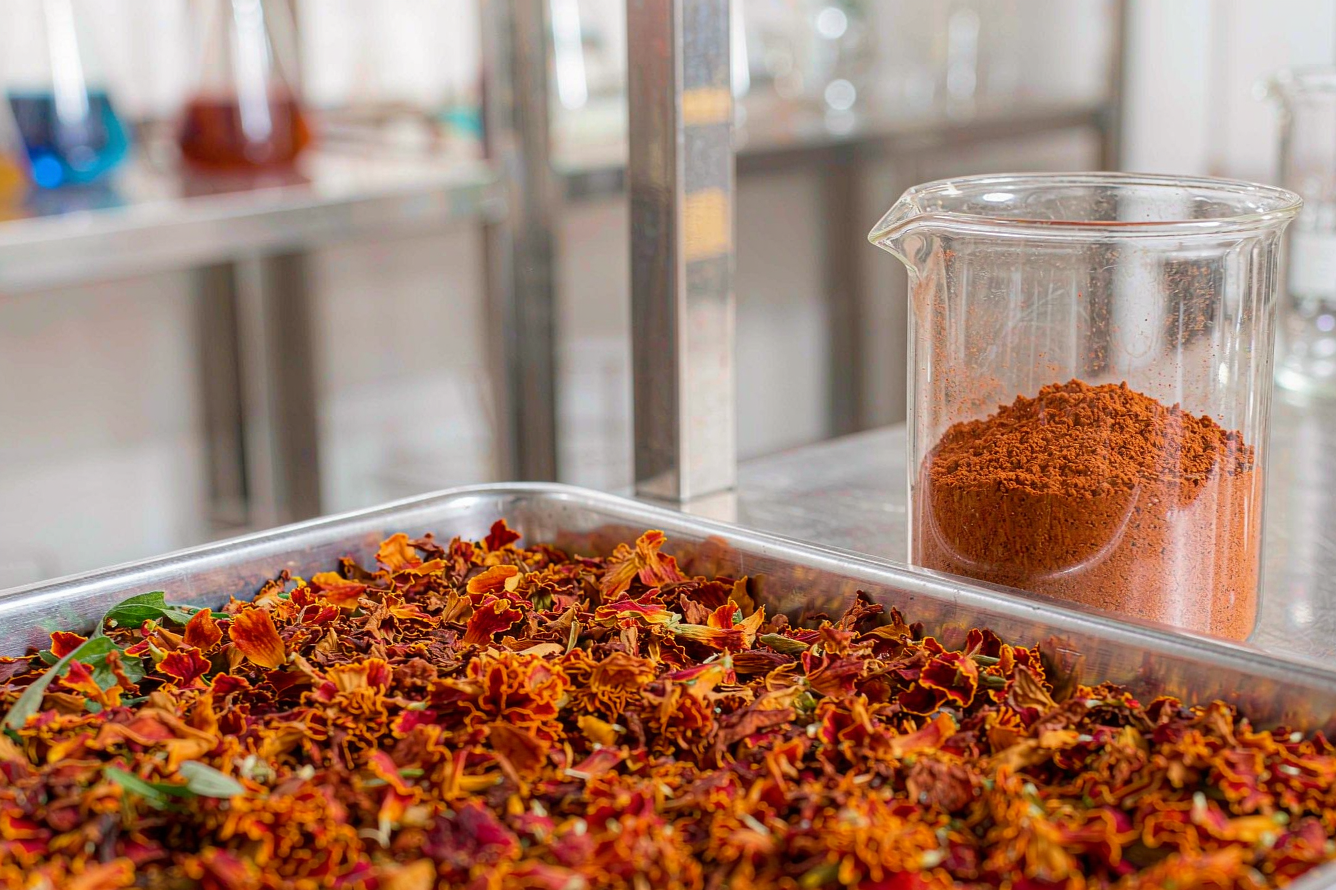
Marigold petals supply nearly all commercial lutein. The species is Tagetes erecta, also called African marigold or Aztec marigold. Growers harvest the flowers, dry the petals, and ship them to extraction plants. Dried petals can hold well over 1 percent lutein, far more than any vegetable. That density is why the flower, and not kale, became the industrial source.
The pigment in a fresh petal is not free lutein. It is lutein ester, with one or two fatty acids attached. The plant builds it that way on purpose. Esterified lutein dissolves better in the oily tissue of the petal, and it resists oxidation. Extraction plants then saponify the esters. That reaction frees the lutein so it can be purified and standardized.
Flower farming clusters in a few regions, mainly China, India, and parts of Latin America and Africa. Harvest weather, petal price, and saponification capacity all move the market. When a harvest disappoints, bulk prices follow fast.
Lutein in Everyday Food
Dietary lutein comes mostly from dark leafy greens. Egg yolk and yellow-orange produce add smaller amounts. Content shifts with variety, season, and cooking, so treat the numbers below as typical values, not fixed facts.
| Food (common serving base) | Lutein + zeaxanthin, mg per 100 g |
|---|---|
| Cooked kale | 15–18 |
| Cooked spinach | 11–13 |
| Cooked collard greens | 8–10 |
| Raw spinach | 6–8 |
| Cooked broccoli | 1.5–2 |
| Yellow sweet corn, cooked | 0.9–1.5 |
| Orange, raw | 0.13–0.2 |
| Egg yolk | ~0.15–0.25 mg per large yolk |
Egg yolk deserves a second look. The absolute number looks small, but the fat around it improves absorption. For that reason, one egg can deliver more usable lutein than a large bowl of plain raw greens.
How Lutein Works in the Eye and Body
A Pigment That Absorbs Blue Light
Lutein and zeaxanthin are the only two carotenoids that accumulate in the macula. That is the small central patch of retina behind sharp, straight-ahead vision. Together they build a yellow layer called macular pigment. Its thickness can be measured, and the reading is known as MPOD, or macular pigment optical density.
Picture macular pigment as a pair of internal sunglasses. It sits in front of the photoreceptors and soaks up blue light before that light arrives. Blue light carries the highest energy in the visible spectrum. It also generates reactive oxygen inside cells. Less blue light at the receptor means less oxidative stress. The pigment then clears the radicals that still form.
This explains why the same 10 mg dose changes one person’s MPOD more than another’s. Baseline pigment, genetics, and diet all push the number around. Age pushes it too, because macular pigment tends to thin as the years pass.
Absorption: Why You Take It With Fat
Lutein prefers fat over water. Absorption depends on bile salts forming tiny micelles in the gut, which ferry the carotenoid into the intestinal cells. With no dietary fat in the meal, a large share of the dose simply passes through.
That behaviour drives product design. Oil-based softgels and oil suspensions dissolve the pigment in a lipid phase. Beadlets and microencapsulated powders wrap each particle in a protective matrix. Both routes help, and both cost more than plain powder. So a formulator choosing between them is really choosing a balance of absorption, stability, and cost per serving.
Once absorbed, lutein travels through the bloodstream inside lipoproteins. The retina takes it up, and a portion crosses into the brain, where it works as an antioxidant too. Clearance is slow, which is why a clinical trial usually needs at least six months before macular pigment visibly rises.
Free Lutein vs Lutein Esters: Forms, Grades, and Standardization
Two Forms, Two Very Different Numbers
Lutein esters are what the flower makes. Free lutein is what the saponification tank produces. The difference is not cosmetic. It changes the weight of the molecule, and it changes how the gut handles it.
An ester carries fatty acids, so each molecule is heavier. A 20 percent ester grade therefore holds less real lutein than a 20 percent free grade of the same weight. When a supplier quotes a percentage without naming the form, that quote is incomplete. Always ask which one you are buying.
Free lutein is generally described as the more bioavailable form. It needs no hydrolysis step in the gut, so absorption begins sooner. Ester grades tend to cost less per kilogram, which is why value-focused brands still buy them. Both work fine in a softgel or an oil-based formula. For a dry blend, a gummy, or a beverage, free lutein in a water-dispersible format is usually the easier choice.
Assay Grades: What the Percentage Really Means
Commercial lutein is sold by assay. The number states the minimum lutein content of the powder, usually measured by UV spectroscopy. Higher assay means less carrier and more active per kilogram.
| Grade (assay) | Typical format | Common applications | Notes for buyers |
|---|---|---|---|
| 5% | Beadlet, CWS powder | Tablets, dry blends, gummies, beverages | Most stable in dry systems; highest carrier load |
| 10% | Beadlet, oil suspension, powder | Capsules, softgels, gummies | Balanced cost and handling |
| 15% | Fine powder (UV) | Hard-shell fill, capsules, premix | Common bulk standard in Asian supply |
| 20% | Fine powder, oil suspension | Softgels, high-potency capsules | Low carrier load; needs tight blending control |
| 80%+ free crystals | Crystalline, oil suspension | Softgels, premium oils | Highest cost per kg; used for high label claims |
Physical format matters as much as the number. Plain powder is cheapest and easiest to ship. Beadlets and water-dispersible powders cost more, because somebody already spent money making the pigment behave in a dry system. Pick the format around your process, then negotiate on price.
Honry Chemical supplies bulk lutein in both free and ester forms, from 5 percent beadlets to 20 percent powder, with a COA and TDS for every lot.
Health Benefits Backed by Clinical Research
Age-Related Macular Degeneration
AMD is where the evidence is strongest. The AREDS2 trial replaced beta-carotene with 10 mg of lutein plus 2 mg of zeaxanthin in a long study of people with intermediate AMD. The formula lowered the risk of progression to advanced disease. Follow-up work years later confirmed the effect held.
A meta-analysis of nine studies found that 5 to 20 mg of lutein and zeaxanthin per day raised macular pigment density in healthy adults. Higher dietary intake has also been tied to lower risk of late AMD. The picture for early AMD stays mixed, and no trial has shown that lutein prevents the disease from starting.
Cataracts, Cognition, and Skin
Other claimed benefits are plausible but less settled. Observational work links higher lutein intake to lower cataract risk, and small trials report gains in contrast sensitivity. Cognitive studies point to modest support for memory and processing speed, mostly in older adults. For skin, lutein appears to help against light-induced oxidative stress.
| Benefit area | Evidence strength | What the research suggests |
|---|---|---|
| AMD progression | Moderate to strong | 10 mg lutein + 2 mg zeaxanthin slows progression to advanced AMD |
| Macular pigment density | Strong | 5–20 mg/day raises MPOD in healthy adults |
| Cataracts | Moderate | Higher intake linked to lower risk; intervention trials limited |
| Cognition and memory | Moderate | Modest gains reported, mainly in older adults |
| Skin photoprotection | Early | May reduce light-induced oxidative stress |
| Myopia and eye strain | Not supported | No reliable evidence that lutein prevents or treats short-sightedness |
One honest caveat belongs here. Lutein is not a treatment. It does not cure AMD, and it does not slow short-sightedness. Marketing built on myopia prevention will not survive regulatory scrutiny, and it invites complaints.
Specifications and Quality Control: Reading a Lutein COA
Every serious supplier ships a Certificate of Analysis with each lot. The document states what was tested and what passed. If a line is missing, ask why before you place a bulk order.
What a Complete Lutein COA Should Show
| Test item | Typical specification | Why it matters to you |
|---|---|---|
| Assay (lutein content) | ≥15% by UV, or your agreed grade | Sets the price per active kilogram |
| Wygląd | Orange-red fine powder | Fast identity check on receipt |
| Strata podczas suszenia | ≤5,0% | Moisture shortens shelf life |
| Pozostałości po zapłonie | ≤5,0% | Indicator of inorganic load |
| Wielkość cząstek | 100% przechodzi przez siatkę o rozmiarze 80 mesh | Affects blend uniformity and capsule fill |
| Gęstość ubitej | 0.6–1.0 g/ml | Drives fill weight and tooling choice |
| Resztkowe rozpuszczalniki | Hexane ≤50 ppm, ethanol ≤500 ppm | Safety limit for solvent-extracted material |
| Metale ciężkie | Pb, As, Cd, Hg within limits | Mandatory in most markets |
| Pesticide residues | BHC, DDT, quintozene ≤0.1 ppm | Marigold is a field crop, so this is a genuine risk |
| Microbiology | TPC ≤1000 cfu/g; yeast and mould ≤100 cfu/g | Protects the finished product |
| Shelf life and storage | 24 months, sealed, cool and dry | Sets your inventory rotation plan |
UV Versus HPLC: Why the Number Moves
Most bulk lutein is assayed by UV spectroscopy, because it is fast and inexpensive. HPLC separates lutein from related carotenoids and returns a tighter figure. For the same powder, the UV result almost always reads higher. Material sold as “15% lutein by UV” may test closer to 13 percent by HPLC.
That gap is not fraud. It is a method difference the industry has lived with for years. Even so, you should know which method your specification names. If your label claim is tight, or your market enforces an HPLC limit, write the method into the contract. Otherwise you may order 15 percent and receive something else.
Three further lines deserve a place in your questionnaire: saponification status, ester-to-free ratio, and the carrier list. Those three decide how the powder behaves on your line, and none of them normally appears on a one-page COA.
How to Choose a Lutein Supplier: Checklist and Red Flags
Price is the last question, not the first. A cheap quote means little until you know the form, the assay method, and the residue profile behind it.
Evaluation Checklist
- Confirm grade, form, and assay method in writing: free lutein or ester, UV or HPLC, powder, beadlet, or oil suspension.
- Request a COA from the current production lot, not a sample certificate from last year.
- Ask for the pesticide residue and heavy-metal reports separately. Both should be recent.
- Trace the material back to the harvest and the extraction plant.
- Request stability data showing how the assay holds at 12 and 24 months in the supplied packaging.
- Settle MOQ, lead time, and packaging up front. Lutein normally ships in 1 kg foil bags, 5–25 kg drums, or to agreed formats.
- Buy a paid sample and run it through your own process before the first bulk order.
- Collect the paperwork early: MSDS, TDS, allergen statement, plus non-GMO and vegan declarations where your market needs them.
Red Flags
- A quote that names a percentage but never the form.
- A COA tested by UV when your specification says HPLC.
- Pesticide lines marked “not tested” on a field-crop extract.
- A price far below the market for the declared grade.
- Reluctance to name the extraction plant or the harvest year.
- Sudden changes to the COA layout between lots, which often signals an undocumented new source.
Clear that list and you have a workable partner. Dodge two or three points and keep looking. Honry Chemical documents every bulk lot this way, and the human nutrition range is built around that discipline.
For a specific grade or a document pack, contact our team with your target specification.
Applications and Dosage: Where Lutein Fits in Finished Products
Dosage by Category
The dose follows the claim, not the other way round. A statement about normal vision needs a credible daily amount. A gummy aimed at a younger shopper needs something that still tastes good. The table below reflects common market practice alongside the clinical benchmark.
| Product category | Typical format | Typical lutein dose | Formulation note |
|---|---|---|---|
| Eye-health capsules and softgels | Oil suspension, 20% powder | 10 mg lutein + 2 mg zeaxanthin | Matches the AREDS2 dose for the strongest claim |
| Multivitamins | Beadlet, 5–10% | 2–6 mg per serving | Lower dose, broad compatibility |
| Gummies | Water-dispersible powder | 5–10 mg per gummy | Flavour and colour must mask the pigment |
| Functional beverages and shots | CWS or emulsified premix | 5–10 mg per serving | Needs a lipid emulsifier to absorb |
| Fortified dairy and child nutrition | CWS powder | 0.25–3 mg, adjusted by age | Check local limits before claiming |
| Beauty-from-within products | Oil suspension, 10% powder | 2–5 mg per day | Often blended with other carotenoids |
| Animal and pet nutrition | Powder | Species-specific, e.g. 0.5–2 mg per day | Used for retinal support and pigmentation |
Two formulation habits matter. Always pair the pigment with a lipid phase, even in a dry product. Then protect it from light, heat, and oxygen through blending, because lutein oxidises and fades when it is exposed.
Packaging and Handling for Bulk Buyers
Lutein powder is sensitive material. Keep drums sealed in a cool, dry place, away from direct light. Once a bag is open, use it quickly or reseal it under nitrogen. Typical shelf life is 24 months in the original packaging.
For softgel lines, an oil suspension saves a blending step and cuts dust. For tablet and capsule lines, beadlets flow better and resist segregation. Settle the format with your supplier before the formula is locked, because a late change usually means a fresh stability study.
Często zadawane pytania
What foods are the best sources of lutein?
Dark leafy greens lead the list. Cooked kale and spinach carry the most per serving, followed by collard greens and broccoli. Egg yolk contains less lutein, but the fat around it improves absorption. Yellow corn and oranges add useful amounts. A daily plate of greens plus an egg usually covers normal needs. Even so, many adults in Western countries take in only 1–2 mg per day from food, which sits far below the dose used in eye-health research.
How much lutein should I take per day?
The benchmark from the AREDS2 trial is 10 mg of lutein with 2 mg of zeaxanthin daily. Clinical studies have used 6 to 20 mg per day, and a typical supplement delivers 10 mg. Higher doses are not known to help more, and very high long-term intake can tint the skin. Take it with a meal that contains some fat, and allow at least six months before expecting a change in macular pigment.
Is lutein the same as zeaxanthin?
No, they are close relatives. Both belong to the xanthophyll family and both gather in the macula. Zeaxanthin dominates the very centre, while lutein spreads across the surrounding area. Their structures differ by a single double bond. Most supplements combine them, usually at 10 mg lutein and 2 mg zeaxanthin, because the pair works as a team of blue-light filter and antioxidant. Lutein alone is fine, but the combination matches the trial evidence.
Should I take lutein with food?
Yes. Lutein is fat-soluble, so it needs dietary fat to be absorbed well. Take it with a meal that includes oil, butter, eggs, dairy, or another fat source. Taking it on an empty stomach wastes a large share of the dose. The same rule holds for softgels and for powder. Exact timing within the day matters little, as long as the meal carries some fat.
What is the difference between free lutein and lutein esters?
Lutein esters are the natural form in marigold petals, where the pigment is bound to fatty acids. Free lutein comes from hydrolysing those esters during extraction. Free lutein is generally considered more bioavailable, because the gut does not have to break it down first. Ester grades usually cost less per kilogram. On any specification sheet, confirm which form you are buying, since the same declared percentage carries different amounts of active lutein.
Is lutein safe for long-term use?
Lutein is well tolerated. Human trials have run for years without serious effects, and regulators treat typical intakes as safe. Very high doses over a long period can cause carotenodermia, a harmless yellow tint to the skin that fades when intake drops. Mild stomach upset is occasionally reported. People allergic to Asteraceae plants, such as ragweed and chrysanthemum, should be careful. Lutein is not a substitute for medical treatment of an eye condition.
The Bottom Line
Lutein is the marigold pigment your retina uses to filter blue light and fight oxidative stress. Free lutein and lutein esters are different products, and so are 5 percent and 20 percent grades. Match the form and grade to your formulation, then insist on a COA that names the assay method, the solvent residues, and the pesticide profile. Get those four things right, and the rest of the sourcing conversation turns simple.
