 Skip to content



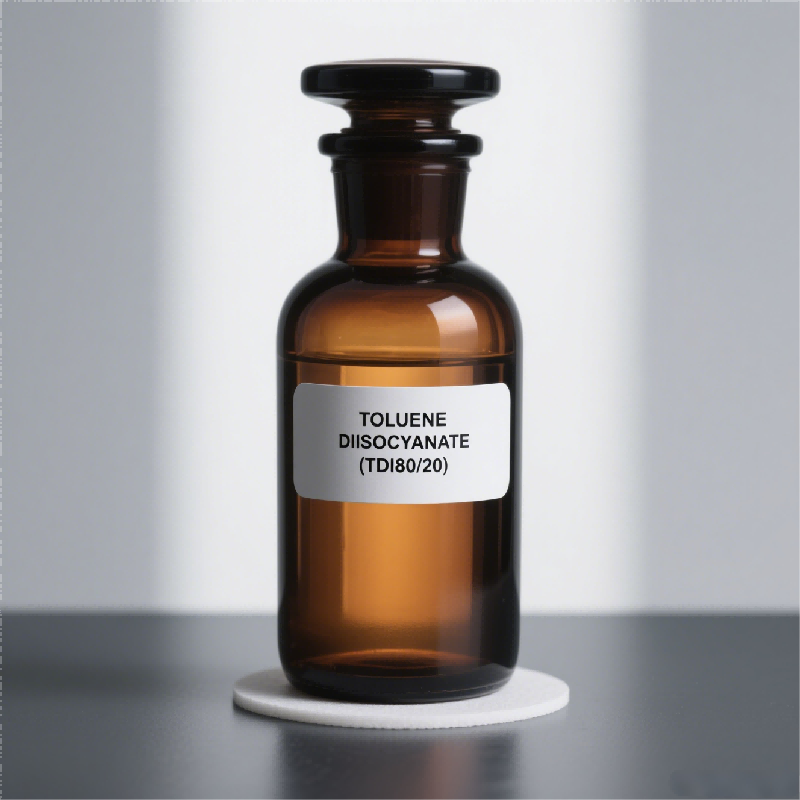
Toluene Diisocyanate (TDI) is an aromatic diisocyanate with the molecular formula C₉H₆N₂O₂. The 80/20 grade comprises a mixture of 80% 2,4-toluene diisocyanate (2,4-TDI) and 20% 2,6-toluene diisocyanate (2,6-TDI) isomers. This specific isomeric blend is produced by distillation of crude TDI, yielding a clear to pale yellow liquid with a sharp, pungent odor.
Physical & Chemical Properties
- CAS Number: 26471-62-5
- EINECS Number: 247-722-4
- Molecular Weight: 174.2 g/mol
- Appearance: Clear to pale yellow liquid
- Odor: Sharp, pungent
- Density: 1.22 g/cm³ at 25°C
- Boiling Point: 251°C
- Melting Point: Approximately 21.8°C
- Solubility: Insoluble in water; soluble in acetone, alcohol, benzene, and ether
- Flash Point: 121°C
- Vapor Pressure: 0.01 mmHg at 25°C
- Reactivity: Reacts with water, alcohols, amines, and acids
Key Applications
TDI 80/20 is a fundamental intermediate in the production of polyurethane (PU) products. Its applications include:
- Flexible Polyurethane Foams:Widely used in the manufacture of cushioning materials for furniture, mattresses, automotive seating, and packaging.
- Coatings, Adhesives, Sealants, and Elastomers (CASE):Utilized in formulating high-performance coatings and adhesives for automotive, industrial, and architectural applications.
- Rigid Polyurethane Foams:Employed in the production of thermal and acoustic insulation materials for construction and refrigeration.
- Synthetic Leather and Coated Fabrics:Used in the manufacture of synthetic leather materials and coated fabrics for various industrial applications.
- Footwear and Upholstery:Applied in the production of shoe soles and upholstery materials, providing comfort and durability.
Chemical Reactivity & Mechanism
TDI 80/20 exhibits high reactivity due to the presence of isocyanate groups. Key reactions include:
-
Reaction with Polyols: Forms urethane linkages, resulting in polyurethane polymers.
-
Reaction with Water: Produces urea linkages and carbon dioxide gas, which acts as a blowing agent in foam formation.
-
Reaction with Alcohols and Amines: Leads to the formation of carbamates and ureas, respectively.
Safety & Handling
TDI 80/20 is classified as highly toxic and should be handled with caution:
- Toxicity: Can cause respiratory and skin irritation; prolonged exposure may lead to respiratory sensitization.
- Protective Measures: Use appropriate personal protective equipment (PPE), including gloves, goggles, and respiratory protection.
- Storage: Store in a cool, dry, well-ventilated area, away from sources of moisture and incompatible materials.
- First Aid Measures: In case of exposure, seek immediate medical attention.
Packaging & Availability
TDI 80/20 is available in various packaging options to suit customer requirements:
- Bulk Quantities: Delivered in bulk containers for large-scale applications.
- Drums & IBCs: Available in drums and intermediate bulk containers (IBC tanks) for smaller-scale needs.
Certificates


Payment terms: Various payment methods are available, including T/T IN ADVANCE, Part repayment and part credit, etc.
