 Перейти к содержанию



A procurement guide for buyers who need every number on a fish oil certificate to mean something.
Two suppliers quote the same 18/12 fish oil. One arrives pale, mild, and clean in the mouth. The other smells like old frying oil before the drum is half empty. Both certificates said the same thing on paper.
That gap is not about the percentage on the label. It sits in the oxidation data, and in how that data was measured, reported, and protected after release. Most quality arguments in this category start with EPA and DHA content. They should start one step earlier.
In this post, you’ll learn how peroxide value, p-anisidine value, TOTOX, and acid value fit together. You’ll see how to audit a certificate in half a minute, how ester form shifts the numbers, and how to write a spec that still holds when a batch is disputed.
Quick answer: Judge fish oil by four numbers together, not one. Peroxide value (PV) shows primary oxidation and should sit at or below 5 meq O₂/kg. p-Anisidine value (pAV) shows secondary oxidation and should stay under 20. TOTOX, calculated as (2 × PV) + pAV, should stay under 26. Acid value (AV) tracks hydrolysis and belongs in the spec separately. Then confirm the EPA and DHA figures are stated on a known basis, matched to the ester form you ordered. A batch that passes PV but carries a high pAV is an old, oxidised lot. Read all four rows, check the batch number, and check the release date before you discuss price.
Why Oxidation Decides Fish Oil Quality More Than the Percentage on the Label
A 1,000 mg softgel sounds generous. It usually holds around 300 mg of combined EPA and DHA, and the rest is other fat. Buyers who compare products by capsule weight are comparing packaging, not potency.
Oxidation is a different kind of problem. It does not stay still. It starts the moment the oil meets oxygen, heat, or light, and it keeps going through refining, concentration, drum filling, sea freight, and the four times your warehouse opens the drum to sample it. A certificate describes one moment. The oil you receive is the result of every moment after that.
This is why two lots with identical EPA and DHA results can behave nothing alike. One pours clear and smells faintly of the sea. The other carries aldehydes that taste bitter six months later, after your customer has printed the label.
Rancid oil also undercuts the reason people buy the product. Oxidised omega-3 loses potency, and the aldehydes that come with it are the compounds consumers describe as fishy burps. No dosage claim survives that experience.
So the useful question is not “how much omega-3 is in this drum?” It is “how much omega-3 is still there, in what condition, and can the supplier prove it for this batch?” That question has an answer you can check, and it fits into four numbers.
The Four Numbers That Describe a Fish Oil Batch
Peroxide value measures hydroperoxides, the first products formed when omega-3 fatty acids react with oxygen. It is reported in milliequivalents of oxygen per kilogram of oil, written as meq O₂/kg. A rising PV means oxidation is under way right now.
p-Anisidine value measures what those hydroperoxides turn into. Peroxides are unstable, so they break down into aldehydes. Those aldehydes carry the smell and taste people call rancid. pAV has no unit, which trips up first-time readers.
TOTOX combines the two: TOTOX = (2 × PV) + pAV. The doubling gives extra weight to primary oxidation, because hydroperoxides are the fuel for everything that follows.
Acid value is the odd one out. It measures free fatty acids and points to hydrolysis, not oxidation. Water, heat, and poor refining raise it. AV is not part of the TOTOX calculation, and a TOTOX number tells you nothing about it.
| Parameter | What it measures | Typical limit | What a failed result costs you |
|---|---|---|---|
| Peroxide value (PV) | Primary oxidation, hydroperoxides | ≤ 5 meq O₂/kg (GOED) | Early rancidity, short remaining shelf life |
| p-Anisidine value (pAV) | Secondary oxidation, aldehydes | ≤ 20 (GOED) | Fishy odour and bitter taste in the finished capsule |
| TOTOX | Total oxidation, 2 × PV + pAV | ≤ 26 (GOED); ≤ 19.5 (IFOS) | Rejection at goods-in, or complaints after retail |
| Acid value (AV) | Free fatty acids, hydrolysis | ≤ 2.0 mg KOH/g is a common buyer limit | Off notes, poor stability, refining history questions |
Read them as a set. A low PV beside a high pAV describes an oil that oxidised earlier and has moved on to aldehydes.
How to Audit a TOTOX Value in Thirty Seconds
TOTOX is not a lab instrument reading. It is arithmetic on top of two other tests, which means you can check it yourself with a calculator.
Take the PV, double it, add the pAV. If the certificate says TOTOX 23.6, then 2 × 0.8 + 22 fits. If it says TOTOX 12 while PV reads 4.5 and pAV reads 16, the sheet has a typo, a different basis, or a number someone rounded in the wrong direction.
The arithmetic matters because a good-looking PV can hide a tired lot. Compare these pairs.
| PV (meq O₂/kg) | pAV | TOTOX | Verdict against the 26 limit |
|---|---|---|---|
| 1.0 | 10 | 12 | Pass, comfortable margin |
| 3.0 | 20 | 26 | Pass, sitting exactly on the ceiling |
| 5.0 | 15 | 25 | Pass, but both rows are close to their own limits |
| 5.0 | 20 | 30 | Fail, although each row looks acceptable alone |
| 0.8 | 22 | 23.6 | Pass on paper, worse oil than the batch above |
The last two rows are the ones buyers miss. PV of 5 with pAV of 20 passes both individual limits and still fails TOTOX, because 2 × 5 + 20 = 30. And PV 0.8 with pAV 22 scores better than PV 4.5 with pAV 9, even though every sensory panel would prefer the second oil.
One pattern is worth remembering at goods-in. When PV falls and pAV climbs on a re-test of the same drum, the peroxides have converted. That is not improvement.
GOED, IFOS, and Your Own Specification Limits
GOED publishes a voluntary monograph that most of the industry uses as a reference point. The current numbers are PV no more than 5 meq O₂/kg, pAV no more than 20, and TOTOX no more than 26. Those are industry limits, not a legal market authorisation. Your buyer specification still governs the order.
IFOS, the third-party testing programme, applies a stricter TOTOX ceiling of 19.5. A product listed there has been tested per batch, which matters because oxidation is batch-specific.
Two other documents sit alongside them and get confused with them. The Codex Standard for Fish Oils, CODEX STAN 329-2017, sets compositional and quality requirements for fish oils intended for human consumption. In the EU, Regulation 2023/915 sets maximum levels for dioxins and PCBs. Oxidation limits and contaminant limits are separate control areas. Passing one says nothing about the other.
| Parameter | GOED voluntary monograph | Tight concentrate spec (market example) | Honry 18/12 EE release spec |
|---|---|---|---|
| Значение перекисного числа | ≤ 5 meq O₂/kg | ≤ 1.0 meq/kg | ≤ 3.0 meq/kg |
| p-Anisidine value | ≤ 20 | ≤ 10.0 | ≤ 15.0 |
| TOTOX | ≤ 26 | ≤ 12 | ≤ 19 |
| Кислотное число | Not specified | ≤ 1.0 mg KOH/g | ≤ 2.0 mg KOH/g |
| Absorbance at 233 nm | — | — | ≤ 0.55 AU |
| Lead, arsenic, mercury, cadmium | Not set in monograph | 0.05 to 0.1 mg/kg | ≤ 0.1 ppm each |
| Total PCBs | ≤ 0.09 mg/kg | ≤ 0.09 mg/kg | ≤ 0.09 ppm |
One detail is worth knowing before you copy GOED values into a purchase order. The three GOED limits cannot all be reached at the same time, because 2 × 5 + 20 = 30, which is above the TOTOX ceiling of 26. TOTOX is the number that actually binds.
So write all three limits, and state the method. A limit without a method cannot be reproduced, and a result without a basis cannot be compared.
EPA and DHA Ratios: Choosing a Grade for the Label You Plan to Print
EPA and DHA are not interchangeable, and the ratio you buy should follow the claim you intend to make.
EPA drives the anti-inflammatory pathway and is the fatty acid behind most cardiovascular and triglyceride positioning. DHA concentrates in brain and retinal tissue, so it dominates prenatal and cognitive formulas. A 3:2 ratio sits in the middle and suits general-purpose supplements.
Grades are written as two numbers: EPA first, then DHA, both as a percentage of total oil. 18/12 means at least 18% EPA and 12% DHA, so 300 mg of combined omega-3 in every gram of oil. 33/22 raises that to 550 mg per gram, which is why high-potency softgels can stay small.
| Класс | EPA | DHA | Combined omega-3 per gram | Typical use |
|---|---|---|---|---|
| 18/12 EE or TG | ≥ 18% | ≥ 12% | ≥ 300 mg | Standard softgels, liquid supplements, functional food |
| 33/22 EE or TG | ≥ 33% | ≥ 22% | ≥ 550 mg | High-potency softgels, smaller capsule size |
| 50/20 EE | ≥ 50% | ≥ 20% | ≥ 700 mg | EPA-led cardiovascular and triglyceride formulas |
| 10/50 EE | ≥ 10% | ≥ 50% | ≥ 600 mg | Prenatal, infant nutrition, eye and brain formulas |
Price per kilogram rewards dilution. Cost per delivered gram of EPA plus DHA does not. A 33/22 grade carries about 1.83 times the active content of 18/12, so it is only cheaper in use while its price stays under 1.83 times the 18/12 price. Above that line, you are paying for concentration you could have reached with a bigger capsule.
That calculation belongs in the sourcing decision, not the marketing copy. Run it once per grade and keep it beside your cost sheet. Our fish oil product page lists 18/12 and 33/22 in both EE and TG form.
EE, TG, and rTG: What the Form Changes on the Certificate
Ethyl ester oil is made by transesterifying natural fish oil with ethanol, then concentrating it by distillation. That route reaches the high percentages cheaply. Triglyceride form keeps the glycerol backbone and carries three fatty acids instead of one. Re-esterified triglyceride, usually written rTG, puts the concentrated fatty acids back onto glycerol.
Absorption differs, and most formulators accept that TG and rTG outperform EE, especially when the capsule is taken without a fatty meal. Concentration differs too, in the other direction: EE reaches higher percentages more easily.
What surprises buyers is the mass. An ethyl ester group is not fatty acid, and neither is the glycerol backbone. So the same EPA molecule weighs more when reported as an ester. EPA as free acid is C20H30O2 at 302.5 g/mol, and the ethyl ester adds 28.05 to that.
| Reporting basis | EPA multiplier | DHA multiplier | Effect on a 30/10 grade declared 300 + 100 mg/g |
|---|---|---|---|
| Free fatty acid | 1.000 | 1.000 | 400 mg/g combined |
| Triglyceride | 1.042 | 1.039 | 384 mg/g combined |
| Ethyl ester | 1.093 | 1.085 | 367 mg/g combined |
Now the practical consequence. A supplier can certify the same drum at 300 mg/g or 274 mg/g without a milligram of oil changing, because the basis is a choice. A 1,000 mg softgel filled with that oil carries 367 mg of EPA plus DHA as free acid equivalents, not 400. The gap is arithmetic, not adulteration.
Put the basis in the purchase order, next to the number. Otherwise two quotes are not comparable, and the cheaper one may simply be using the more generous convention.
Building a Fish Oil Specification That Survives a Dispute
Most quality arguments are lost before the first drum ships. The spec was too thin to settle anything, so both sides fall back on opinion.
Six clauses do most of the work.
Limits and methods. Write PV, pAV, TOTOX, and AV as separate rows. Name the analytical method beside each one. “Low oxidation” is marketing. “PV not more than 3.0 meq O₂/kg by AOCS Cd 8b-90” is a clause.
Basis. State whether EPA and DHA are reported as free acid, triglyceride, or ethyl ester. Without it, a 9% swing goes unmanaged.
Batch COA fields. Require lot number, grade, ester form, EPA and DHA results, all four oxidation results, contaminant values, test date, and release date. A generic product data sheet is a screening tool, not batch evidence.
Sampling and re-test. Say how the sample is drawn, how it is protected from light and oxygen, and what happens when your lab and theirs disagree. Most unopened disputes are sampling disputes.
Packaging. Specify the drum size, the nitrogen blanket, and the headspace oxygen target. A 25 kg drum holds more headspace per litre of oil than a 190 kg drum, so the same flush leaves more oxygen behind.
Delivery condition, not just release condition. Add a TOTOX ceiling at goods-in, measured on your sample within a defined number of days of arrival. That single clause covers freight, storage, and handling in one line.
A workable sentence reads: “PV ≤ 3.0 meq O₂/kg, pAV ≤ 15.0, TOTOX ≤ 19, AV ≤ 2.0 mg KOH/g, each determined on the batch COA; TOTOX ≤ 26 on buyer’s sample within 14 days of arrival.”
Supplier Evaluation: Documents, Red Flags, and Audit Questions
A fish oil supplier should answer a documentation request within a day. Slow answers are data.
Start with the document stack: product specification with a version number, batch COA, safety data sheet, contaminant test reports, species and fishery declaration, and certificates with their scope written out. Then check that each document refers to the grade and lot you are actually buying.
Certification scope is where buyers get caught. FSSC 22000 and ISO 22000 certify a food safety management system at a site. They do not certify that a batch meets a PV limit. A halal certificate confirms compliance with a religious standard, not oxidative performance. IFOS listing is batch-specific, so ask for the report that matches your lot.
| Criterion | Evidence to request | Weight |
|---|---|---|
| Oxidation performance | Batch COA with PV, pAV, TOTOX, AV and calculation | 30% |
| Potency accuracy | GC fatty acid profile, EPA and DHA on a stated basis | 20% |
| Contaminant control | Metals, PCBs, dioxins, furans against destination limits | 20% |
| Traceability | Species, fishing area, refinery, lot numbering | 15% |
| Delivery protection | Packaging, nitrogen flush, headspace spec, shelf life data | 10% |
| Commercial reliability | MOQ, lead time, repeat-batch consistency | 5% |
Eight questions worth sending before a price is agreed:
- Which ester form and basis are the EPA and DHA figures reported on?
- What are your release limits for PV, pAV, TOTOX, and AV?
- Can you send the COA for the exact lot you will ship?
- What is the release date and the expiry date on that lot?
- Which methods do you use for each oxidation test?
- How is the drum flushed, and what headspace oxygen do you guarantee?
- Which species and fishing areas feed this grade?
- What is your re-test procedure if our lab disagrees?
Red flags repeat across the category. Specifications with no acceptance criteria. Reports that cannot be linked to a lot. A price well below the market for the declared potency. And a supplier who will not send a retained sample.
Keeping TOTOX Low After Delivery: Packaging, Storage, and Shelf Life
A 24-month shelf life on a certificate is a statement about a container and a store room, not about the oil inside.
Hold the storage conditions and the release values stay predictive. Typical requirements are 2 to 8 °C, a nitrogen blanket in the headspace, and exclusion of light. That usually means a nitrogen-flushed steel drum, 190 kg for bulk or 25 kg for smaller runs.
Miss one condition and the certificate describes only the day it was issued. Warm storage starts the peroxide curve immediately. A drum opened, sampled, and reclosed four times has had four exposures, and each one adds oxygen.
Headspace is the part buyers underestimate. A 25 kg drum carries a much higher headspace-to-oil ratio than a 190 kg drum, so an identical nitrogen flush leaves more oxygen per litre in the smaller pack. If you buy small drums, write a headspace oxygen target for that format specifically.
Finished forms behave differently too. A softgel shell slows oxygen transfer but does not stop it, and enteric coating helps with aftertaste while doing nothing for the fill. Liquid oils in bottles are the most exposed, which is why tinted glass and nitrogen dosing matter there.
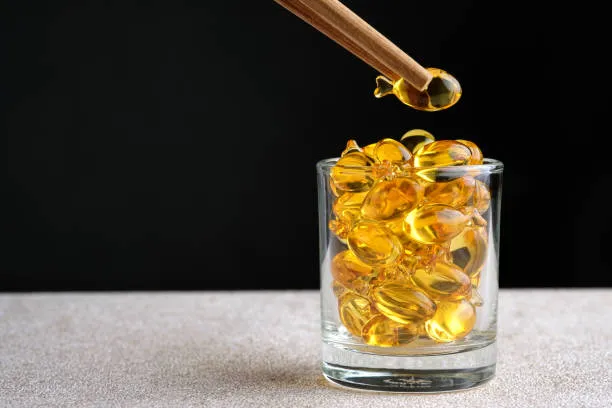
Grades map onto formats fairly cleanly. 18/12 works for standard softgels, liquids, and omega-3 premixes. 33/22 suits high-potency softgel capsules where capsule count per dose is the constraint. Lower concentrations serve functional food and pet nutrition.
Honry Chemical supplies 18/12 and 33/22 fish oil in EE or TG form, with COA documentation per lot. If you need a spec sheet matched to your market, send us the target limits and we will confirm what we can release against.
ЧАСТО ЗАДАВАЕМЫЕ ВОПРОСЫ
Q: What is a good TOTOX value for fish oil?
Under 26 is the GOED reference limit, and under 19.5 is the IFOS limit. In practice, 5 to 10 is very good and below 5 is close to freshly refined oil. For a B2B specification, set release limits below the ceiling so the batch still passes at goods-in after freight.
Q: Is peroxide value enough to judge fish oil quality?
No. PV only describes primary oxidation. It misses secondary oxidation, free fatty acids, contaminant status, and the actual EPA and DHA content of the batch. A lot can show a modest PV while aldehydes are already building. Always read PV, pAV, TOTOX, and acid value together, then check the potency rows.
Q: What EPA to DHA ratio should a supplement use?
Match the ratio to the claim. Around 3:2 suits general wellness products. EPA-dominant ratios of 3:1 or higher fit cardiovascular and triglyceride positioning. DHA-dominant ratios fit prenatal, infant, and eye-health formulas. Confirm the individual milligrams per serving, not just the ratio, and check whether the figures are reported as ethyl ester or free acid.
Q: Does ethyl ester fish oil oxidise faster than triglyceride?
The evidence is mixed and depends on the oil, the antioxidant system, and the packaging. EE concentrates carry fewer natural tocopherols after distillation, so they usually need added antioxidants and nitrogen protection. TG and rTG keep the glycerol backbone and behave closer to natural oil. Neither form survives poor storage.
Q: How do I verify a fish oil certificate of analysis?
Check four things. The lot number must match the drums you receive. The test and release dates must be recent. The TOTOX must equal 2 × PV + pAV, so run the arithmetic yourself. And the EPA and DHA basis must be stated. Then send a retained sample to an independent lab.
Заключение
Fish oil quality comes down to evidence you can check. Read four rows on the certificate, run the TOTOX arithmetic yourself, confirm the EPA and DHA basis, and check the release date against the drums in front of you. Then write those limits into the order, including a goods-in ceiling. Do that, and a 40% grade and an 18/12 grade become comparable numbers instead of competing claims.
