

If you’re involved in the design of flexible PVC, you will experience a world of compromise. You need both strength and flexibility. You need to have a long lifespan, but you also need to be processable. Additionally, you must accomplish this within a limited budget. The center of this complex endeavor is a critical component that is in your toolbox: the plasticizer. It’s the magical ingredient that converts solid, brittle PVC into the flexible, versatile material that is used in everything from saving lives to making cars more durable.
However, a plasticizer isn’t a single, solid entity. It’s an ester, made by combining alcohol with an acid anhydride or a dicarboxylic acid. Additionally, the selection of the acid that will serve as the precursor is considered the most significant decision a formulator makes. It primarily determines the ultimate properties, expense, and regulatory regimen of the plasticized PVC.
For decades, the acknowledged king of this territory was Phthalic Anhydride, the precursor to plasticizers like DOP and DINP. They were budget-friendly, efficient, and became the common standard. However, the world has evolved. Increasing regulatory pressure, combined with a desire for specialized performance in extreme temperatures, has led formulators to seek out high-performance substitutes.
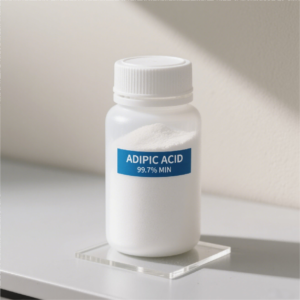
This is the location of Adipic Acid‘s stage. As the precursor to plasticizers like DOA (dioctyl adipate), Adipic Acid offers a unique combination of properties that makes it not only a substitute, but a superior choice for a growing number of demanding applications.
As a modern creator, how do you circumvent this crucial decision? When should you subscribe to the traditional powerhouse, Phthalic Anhydride, and when should you take a specialized approach to Adipic Acid? This guide will discuss the specifics of the comparison, which will surpass the simple cost of the kilowatt; it will also discuss the specifics of performance, processing, and value over time.
The Players: A Tale of Two Molecules
To understand their differences, we first need to appreciate their fundamental molecular structures.
- Phthalic Anhydride: This is an aromatic dicarboxylic acid anhydride. The keyword here is “aromatic.” Its structure is based on a rigid, flat benzene ring. Think of it as a stiff, planar building block. This inherent rigidity is a clue to its properties.
- Adipic Acid: This is an aliphatic dicarboxylic acid. Its structure is a flexible, linear chain of six carbon atoms. Think of it as a supple, chain-like building block. This inherent flexibility is the key to its unique performance advantages.
When these two different acid structures react with an alcohol (like 2-ethylhexanol) to form a plasticizer, they create molecules with fundamentally different shapes and behaviors. The phthalate plasticizer molecule is bulkier and less flexible, while the adipate plasticizer molecule is more linear and agile. This difference is what plays out in the final PVC compound.
The Ultimate Litmus Test – Low-Temperature Flexibility (Cold Resistance)
This is the single most important performance battleground where Adipic Acid is the undisputed champion.
The Challenge:
Standard PVC plasticized with general-purpose phthalates like DOP becomes stiff and brittle at low temperatures. Anyone who has handled a cheap PVC garden hose in winter knows this feeling—it becomes rigid and can easily crack. For many critical applications, this is simply unacceptable. Think of automotive wire and cable insulation that must remain flexible in freezing climates, or food packaging film that needs to be handled in commercial freezers.
Why Adipic Acid Excels:
The linear, flexible structure of adipate plasticizers, derived from Adipic Acid, acts like a molecular lubricant within the PVC matrix. Even as the temperature drops and the PVC polymer chains try to stiffen and pack closer together, the agile adipate molecules remain effective at keeping them separated and mobile.
- Performance: PVC compounds plasticized with DOA (based on Adipic Acid) can have a brittle point as low as -70°C. This is a level of cold resistance that standard phthalates simply cannot achieve. This excellent cold resistance is the primary reason formulators turn to adipates.
- Phthalic Anhydride’s Limitation: The bulkier, more rigid structure of phthalate plasticizers becomes less efficient at lower temperatures. They “freeze up” sooner, allowing the PVC chains to lock into a rigid state.
The Verdict: If your product’s performance specification includes any form of low-temperature flexibility, crack resistance, or a low brittle point, Adipic Acid is not just an option; it is the necessary choice. There is no contest here.
Processing and Efficiency – A More Nuanced Story
How a plasticizer interacts with PVC resin during processing (e.g., in an extruder or calendar) is critical for production efficiency.
Plasticizing Efficiency:
This refers to how much plasticizer is needed to achieve a target level of softness or flexibility.
- Phthalic Anhydride’s Strength: This is the home turf for phthalates. General-purpose phthalates like DOP are known for their high plasticizing efficiency. They are very effective at solvating the PVC resin, meaning you need a relatively lower quantity (in parts per hundred resin, or PHR) to reach a desired hardness. This has historically been a major contributor to their cost-effectiveness.
- Adipic Acid’s Position: Adipates are generally considered to have slightly lower plasticizing efficiency than DOP. You might need a few extra PHR of DOA to achieve the same softness as DOP. However, their efficiency is still very good and more than sufficient for most applications.
Processing Characteristics:
- Fusion & Gelation: Phthalates tend to promote faster fusion and gelation of the PVC compound, which can lead to higher throughput rates in some extrusion processes.
- Volatility: Adipates, being more linear and slightly smaller molecules, can have slightly higher volatility. This means during high-temperature processing, a small amount might be lost to evaporation. This needs to be accounted for in formulation and processing conditions, but it is a manageable parameter for experienced compounders.
The Verdict: In terms of pure, raw plasticizing efficiency and processing speed, Phthalic Anhydride-based plasticizers often have a slight edge. However, the difference is not a deal-breaker, and the processing window for Adipic Acid-based adipates is wide and well-understood by the industry. The choice here depends on whether you are prioritizing maximum throughput speed above all else.
Durability and Permanence – A Question of Application
A plasticizer isn’t just supposed to make PVC flexible; it’s supposed to keep it flexible over the product’s lifespan. This involves resistance to heat, light, and migration.
Heat and Light Stability:
- Adipic Acid’s Advantage: Adipates generally exhibit good thermal stability and excellent resistance to yellowing or degradation upon exposure to UV light. This makes them a great choice for outdoor applications or products where color stability is important.
- Phthalic Anhydride’s Performance: Phthalates also have good stability, but the aromatic ring in their structure can be more susceptible to UV degradation over very long periods compared to the purely aliphatic structure of adipates.
Migration and Extraction:
Migration is the tendency of the plasticizer to slowly leach out of the PVC matrix over time, leading to the product becoming stiff. Extraction is the loss of plasticizer when the PVC comes into contact with a liquid (like oil, fat, or soap).
- Phthalic Anhydride’s Strength: Larger, branched-chain phthalates (like DINP or DIDP) are known for their low migration and excellent resistance to extraction, which is why they are often used in demanding applications like automotive interiors.
- Adipic Acid’s Profile: Standard adipates like DOA have slightly higher migration and extraction rates compared to the high-molecular-weight phthalates. However, this can be mitigated. For applications requiring both cold flex and low migration (like high-end wire and cable), formulators often use polymeric plasticizers, which are themselves large polyester molecules often made using Adipic Acid. These polymeric adipates offer the best of both worlds: excellent permanence and good low-temperature properties.
The Verdict: For general permanence, high-molecular-weight phthalates derived from Phthalic Anhydride have an edge. However, for applications where UV stability is critical, or where advanced performance is needed, Adipic Acid becomes the key building block for either standard adipates or more advanced polymeric adipates.
The Regulatory and Environmental Landscape – A Clear Win for Adipic Acid
This is perhaps the most significant reason for the shift towards Adipic Acid-based plasticizers in the 21st century.
The Opportunities for Phthalic Anhydride:
Low molecular weight phthalates, including DEHP (derived from Phthalic Anhydride), have been the subject of intense regulation and public concern regarding their potential to cause health effects, particularly as an endocrine disruptor. This has resulted in them being prohibited or restricted in many consumer applications by regulations like REACH in Europe and the Consumer Product Safety Improvement Act (CPSIA) in the U.S.
These restrictions cover:
- Toys and childcare articles
- Food contact materials
- Medical devices
While higher-molecular-weight phthalates like DINP have a much better safety profile, the entire “phthalate” chemical family has been subject to negative public perception, forcing many brands to proactively seek “phthalate-free” solutions.
The Uncontested Advantage of Adipic Acid:
Adipate plasticizers are non-phthalates. They are not subject to these same health and environmental concerns.
- Regulatory Compliance: Using adipates derived from Adipic Acid is the simplest and most effective way to formulate a product that is “phthalate-free.” This immediately clears regulatory hurdles for sensitive applications and satisfies the demands of major retailers and brands who have their own restricted substance lists.
- Market Access: For any company looking to export products to Europe or North America, especially in the consumer goods or food packaging space, choosing Adipic Acid as the precursor is a strategic business decision that ensures market access.
The Verdict: In the regulatory arena, there is no debate. Adipic Acid provides a clear, clean, and future-proof path for any application where health, safety, and environmental compliance are a concern. This is a powerful, non-negotiable advantage in today’s market.
The Final Decision Matrix: A Summary for Formulators
Let’s distill this complex choice into a simple decision matrix.
| If Your Priority Is… | The Obvious Choice Is… | Because… |
|---|---|---|
| Excellent Low-Temperature Performance | Adipic Acid (to make Adipates) | Its linear, flexible molecular structure provides unparalleled cold resistance, preventing cracking and stiffness. |
| Regulatory Compliance & “Phthalate-Free” Marketing | Adipic Acid (to make Adipates) | Adipates are non-phthalates and are not subject to the health and safety regulations that restrict many phthalates. |
| Maximum Cost-Effectiveness for General Use | Phthalic Anhydride (to make Phthalates) | General-purpose phthalates like DOP/DINP offer high plasticizing efficiency at a lower cost-per-kilo for non-sensitive applications. |
| Maximum Permanence & Low Migration | Phthalic Anhydride (for high-MW phthalates) OR Adipic Acid (for polymeric adipates) | High-molecular-weight phthalates offer great permanence. For the ultimate combination of permanence and cold flex, polymeric adipates (made from Adipic Acid) are the solution. |
The Right Acid for the Right Application
The era of a single, universal plasticizer has concluded. The distinction between Adipic Acid and Phthalic Anhydride is not based on which one is better in a vacuum, but instead is based on the application, market, and long-term goals of the business.
Phthalic Anhydride is still an effective workhorse; this is attributed to its efficiency in jobs where the concern for regulatory approval is low and the desire for extreme cold performance is not paramount.
However, Adipic Acid has become essential and has grown in importance as the precursor for modern, high-performance applications. It’s the key to gaining access to superior low-temperature flexibility and the means to navigate the intricate global regulatory landscape. For anyone who is involved in the creation of products intended for cold climates, sensitive consumer applications, or international markets, a comprehensive understanding of the benefits of Adipic Acid is no longer simply an advantage in the technical sense: it’s now become a necessity in the business world. The intelligent formulator doesn’t simply choose a plasticizer; they choose the appropriate precursor acid for the task.
