


Executive summary
Soda ash dense and soda ash light are both anhydrous sodium carbonate (Na₂CO₃). They are not different chemicals, and one is not automatically purer or stronger than the other. The meaningful distinction is physical: dense soda ash consists of coarser, more compact granules, while light soda ash is a finer, lower-bulk-density powder. That difference affects the space a tonne occupies, how the product flows through equipment, how much dust it can generate, and how quickly it typically disperses and dissolves in water.
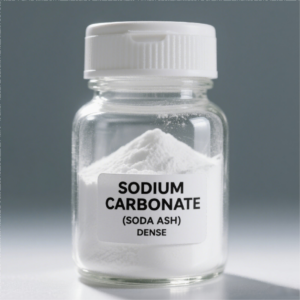
For many dry, high-volume operations, dense soda ash is the practical first choice. It is commonly used in glass batch plants, dry chemical blending, bulk storage, and automated feeding systems because it normally occupies less volume per tonne and produces less dust during transfer. Light soda ash is often preferred where rapid solution preparation or fine-powder dispersion is the main requirement, such as selected detergent, textile, and liquid-processing applications.
Grade selection should never stop at the name on the quotation. A sound purchase specification includes sodium carbonate assay, bulk-density range, particle-size distribution, moisture, insoluble matter, chloride, iron, packaging, and a batch-specific certificate of analysis (COA). The right grade is the one that matches the process, storage system, handling controls, and delivered cost—not simply the lowest price per tonne.
1. What is soda ash dense?
Soda ash is the commercial name for sodium carbonate, an inorganic alkaline salt with the formula Na₂CO₃ and CAS No. 497-19-8. Soda ash dense is a physical grade of this material. It is normally supplied as white, coarse, compact granules with a higher bulk density than light soda ash. “Dense” therefore describes particle structure and packing behavior; it does not identify a different chemical compound.
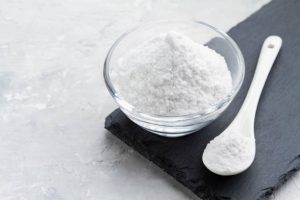
In practical terms, a denser granular product allows more mass to fit into the same bag, silo, warehouse bay, or container volume. Dense grade also tends to move more smoothly through dry material systems. Typical commercial dense soda ash may have a bulk density around 0.9–1.1 g/cm³, but this is only a guide. Buyers should use the supplier’s current technical data sheet (TDS) and batch COA as the contractual reference.
Dense soda ash remains strongly alkaline once dissolved. It must be stored dry and handled under an appropriate safety program. Contact with eyes, prolonged skin contact, and inhalation of dust should be avoided. Moisture exposure may cause caking and reduce flowability, even though the material is sold as anhydrous sodium carbonate.
Key properties buyers should review
| Özellik | Typical relevance for dense soda ash |
| Chemical identity | Sodium carbonate, Na₂CO₃; confirms the active chemical |
| Bulk density | Determines storage volume, shipping efficiency, and feeder settings |
| Particle-size distribution | Influences flow, dust, dissolution, and pneumatic conveying behavior |
| Assay and insolubles | Affect reaction performance and solution cleanliness |
| Nem | Higher values can increase caking and reduce usable flowability |
| Chloride and iron | Important for sensitive glass, chemical, and color-critical applications |
2. What is soda ash light?
Soda ash light is the same sodium carbonate chemistry supplied as a finer, lower-bulk-density powder. A typical range is roughly 0.5–0.7 g/cm³, subject to supplier and production method. Its small particles create more total surface area, so it often wets, disperses, and dissolves more quickly than dense soda ash under comparable operating conditions.
That advantage has a trade-off. A tonne of light soda ash generally occupies more storage and shipment volume, and fine particles can become airborne more easily during unloading and transfer. This can increase dust-control, housekeeping, and worker-protection requirements. Hopper design, humidity, transfer velocity, and equipment enclosure strongly influence actual performance, so the product should be tested in the intended system when a grade change could affect production.
Light soda ash is sometimes confused with baking soda or caustic soda. They are not interchangeable. Baking soda is sodium bicarbonate (NaHCO₃), and caustic soda is sodium hydroxide (NaOH), a much more corrosive alkali. Always check the chemical name, formula, CAS number, grade, and documentation rather than relying on a familiar trade name.
3. Dense vs. light soda ash: the differences that matter
The following comparison provides a purchasing and process-screening starting point. Exact ranges and handling behavior depend on the product specification and site conditions.
| Comparison factor | Soda ash dense | Soda ash light |
| Chemical formula | Na₂CO₃ | Na₂CO₃ |
| Physical form | Coarse, compact granules | Fine powder |
| Typical bulk density | Higher; often about 0.9–1.1 g/cm³ | Lower; often about 0.5–0.7 g/cm³ |
| Storage volume per tonne | Lower | Higher |
| Dust during dry handling | Generally lower | Generally higher |
| Flow through dry equipment | Usually more stable | May require closer hopper and dust control |
| Dissolution behavior | Effective with suitable mixing; often slower | Often faster because of greater surface area |
| Common preference | Glass, dry blending, bulk transfer, automatic feeders | Solution preparation, selected detergents, textile and liquid processes |
Bulk density, warehouse capacity, and freight
Bulk density measures the mass of the product plus the air spaces between particles in a given volume. It is not the intrinsic density of sodium carbonate. A denser grade means more product can fit into a fixed silo or container volume. This can reduce warehouse footprint requirements and improve transport efficiency on routes where volume, rather than legal payload, limits the shipment.
The operational effect can be substantial. A feeder calibrated by volume will deliver a different mass if the bulk density changes. Two dense grades with similar assay may still need different feeder settings because their particle distribution and packing characteristics differ. When changing suppliers or grades, revalidate volumetric feeders, bin level calculations, conveying settings, and replenishment schedules.
Particle size, dust, and flowability
Dense soda ash’s coarser granules usually generate less airborne dust during unloading, conveying, and blending. This can improve material recovery and housekeeping, although it does not remove the need for local ventilation, enclosed transfers, cleaning procedures, and suitable personal protective equipment.
Light soda ash’s fine particles are more likely to create dust clouds, particularly at high transfer speeds or at bag-dumping stations. Fine powder may also bridge or arch in a poorly designed hopper after exposure to humidity. The best equipment choice depends on material tests, not assumptions: hopper angle, liner material, vibration, bin aeration, screw feeder design, and pneumatic conveying velocity can all change the outcome.
Dissolution rate is a system property
Light soda ash generally dissolves faster because more particle surface is available to contact water. However, “faster dissolving” is not the same as “always better.” Water temperature, agitation, feed rate, solution concentration, water hardness, and available residence time can matter as much as grade. Dense soda ash can form dependable solutions when the mixing tank and operating conditions are correctly designed.
For solution-based operations, define a measurable target: required solution concentration, maximum dissolution time, tank turnover, allowable residue, and temperature window. Run a pilot test using the actual water and mixing equipment. For dry dosing operations, prioritize flowability, density consistency, dust behavior, and feeder accuracy.
4. How dense soda ash is made
Commercial soda ash can originate from natural trona ore or from synthetic chemical production. Both routes can produce material suitable for industrial use; the application specification and supplier controls are more important than the route alone.
Natural soda ash begins with trona, a mineral containing sodium carbonate compounds. Producers mine, crush, dissolve, refine, crystallize, and calcine the material to obtain anhydrous sodium carbonate. Synthetic soda ash is widely made by the Solvay process, which uses brine, limestone, water, and recycled ammonia. Sodium bicarbonate is formed as an intermediate and then calcined to sodium carbonate.
Dense grade is commonly created by changing the physical structure of sodium carbonate after the initial product is made. In a monohydrate route, controlled hydration produces sodium carbonate monohydrate crystals; subsequent calcination removes water and leaves larger, denser particles. Other facilities may use granulation or compaction-related controls. The final product is screened and tested to achieve the target particle-size distribution, bulk density, moisture, and flowability.
Production origin can affect logistics, supply resilience, and environmental profile, but it is not a substitute for technical qualification. Ask for origin information, current TDS and SDS, batch COA, production method where relevant, and sustainability information if it is part of your procurement criteria.
5. Main applications of dense soda ash
Glass manufacturing
Glass is the leading use for soda ash dense. Sodium carbonate acts as a flux in glass batch formulations, helping lower the temperature required to melt silica and supporting a workable molten glass composition. Dense granules are well suited to automated glass-batch systems because they are comparatively low-dust, flow well in dry handling equipment, and use storage volume efficiently.
Dense soda ash is used across flat glass, container glass, fiberglass, automotive glass, architectural glass, and selected solar-glass applications. For color-sensitive or high-quality glass, impurity controls—especially iron, chloride, moisture, insolubles, and lot consistency—deserve close attention. The most suitable specification must be confirmed with the glass formulation and furnace team.
Chemical manufacturing and dry blending
Soda ash is a broadly used alkaline feedstock for producing sodium silicate, sodium bicarbonate, selected sodium salts, and detergent or cleaning formulations. Dense grade can support controlled dry dosing in hoppers and automatic feeders. Its granular form may reduce losses from airborne dust and help maintain repeatable mass flow, provided feeder calibration is verified.
The chemical assay alone does not guarantee compatibility. Sensitive processes may require limits on chloride, iron, water-insoluble matter, and moisture. Define these limits in the purchase specification and compare supplier results using comparable test methods.
Water and wastewater treatment
Sodium carbonate can raise pH and alkalinity and can support controlled softening processes. Dense soda ash may be used in municipal or industrial wastewater treatment, boiler-feedwater conditioning, cooling-water systems, process-water adjustment, and selected recreational-water applications. Dosing should be based on water analysis, treatment objectives, downstream interactions, and applicable local requirements.
Dense grade can be delivered dry to a feeder or dissolved in a preparation tank. In either case, validate concentration, mixing, tank turnover, residue control, and pH feedback. Overdosing can drive pH beyond target ranges or create unwanted precipitation; it is not a material to use without a defined treatment program.
Detergents, textiles, and other processes
Dense soda ash can be useful in dry powdered detergents and bulk blending because of its flow and reduced dust potential. Light grade may be more convenient for detergent pastes, liquid cleaners, and solution-driven mixing steps where rapid dispersion is valuable. In textile processes, sodium carbonate may support alkaline washing, dye fixation, or pH adjustment depending on the process. Product selection should follow the formulation, equipment, quality target, and safety review rather than a generic application label.
6. Selecting the right grade for your operation
Choose dense soda ash when the operation depends on high-volume dry handling, compact storage, lower dust potential, or stable automated feeding. Typical examples are glass batch plants, dry chemical blending, silo-fed systems, and bulk transport where shipment volume is important.
Choose light soda ash when rapid wetting and dissolution are the primary concern and the plant has adequate dust and storage controls. Typical examples include solution preparation, selected detergent mixing, textile applications, and liquid-formulation steps.
Before approving either grade, answer these questions:
- Is the material transferred dry, dissolved first, or both?
- Is storage limited by silo or warehouse volume?
- Does the equipment use volumetric feeding, gravimetric feeding, or manual dosing?
- What dissolution time, concentration, and solution clarity are required?
- What dust-control systems are available at unloading and transfer points?
- Which impurity limits are critical to the final product?
- Can the supplier guarantee a stable bulk-density and particle-size range?
Where the application is production-critical, use a controlled qualification plan: review documents, test a representative sample, verify the first shipment with an independent or in-house test where appropriate, and monitor actual feeder performance, dissolution, dust, and finished-product results.
7. Storage, handling, and safety basics
Store soda ash in a cool, dry, covered area with packaging kept tightly closed until use. Protect it from humidity and direct water exposure. Keep bags or FIBCs off wet floors, avoid damaged packaging, rotate inventory, and inspect older stock for caking before it enters the process. Bulk systems should be designed to limit moisture ingress and allow safe cleaning.
Because soda ash solutions are alkaline and dust can irritate, workplaces should follow the current SDS, site risk assessment, and applicable regulations. Basic controls commonly include eye protection, gloves suitable for the task, dust control at transfer points, and prompt washing after contact. For eye contact or persistent symptoms, follow the SDS and obtain medical assistance as appropriate. Do not rely on a general article as a substitute for the product-specific SDS or professional safety advice.
8. Procurement checklist: quality, documents, and total cost
A low unit price does not necessarily produce a low operating cost. Compare quotations on the same grade, same technical limits, same packaging, same order size, same delivery point, and same Incoterm. A supplier may quote an attractive factory price while excluding freight, port charges, palletization, inspection, documentation, or inland delivery.
The true cost per usable tonne includes product price, packaging, freight, taxes and clearance, warehouse handling, dust-control cost, product losses, mixing energy, labor, rejected batches, and downtime risk. Dense grade may reduce storage and freight volume; light grade may reduce solution-preparation time. Quantify the value in the actual process rather than assuming one grade is universally cheaper.
Minimum supplier-document package
| Document | What it should confirm |
| Technical Data Sheet (TDS) | Normal chemical and physical specification |
| Safety Data Sheet (SDS) | Hazards, handling, storage, and emergency information |
| Batch COA | Actual results for the shipment or batch |
| Product specification | Agreed acceptance limits and test methods |
| Packaging specification | Bag/FIBC type, labeling, palletization, and protection |
| Traceability and origin records | Link between shipment, batch, production date, and source |
Supplier questions that prevent costly mistakes
- Is the quoted product dense or light sodium carbonate, and what bulk-density range is guaranteed?
- What particle-size distribution, moisture, assay, chloride, iron, and insoluble limits apply?
- Can you provide a current TDS, SDS, representative COA, and pre-shipment batch COA?
- What origin, packaging, monthly volume, lead time, and Incoterms are available?
- Are you the producer, an authorized distributor, or a trading company? What is the traceable source?
- Can you provide samples, packaging photos, inspection options, and batch traceability?
Warning signs include an unclear grade description, missing batch COA, inconsistent product names across documents, unusually low prices without a clear scope, vague origin or lead time, outdated SDS files, and a refusal to provide samples or allow a reasonable inspection process.
For product specifications, sourcing support, and quotation discussions, visit Honry Chemical (https://www.honrychemical.com/). A complete inquiry should state application, target assay, required bulk density and particle size, impurity limits, packaging, quantity, destination, preferred Incoterm, delivery date, and documentation requirements.
9. Receiving inspection and change-control recommendations
Once a supplier is approved, receiving inspection should confirm that the physical product and documents match the purchase order. Check the product name, grade, batch number, net weight, packaging condition, labels, and COA before the material is released to production. Where a process is sensitive, retain a representative sample under controlled conditions so that an unexpected result can be investigated against the shipment record.
A useful acceptance plan separates critical characteristics from routine ones. Critical characteristics might include Na₂CO₃ assay, bulk density, particle-size range, moisture, iron, chloride, and water-insoluble matter. The limits should be written as measurable values with defined test methods, not as broad statements such as “high quality” or “suitable for industry.” For recurring deliveries, review results by batch and look for drift, even when every value remains technically within the agreed range. A gradual density shift, for example, can alter feeder behavior before it becomes an obvious nonconformance.
Any grade or supplier change should be controlled. Confirm whether the manufacturing site, production route, packaging, particle size, bulk density, or test method has changed. Then assess the impact on storage, dosing, dust collection, dissolution, finished-product quality, and safety procedures. A short validation run is usually cheaper than reacting to a full-scale process disruption.
For imported material, reconcile the COA batch number with packing lists, bill of lading information, and warehouse receipts. Keep the TDS, SDS, COA, inspection records, and change approvals together in a traceable procurement file. This discipline is especially valuable for glass, water-treatment, regulated, or customer-audited applications.
10. Frequently asked questions
Is soda ash dense the same as sodium carbonate?
Yes. Dense soda ash is a dense physical grade of sodium carbonate, Na₂CO₃.
What is the main difference between dense and light soda ash?
Their chemistry is the same. The main differences are bulk density, particle size, storage volume, dust behavior, flowability, and typical dissolution rate.
Why is dense soda ash widely used in glass?
It supplies sodium carbonate as a flux and is convenient for large dry batch systems because its compact granules usually flow well and create less dust than fine powder.
Does dense soda ash dissolve in water?
Yes. It can form reliable solutions with suitable tank volume, agitation, temperature, feed rate, and contact time. Light grade often dissolves faster, but the best choice depends on the system.
Is soda ash the same as baking soda or caustic soda?
No. Soda ash is sodium carbonate (Na₂CO₃); baking soda is sodium bicarbonate (NaHCO₃); caustic soda is sodium hydroxide (NaOH). They should not be substituted without technical and safety approval.
Sonuç
Dense and light soda ash deliver the same core chemical: sodium carbonate. Dense grade is generally the stronger operational fit for glassmaking, bulk transport, compact storage, reduced-dust dry handling, and automated feeding. Light grade is often more suitable when fast wetting and solution preparation take priority. The final decision should be based on verified physical specifications, process trials, equipment capability, safety controls, and delivered cost per usable tonne.
For a supplier comparison or a tailored technical inquiry, use the product requirements above and consult the current information available at https://www.honrychemical.com/.
