 İçeriğe geç
Gıdada hidrokoloid nedir
When consumers bite into a perfectly elastic fruit gummy, pour a smooth, non-separating salad dressing, or enjoy a creamy scoop of low-fat ice cream, they are experiencing the subtle but powerful magic of a hydrocolloid. But what exactly is a hydrocolloid in food? From a scientific and food technology perspective, a hydrocolloid refers to a diverse group of long-chain polymers—primarily polysaccharides and proteins—that exhibit a profound affinity for water. The word itself breaks down into “hydro,” meaning water, and “colloid,” referring to a uniform dispersion of microscopic particles in a different substance. In the culinary and manufacturing world, a hydrocolloid acts as an essential structural architect, interacting with water molecules to profoundly alter the physical properties, rheology, and stability of liquid and semi-solid systems.
The integration of a food hydrocolloid into a recipe is rarely about adding nutritional bulk or primary flavor. Instead, a hydrocolloid is utilized in extremely small concentrations, often less than 1% of the total formulation, to achieve monumental shifts in texture. Whether a food scientist is trying to prevent ice crystals from forming in frozen desserts, aiming to replace gluten in baked goods, or striving to simulate the mouthfeel of fat in a diet beverage, a hydrocolloid is the go-to solution. The immense versatility of a hydrocolloid stems from its ability to bind water through hydrogen bonding. Once hydrated, the molecular chains of the hydrocolloid uncoil and spread throughout the aqueous phase, tangling with one another to slow down the movement of water. Understanding how a specific hydrocolloid behaves under different temperatures, shear forces, and pH levels is the absolute key to mastering modern food formulation.
The Core Functions: Why the Food Industry Relies on a Hydrocolloid
The food and beverage industry depends on hydrocolloid ingredients primarily to execute two fundamental physical transformations: thickening and gelling. While these two terms are sometimes used interchangeably by the general public, in food science, they represent entirely different mechanisms achieved by selecting the appropriate hydrocolloid.
Thickening occurs when a hydrocolloid increases the viscosity of a liquid without creating a solid structure. As the hydrocolloid chains hydrate and swell, they bump into each other, creating friction that resists flow. A typical thickening hydrocolloid, such as xanthan gum or guar gum, is highly valued for producing shear-thinning solutions. This means the food product (like ketchup) remains thick while sitting in the bottle but temporarily thins out when squeezed or poured, before instantly recovering its thickness on the plate.
Gelling, on the other hand, is a more complex structural phenomenon. When a gelling hydrocolloid is activated—often through heating and subsequent cooling, or through the introduction of specific ions like calcium—the polymer chains cross-link to form a continuous, three-dimensional network. This hydrocolloid matrix physically traps the water and other food components, turning a liquid puddle into a cohesive solid or semi-solid state. A classic gelling hydrocolloid includes carrageenan, agar, and pectin.
To facilitate a deeper understanding for formulators and buyers, the following table provides a comprehensive data analysis and comparison between the thickening and gelling behaviors of various hydrocolloid types:
| Function | Primary Mechanism | Rheological Result | Common Hydrocolloid Examples | Typical Food Applications |
|---|---|---|---|---|
| Thickening | Polymer chain entanglement and hydration, restricting water mobility. | High viscosity, shear-thinning behavior, flowable liquid. | Xanthan Gum, Guar Gum, Cellulose (CMC), Locust Bean Gum. | Salad dressings, sauces, gravies, soups, fruit syrups, dairy drinks. |
| Gelling | Polymer cross-linking (junction zones) via thermal or ionic induction. | Viscoelastic solid, structural rigidity, shape retention. | Carrageenan, Agar, Pectin, Gellan Gum, Sodium Alginate. | Jellies, fruit preserves, gummy candies, puddings, meat binders. |
Understanding this distinction is crucial when selecting a hydrocolloid food additive. Using a gelling hydrocolloid when only thickening is desired can result in an unappealing, clumpy, or overly rigid product, while using a thickening hydrocolloid to create a jelly will result in a messy, flowing liquid. Furthermore, food scientists frequently blend multiple hydrocolloid types together to achieve “synergy.” For instance, combining xanthan gum (a thickener) with locust bean gum (a thickener) surprisingly yields a strong, elastic gel—a hydrocolloid phenomenon utilized heavily in the dairy and dessert sectors.
Major Sources and Classifications of a Food Hydrocolloid
Profesyonel bir hydrocolloid supplier and manufacturer, it is vital to offer a comprehensive portfolio because no single hydrocolloid can solve every formulation challenge. The functional characteristics of a hydrocolloid—such as its tolerance to acidic environments, its melting point, and its mouthfeel—are largely dictated by its natural origin. The commercial hydrocolloid landscape is divided into four primary sourcing categories: plant-derived, seaweed-derived, microbe-derived, and cellulose-based.
The first major category is the plant-derived hydrocolloid. These are extracted from tree exudates, plant seeds, or agricultural by-products. Seed gums, such as guar gum and locust bean gum, are harvested from the endosperm of specific legumes. They are exceptional thickening agents and are highly prized for their clean label appeal. Another critical plant-based hydrocolloid is pectin, extracted primarily from citrus peels and apple pomace. Pectin is the foundational hydrocolloid for the global jam and jelly industry, relying on sugar and acid to form its characteristic gel. Arabic gum, a tree exudate hydrocolloid, is exceptionally unique because it provides high solubility and low viscosity, making it an ideal emulsifier for flavor oils in beverage manufacturing.
The second category is the seaweed-derived hydrocolloid. Harvested from the oceans, red and brown seaweeds yield some of the most powerful gelling agents known to the food industry. Carrageenan, extracted from red seaweed, is a hydrocolloid famous for its unique interaction with milk proteins, making it an irreplaceable hydrocolloid in chocolate milk, ice cream, and vegan dairy alternatives. Agar, another red seaweed hydrocolloid, produces very firm, brittle gels that can withstand high temperatures without melting, an essential property for baked goods found in hot climates. Alginate, sourced from brown seaweed, is a unique hydrocolloid that forms instant cold gels in the presence of calcium, a property popularized by the “spherification” technique in molecular gastronomy and utilized in structured meat products.
The third category is the microbe-derived hydrocolloid. Through the controlled fermentation of carbohydrates by specific bacterial strains, manufacturers can produce a highly pure and functionally consistent hydrocolloid. Xanthan gum, produced by the bacterium Xanthomonas campestris, is arguably the most versatile hydrocolloid in existence. It dissolves in cold water, withstands extreme pH levels, and is immune to most temperature fluctuations. Gellan gum is another remarkable fermentation hydrocolloid; it forms brilliant, crystal-clear gels and is extensively used to suspend particles, such as seeds or fruit pulp, in premium beverages while adding almost zero viscosity to the drink.
The fourth category is the cellulose-based hydrocolloid. Cellulose is the most abundant structural polymer in nature, found in the cell walls of all plants. By chemically or physically modifying natural cellulose, scientists create a highly functional hydrocolloid food additive class. Carboxymethyl cellulose (CMC) is highly water-soluble and excels at retaining moisture in baked goods, preventing staleness. Hydroxypropyl methylcellulose (HPMC) is a specialized cellulose hydrocolloid that exhibits thermal gelation—it uniquely gels when heated and melts when cooled. This rare hydrocolloid property is currently revolutionizing the plant-based meat sector, as it helps vegan burgers retain their shape and juices while sizzling on a hot grill.
To assist in product selection, here is a detailed comparative analysis of the four main hydrocolloid sources:
| Hydrocolloid Source | Key Hydrocolloid Examples | Primary Market Advantages | Sensitivities & Constraints | Best Use Cases |
|---|---|---|---|---|
| Plant / Seed | Guar, Locust Bean, Pectin, Arabic | High consumer acceptance, natural, excellent clean label profile. | Pectin requires specific pH/sugar levels; guar can have a “beany” flavor. | Jams, fruit preps, bakery moisture retention, flavor emulsions. |
| Seaweed | Carrageenan, Agar, Alginate | Exceptional gelling strength, thermal reversibility, dairy synergy. | Carrageenan faces some regulatory scrutiny in specific niche markets. | Dairy, plant-based milks, meat processing, bakery glazes. |
| Microbial Fermentation | Xanthan Gum, Gellan Gum | Unmatched batch-to-batch consistency, extreme pH/heat stability. | Can be perceived as less “natural” due to the fermentation process name. | Gluten-free bakery, salad dressings, particle suspension in drinks. |
| Cellulose-based | CMC, HPMC, MCC | Highly versatile, thermal gelling (HPMC), excellent fat-blocking. | Requires chemical modification of natural plant fibers. | Plant-based meats, gluten-free formulations, fried food coatings. |
Applications and Commercial Benefits of a Hydrocolloid Food Additive
The decision to incorporate a hydrocolloid food additive is driven by the desire to drastically elevate the sensory experience and the commercial viability of a product. In the fiercely competitive food sector, a hydrocolloid acts as an insurance policy against product failure.
The most immediate commercial benefit of a hydrocolloid is texture optimization. Texture dictates whether a consumer perceives a food as fresh, premium, and appetizing. A hydrocolloid allows manufacturers to precisely dial in the mouthfeel of their products. For instance, in a low-fat yogurt, the removal of milk fat severely degrades the creamy texture, leaving a watery, unappealing product. By introducing a carefully calibrated hydrocolloid blend, the manufacturer can mimic the physical sensation of fat globules coating the tongue, restoring the luxurious mouthfeel without the associated calories.
Another profound benefit of a hydrocolloid is enhanced physical stability. During transport and storage, food products are subjected to thermal shocks, vibrations, and time. Emulsions, such as mayonnaise or vinaigrettes, naturally want to separate into oil and water phases. A hydrocolloid prevents this by increasing the viscosity of the continuous phase, drastically slowing down the coalescence of oil droplets. In the frozen food sector, a hydrocolloid is absolutely critical for managing ice crystal growth. During the freeze-thaw cycles that occur during distribution, water in ice cream melts and refreezes into large, crunchy crystals. A hydrocolloid binds to the free water, preventing these ice crystals from growing and ensuring the ice cream remains smooth and scoopable for months.
Shelf-life enhancement is perhaps the most economically impactful benefit of a hydrocolloid. Food waste is a massive global issue, and staling or moisture migration is a leading cause of bakery product rejection. A hydrocolloid, particularly a cellulose-based hydrocolloid or guar gum, acts as a microscopic sponge within bread dough. It aggressively holds onto water molecules, preventing the starch retrogradation that causes bread to become hard and crumbly. Furthermore, a hydrocolloid prevents “syneresis,” the unappealing weeping or pooling of water on the surface of yogurts, mustards, and jellies over time. By locking the moisture firmly within the product matrix, a hydrocolloid food additive extends the marketable window of the product, directly increasing profitability for the manufacturer.
Driving Modern Food Trends with Hydrocolloids
The contemporary food industry is undergoing a massive paradigm shift driven by health-conscious consumers, environmental concerns, and ethical dietary choices. In this landscape, the role of a food hydrocolloid has evolved from a simple thickener to a primary enabler of disruptive food technology.
The explosion of the plant-based and vegan movement owes its success largely to hydrocolloid innovations. Replicating the exact texture, bite, and juiciness of animal meat using only plant proteins is notoriously difficult. Animal proteins naturally form cohesive gels when cooked. To achieve this in a vegan sausage or burger, formulators rely heavily on a hydrocolloid like HPMC (Hydroxypropyl methylcellulose) and carrageenan. As mentioned earlier, HPMC provides a firm bite when heated, simulating the firming of animal muscle on a grill, while a different hydrocolloid can be used to encapsulate liquid vegetable oils, simulating melting animal fat. Similarly, in the dairy-free sector, plant milks (oat, almond, soy) naturally lack the rich mouthfeel of cow’s milk. A hydrocolloid such as gellan gum or locust bean gum is introduced to provide that missing creamy body and to prevent the heavy plant proteins from sinking to the bottom of the carton.
Health and wellness trends are also heavily dependent on the functional properties of a hydrocolloid. With global health authorities urging the reduction of sugar and fat, food manufacturers face the challenge of removing these bulk ingredients without ruining the product’s structure. Sugar does not just provide sweetness; it provides mass, viscosity, and a preservative effect. When sugar is removed and replaced by high-intensity sweeteners, a hydrocolloid must be added to build back the lost body and syrup-like flow.
Furthermore, the intersection of gut health and food technology is bringing certain hydrocolloid types into the spotlight as active functional ingredients. It is important to note that many a hydrocolloid is, by its very chemical nature, a soluble dietary fiber. Because the human digestive system lacks the enzymes to break down the complex polysaccharide chains of a hydrocolloid like pectin, guar gum, or alginate, they pass through the stomach intact. In the lower intestine, they serve as prebiotics—fermentable food sources for beneficial gut flora. Consequently, forward-thinking nutrition brands are not just using a hydrocolloid to stabilize a beverage; they are actively promoting the hydrocolloid content as a gut-health-boosting dietary fiber.
How to Choose a Reliable Hydrocolloid Supplier
Navigating the complexities of global supply chains and stringent food safety regulations makes choosing the right hydrocolloid supplier a pivotal business decision. A high-quality hydrocolloid should deliver absolute consistency; a slight variation in the molecular weight or hydration speed of a hydrocolloid batch can lead to catastrophic production failures, causing thousands of dollars in wasted materials and downtime.
As a professional supplier and manufacturer of a comprehensive hydrocolloid portfolio, we understand that a modern food hydrocolloid must be more than just highly functional—it must be universally compliant. Our commitment to excellence ensures that whether you require plant-, seaweed-, microbe-derived gums, or cellulose-based hydrocolloids, you receive ingredients that perform predictably under the most demanding manufacturing conditions. We design our hydrocolloid solutions to deliver precise texture control, unwavering stability, and significant shelf-life enhancement across foods, beverages, pharmaceuticals, and nutraceuticals.
When vetting a hydrocolloid supplier, global certifications are the ultimate testament to quality, traceability, and market reach. Our hydrocolloid ingredients proudly comply with the highest global standards, backed by a robust matrix of certifications. Food safety is guaranteed through our BRC, FSSC, and ISO certifications, ensuring that every hydrocolloid batch is produced in a facility adhering to rigorous hygiene and hazard management protocols. Furthermore, catering to diverse global demographics requires specialized dietary compliance. Our extensive hydrocolloid range is available with HALAL and KOSHER certifications, empowering your brand to seamlessly export products and penetrate lucrative markets in the Middle East, Southeast Asia, North America, and beyond without regulatory friction. Partnering with a certified, multi-source hydrocolloid manufacturer allows food brands to consolidate their supply chain, confident that their critical texture ingredients are safe, ethical, and commercially viable worldwide.
FAQs About Hydrocolloids in Food
Is a hydrocolloid safe for human consumption?
Yes, a hydrocolloid used in the food industry is rigorously tested and globally recognized as safe by major regulatory bodies, including the FDA (USA), EFSA (Europe), and JECFA (FAO/WHO). Most hydrocolloid ingredients are derived from completely natural sources like plants, seeds, and seaweeds. They have been consumed safely by humans for centuries.
What is the difference between a hydrocolloid and traditional gelatin?
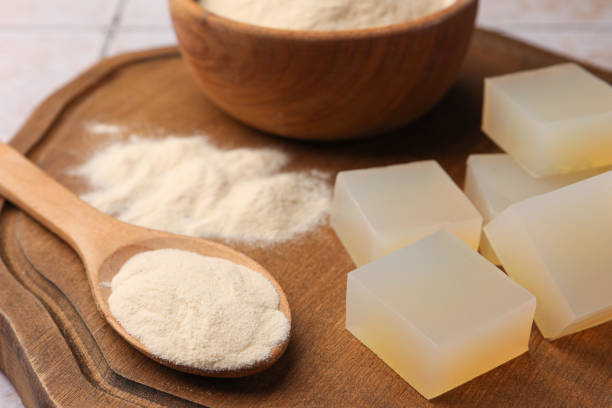
Gelatin is a protein derived from animal collagen (typically pork or beef), whereas the vast majority of a modern food hydrocolloid is carbohydrate-based (polysaccharides) and derived from plants, seaweeds, or microbes. Because of this, a plant-based hydrocolloid like pectin or agar is the preferred choice for vegan, Halal, and Kosher certified products, replacing animal-derived gelatin perfectly.
How much of a hydrocolloid is typically used in a food recipe?
One of the greatest advantages of a hydrocolloid food additive is its high efficiency. They are typically used in very low concentrations, often ranging from as little as 0.05% up to roughly 2.0% of the total product volume. Because a hydrocolloid possesses such an immense water-binding capacity, adding too much can quickly turn a pleasant beverage into an unpalatable, solid gel. The exact dosage depends on the specific hydrocolloid being utilized, the presence of other ingredients like sugar, acid, or calcium, and whether the primary goal is minor thickening or rigid gelling.
Sonuç
As consumer demands continue to evolve rapidly toward healthier, low-sugar, plant-based, and longer-lasting foods, the industry’s reliance on a functional food hydrocolloid will only intensify. Navigating this complex chemical and culinary landscape requires more than just buying a raw material off a shelf; it requires partnering with an industry expert. As a premier hydrocolloid supplier and manufacturer, we are dedicated to empowering food, beverage, pharmaceutical, and nutraceutical brands with the exact texturizing tools they need to succeed and innovate. Our extensive, globally certified portfolio—encompassing plant-derived gums, seaweed-derived extracts, microbe-derived polysaccharides, and cellulose-based hydrocolloid ingredients—ensures that we have the perfect structural solution for any manufacturing challenge.
Whether you are a food scientist looking to replace animal gelatin with a vegan-friendly seaweed hydrocolloid, a beverage formulator needing to suspend fruit pulp without adding heavy viscosity, or a bakery manager aiming to extend the softness and moisture retention of your packaged bread, we are here to facilitate your success. By choosing a fully compliant hydrocolloid food additive backed by HALAL, KOSHER, BRC, FSSC, and ISO certifications, you ensure that your innovative products are not only structurally flawless and safe but also ready for seamless expansion into diverse worldwide markets.
Are you ready to elevate your food and beverage formulations to the next level? Do not let texture inconsistencies, emulsion breakdowns, or limited shelf-life hold your brand back in a competitive market. Contact our expert technical sales team today to discuss your specific formulation challenges, request comprehensive technical data sheets (TDS), or order high-quality hydrocolloid samples. Let us help you harness the transformative, scientific power of a hydrocolloid to create market-leading products that consumers will love, trust, and purchase again and again.
