 İçeriğe geç

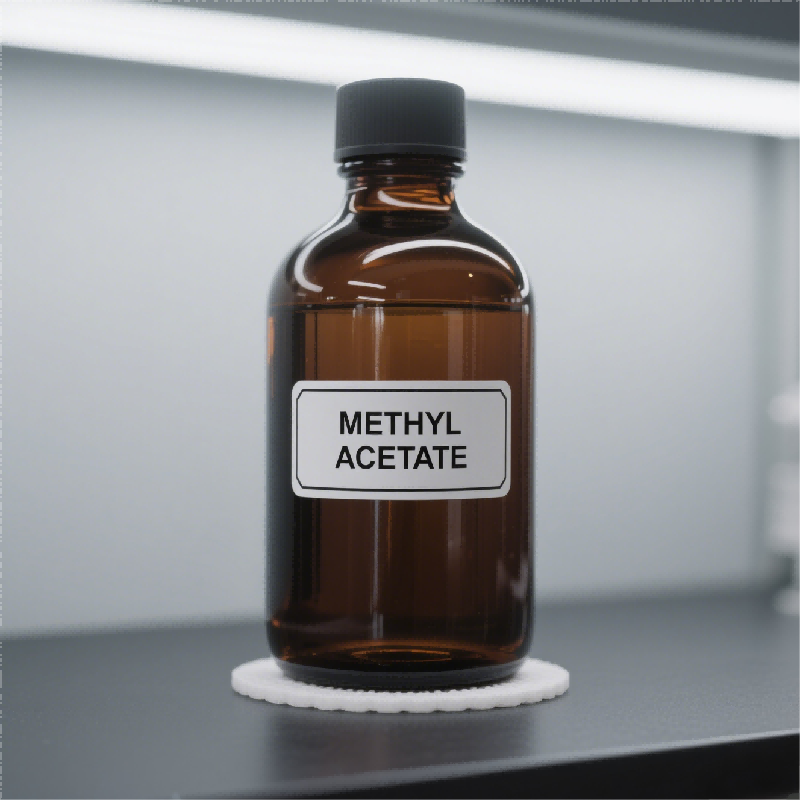
METİLASETAT (CAS No. 79-20-9), also widely known as methylacetat in European chemical markets, is one of the most versatile ester solvents in modern industrial chemistry. Chemically classified as a carboxylate ester with the molecular formula C₃H₆O₂, it is formed through the esterification of acetic acid and methanol. The result is a colorless, highly flammable liquid with a characteristic fruity odor — a compound that quietly powers some of the world’s most important manufacturing industries.
If you work in coatings, adhesives, electronics, or chemical synthesis, understanding METİLASETAT is not just academically useful — it is a procurement and operational necessity. This guide walks you through everything from quality evaluation and application scenarios to safety handling and purchasing considerations, structured specifically for industrial buyers and sourcing professionals.
What Is METHYL ACETATE Used For?
The reason METİLASETAT commands growing global attention is straightforward: it works extremely well across a remarkably broad range of applications. Its fast evaporation rate, mild odor, low toxicity, and strong solvency power make it a preferred choice in industries where performance and regulatory compliance both matter.
Paints, Coatings & Wood Finishes
The single largest end-use market for METİLASETAT is the paints and coatings sector. It dissolves nitrocellulose and cellulose esters rapidly, making it indispensable for automotive refinishing, industrial surface coatings, and wood varnishes. For formulators, METİLASETAT offers a critical combination of benefits: it evaporates quickly (reducing drying time), leaves minimal residue, and produces a smooth, even film.
According to market research, the paints and coatings segment accounted for the largest share of global METİLASETAT consumption in 2024, driven by surging demand from the automotive and construction industries. In 2024 alone, global vehicle sales reached 95.3 million units, each requiring surface coatings where METİLASETAT plays a key solvent role.
Adhesives & Sealants
METİLASETAT is widely used in the formulation of pressure-sensitive adhesives and construction sealants. It provides excellent dissolution of adhesive resins and sets quickly, making it highly efficient in manufacturing environments where production speed matters. The adhesives and sealants sector is one of the fastest-growing end markets for METİLASETAT, particularly in automotive and infrastructure applications.
Elektronik Bileşen Temizliği
In electronics manufacturing, cleanliness is non-negotiable. METİLASETAT serves as a precision cleaning agent for PCBs, semiconductor components, and precision instruments. Its ability to remove flux residues and organic contaminants without leaving behind harmful deposits makes it a trusted choice in aerospace and electronics assembly lines. The semiconductor industry’s demand for ultra-high purity METİLASETAT (≥99.9%) continues to rise alongside the global chip manufacturing expansion.
Chemical Synthesis & Intermediates
Beyond direct solvent use, METİLASETAT is a crucial chemical building block. It serves as a starting material or intermediate in the synthesis of:
| Downstream Chemical | Primary Industry Use |
|---|---|
| Acetic anhydride | Pharmaceuticals, cellulose acetate |
| Methyl acetoacetate | APIs, agrochemicals |
| Vinyl acetate monomer | Adhesives, paints, textiles |
| Methacrylate esters | Plastics, optical materials |
This role as a chemical intermediate positions METİLASETAT as a cornerstone in pharmaceutical and agrochemical supply chains — where purity specifications are especially stringent.
Flexographic Printing Inks & Packaging
An emerging and rapidly growing application for METİLASETAT is in flexographic printing inks, especially in food packaging. Its fast evaporation and low toxicity profile make it ideal for high-speed printing operations. The global expansion of e-commerce has driven unprecedented growth in packaging demand, and METİLASETAT is a primary beneficiary of this trend.
Food Flavoring
Naturally occurring in fruits such as apples, bananas, and grapes, METİLASETAT is approved as a food-grade flavoring agent. It imparts fruity, fresh notes to candies, beverages, and baked goods — a niche but high-value application.
Polyurethane (PU) Foam Blowing Agent
In markets across Asia-Pacific, METİLASETAT is increasingly used as a blowing agent in the manufacturing of PU foams for mattresses, furniture cushions, and thermal insulation panels. Population growth and rising urbanization in China, India, and Southeast Asia are driving this demand segment significantly.
How to Evaluate METHYL ACETATE Quality?
For procurement professionals, quality assessment is the first real decision point when sourcing METİLASETAT. The difference between industrial-grade and high-purity METİLASETAT is not just a number on a specification sheet — it directly affects your product performance, regulatory compliance, and downstream manufacturing yield.
Here is a breakdown of the key parameters to assess, based on standard enterprise specifications (Q/320581FGF013-2013):
| Quality Parameter | Standard Requirement | Benchmark Result | Significance |
|---|---|---|---|
| Saflık | ≥ 99.50 wt% | 99.9 wt% | Core performance indicator |
| Su İçeriği | ≤ 0.050 wt% | 0.02 wt% | Affects reactivity and shelf life |
| Acidity (as CH₃COOH) | ≤ 0.050 wt% | 0.005 wt% | Prevents corrosion in equipment |
| Color (APHA) | ≤ 10 | 5 | Indicates purity and storage quality |
| Residue on Evaporation | ≤ 0.01 wt% | 0.009 wt% | Measures non-volatile contaminants |
| GC Metanol | ≤ 0.006% | 0.002% | Safety and purity marker |
| Yoğunluk | 0.92–0.94 g/cm³ | 0.93 g/cm³ | Physical integrity check |
What these numbers mean in practice:
- Purity at 99.9% exceeds the minimum standard by 0.4 percentage points. For pharmaceutical and electronics applications, this margin is critical.
- Low methanol content (0.002%) is particularly important for buyers supplying into food or pharmaceutical environments, where methanol is a regulated impurity.
- APHA color at 5 (vs. max of 10) indicates the product has been stored correctly and has not undergone oxidative degradation.
- Residue on evaporation at 0.009% confirms that the solvent will leave minimal contamination after use — essential for cleaning applications.
When requesting a Certificate of Analysis (COA) from a supplier, always verify these seven parameters as a minimum. Any reputable METİLASETAT supplier should be able to provide batch-specific COA data upon inquiry.
Industrial Grade vs. High Purity: Which Do You Need?
| Sınıf | Typical Purity | Best Suited For |
|---|---|---|
| Industrial Grade | 99.0–99.5% | Paints, adhesives, general cleaning |
| High Purity | ≥ 99.9% | Pharmaceuticals, electronics, semiconductor |
| Food Grade | ≥ 99.5% (with specific impurity limits) | Flavoring, food packaging inks |
Key Physical and Chemical Properties of METHYL ACETATE
Understanding the physical and chemical properties of METİLASETAT helps buyers and formulators predict its behavior in specific applications. Below is a comprehensive reference table:
| Özellik | Değer |
|---|---|
| Kimyasal Ad | Methyl ethanoate / Methylacetat |
| CAS Numarası | 79-20-9 |
| Moleküler Formül | C₃H₆O₂ |
| Molar Mass | 74.08 g/mol |
| Görünüş | Colorless liquid |
| Koku | Pleasant, fruity |
| Yoğunluk | 0.932 g/cm³ at 20°C |
| Kaynama Sıcaklığı | 56.9°C |
| Alevlenme Sıcaklığı | -10°C |
| Buhar Basıncı | 173 mmHg at 20°C |
| Kırılma İndeksi | 1.361 at 20°C |
| Otobürünme Sıcaklığı | 474°C |
| Suda Çözünürlük | ~25% at 20°C |
| Solubility in Organics | Miscible with most organic solvents |
What these properties mean for buyers:
- The low boiling point (56.9°C) means METİLASETAT evaporates rapidly at room temperature — a key advantage in coatings and printing applications where fast drying is critical.
- The flash point of -10°C classifies it as a highly flammable liquid (GHS Category 1). This has direct implications for transport, storage, and insurance requirements.
- Its weak polarity and lipophilic character mean it dissolves oils, resins, and waxes effectively — but has limited miscibility in water, which is why moisture control during storage matters.
- Vapor pressure of 173 mmHg at 20°C confirms strong volatility — meaning proper ventilation in storage and production environments is non-negotiable.
METİLASETAT Nasıl Üretilir?
METİLASETAT is primarily manufactured through two industrial methods:
1. Esterification of Methanol and Acetic Acid The classic synthesis route involves reacting methanol with acetic acid in the presence of a sulfuric acid catalyst at elevated temperatures. This is a reversible reaction, so excess reagent or removal of water is typically employed to drive the equilibrium toward product formation.
2. Carbonylation Process (Eastman Process) A more advanced industrial method involves the carbonylation of methanol to produce METİLASETAT directly. This process, developed by Eastman Chemical Company, is a landmark example of process intensification — combining the reactor and distillation steps into a single reactive distillation column, dramatically improving efficiency and reducing energy use. Most large-scale METİLASETAT is also produced as a byproduct of the carbonylation of methanol to make acetic acid.
3. Byproduct from PTA Plants METİLASETAT and water mixtures are produced in significant quantities from Purified Terephthalic Acid (PTA) manufacturing plants, which are abundant in Asia-Pacific — a key reason why the region dominates global supply.
Metil Asetat Piyasa Trendleri 2025–2035
The global METİLASETAT market is experiencing robust and sustained growth. Here is a snapshot of current market intelligence:
| Metric | Data |
|---|---|
| Market Size (2024) | USD 210–211 million |
| Market Size (2025) | USD 228–231 million |
| Projected Market Size (2030) | USD 388.5 million |
| CAGR (2025–2030) | 7.9% |
| Largest Regional Market | Asia-Pacific (~55% of global share) |
| Largest Application Segment | Paints & Coatings |
Key market drivers in 2025:
- Green solvent shift: Up to 40% of new solvent formulations now incorporate METİLASETAT as a greener alternative to HAP (Hazardous Air Pollutants) solvents. Its VOC-exempt designation under the U.S. EPA gives it a significant regulatory advantage over competitors like toluene and xylene.
- E-commerce packaging boom: Rapid global e-commerce growth is fueling demand for flexographic printing inks, where METİLASETAT is a preferred carrier solvent.
- Asia-Pacific urbanization: Rising furniture, bedding, and construction demand in China, India, and ASEAN countries is accelerating METİLASETAT consumption as a PU foam blowing agent.
- Pharmaceutical API synthesis: With 99.9% purity METİLASETAT increasingly required for active pharmaceutical ingredient production, high-purity supply chains are tightening.
- Semiconductor expansion: Global chip manufacturing capacity additions require high-purity solvents for wafer cleaning and photoresist stripping — a growing niche for ultra-pure METİLASETAT.
Challenges to watch:
- Raw material price volatility: methanol prices have fluctuated between USD 350–450 per ton in recent periods, directly impacting METİLASETAT production costs.
- Health and safety regulatory tightening in certain jurisdictions may increase compliance costs for both producers and buyers.
Safety, Storage & Handling of METHYL ACETATE
METİLASETAT is classified as a highly flammable liquid and vapor. For any buyer or logistics professional handling this chemical, the following safety framework is mandatory knowledge:
Risk Sınıflandırması:
| Hazard Category | Classification |
|---|---|
| Flammability | GHS Category 1 (Flash Point -10°C) |
| Eye Irritation | Category 2 |
| CNS Effects | Drowsiness/dizziness upon inhalation |
| Skin Effects | Dryness/cracking with repeated exposure |
| NFPA Flammability Rating | 3 |
Storage Requirements:
- Store in a cool (below 25°C), well-ventilated area, away from all ignition sources and open flames
- Keep containers tightly sealed to prevent vapor accumulation and moisture ingress
- Use grounded and bonded containers during transfer to prevent static discharge
- Incompatible with strong oxidizers, strong acids, and strong bases
Kişisel Koruyucu Ekipmanlar (KKE):
- Chemical-resistant gloves (nitrile or neoprene recommended)
- Safety goggles or face shield
- Flame-resistant clothing in high-exposure environments
- Ensure local exhaust ventilation at workstations
Transport Classification:
- UN Number: UN 1231
- DOT Hazard Class: 3 (Flammable Liquid)
- Packing Group: II
All buyers importing METİLASETAT should ensure their logistics partners are fully certified for Class 3 flammable liquid transport.
METHYL ACETATE vs. Alternative Solvents: A Comparison
When evaluating METİLASETAT against competing solvents, the picture is compelling:
| Özellik | METİLASETAT | Etil asetat | Aseton | Toluen |
|---|---|---|---|---|
| Kaynama Sıcaklığı | 56.9°C | 77.1°C | 56.1°C | 110.6°C |
| Alevlenme Sıcaklığı | -10°C | -4°C | -20°C | 4°C |
| VOC Status | Exempt (U.S. EPA) | Non-exempt | Non-exempt | Non-exempt |
| Toxicity | Düşük | Düşük | Düşük | Moderate–High |
| Koku | Mild, fruity | Fruity | Sharp | Güçlü |
| Solvency Power | Yüksek | Yüksek | Very High | Very High |
| Cost Competitiveness | ✅ Favorable | Orta düzeyde | Orta düzeyde | Variable |
| Regulatory Trend | ✅ Gaining favor | Nötr | Restricted | Declining |
The key differentiator for METİLASETAT is its VOC-exempt status under U.S. EPA regulations — a distinction that neither ethyl acetate nor acetone enjoys. As environmental regulations tighten globally, this regulatory advantage becomes increasingly valuable to formulators seeking compliant solvent solutions.
Packaging Options & How to Order METHYL ACETATE
For industrial buyers, METİLASETAT is available in the following standard packaging configurations:
| Packaging Type | Capacity | Best For |
|---|---|---|
| Steel Drums | 180 kg / drum | Small to mid-volume buyers, R&D |
| IBC Totes | 1,000 kg / IBC | Mid-to-large volume manufacturing |
| ISO Tank / Bulk | 20,000+ kg | Large-scale industrial procurement |
Minimum Order Quantity (MOQ): 1 Full Container Load (1 FCL)
When placing an order for METİLASETAT, professional buyers should request the following documentation as standard:
- Certificate of Analysis (COA) — batch-specific
- Safety Data Sheet (SDS) — current version per GHS standards
- UN Dangerous Goods Declaration for transport
- Country of Origin Certificate (if import duties apply)
Frequently Asked Questions (FAQs)
What is METHYL ACETATE used for in everyday products?
METİLASETAT is found in nail polish removers, spray paints, adhesives, and food flavorings. Its fruity odor and fast evaporation make it an effective and relatively safe solvent in consumer and industrial products alike.
Is METHYL ACETATE the same as methylacetat?
Yes. Methylacetat is the German-language name for the same compound — METİLASETAT (CAS 79-20-9). The chemical is identical regardless of regional naming conventions.
What purity grade of METHYL ACETATE do I need?
It depends on your application. Industrial-grade (99.0–99.5%) is sufficient for most coating and adhesive uses. High-purity (≥99.9%) is required for pharmaceutical synthesis, semiconductor cleaning, and food-grade applications.
Is METHYL ACETATE environmentally friendly?
Compared to many competing solvents, yes. METİLASETAT is VOC-exempt under U.S. EPA regulations, is not classified as a Hazardous Air Pollutant (HAP), and is readily biodegradable. These characteristics make it a preferred choice in environmentally regulated formulations.
How should METHYL ACETATE be stored?
Store in sealed steel drums or IBCs in a cool, ventilated area below 25°C, away from ignition sources. Always maintain grounding during transfer operations. Shelf life under proper storage conditions is typically 12–24 months.
Can METHYL ACETATE dissolve in water?
Only partially. METİLASETAT has a water solubility of approximately 25% at 20°C — meaning it is slightly soluble but not fully miscible. It is, however, fully miscible with most organic solvents including alcohols, ketones, and glycols.
What is the difference between METHYL ACETATE and ethyl acetate?
Both are ester solvents with similar applications, but METİLASETAT has a lower boiling point (56.9°C vs. 77.1°C), evaporates faster, and crucially holds VOC-exempt status under U.S. EPA rules — a regulatory advantage ethyl acetate does not share.
Who are the major producers of METHYL ACETATE globally?
Key producers include Celanese Corporation, Eastman Chemical Company, BASF SE, Wacker Chemie AG, Chang Chun Group, and Haihang Industry. Asia-Pacific, particularly China, dominates global production, accounting for approximately 55% of supply.
